Cat and Mouse
ca. 1295–1075 B.C.E.




1 of 5
Object Label
Animals imitating human behavior were well-known in Egyptian art. Yet their meaning is uncertain.
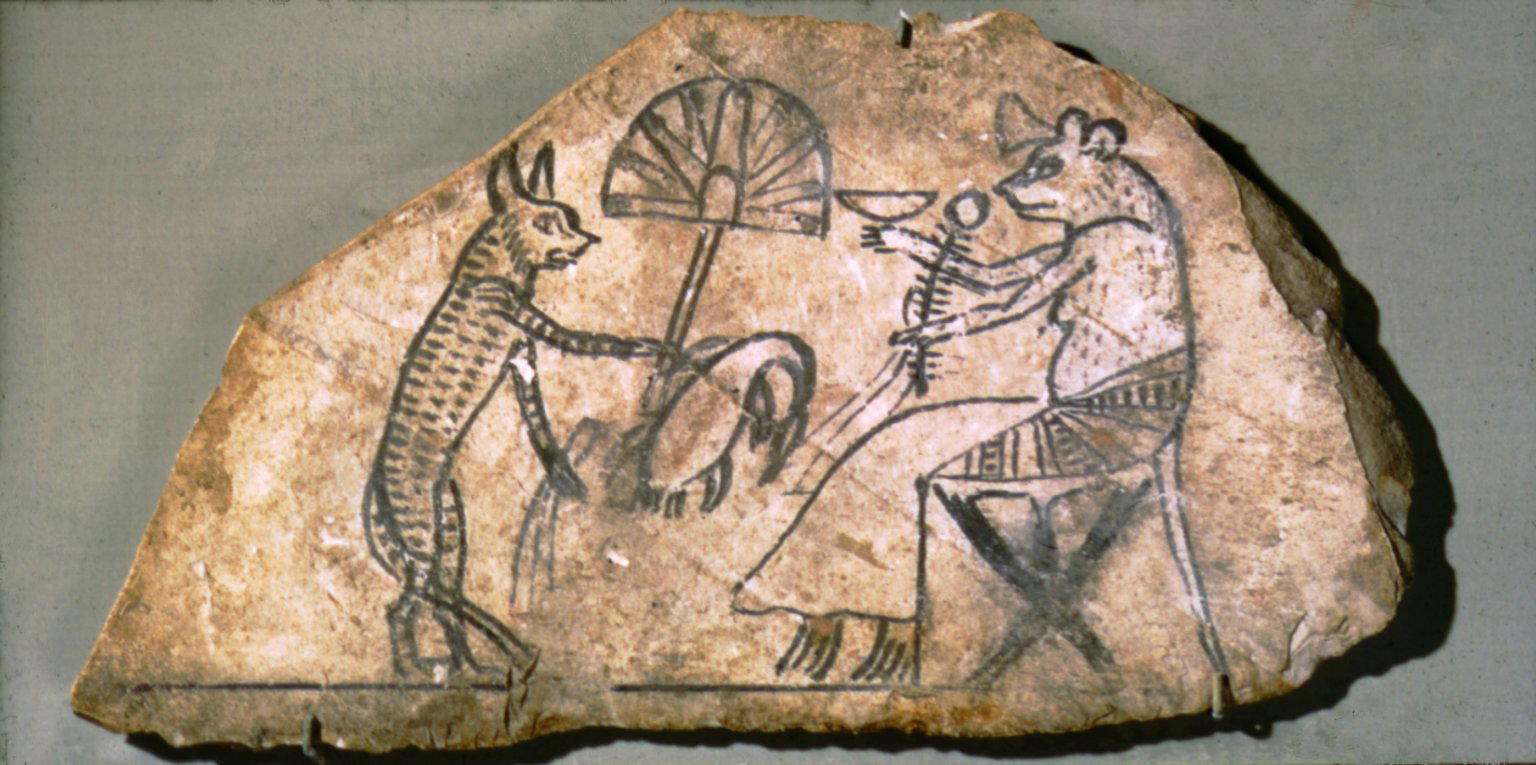
Here, a feline funerary priest approaches a mouse with offerings. The mouse wears a lotus flower on its head, sits on a chair, sniffs a flower, and holds out a cup to be filled. The cat, standing on his hind legs, fans the mouse and offers a roasted duck and a piece of linen.
People performing these actions in Egyptian art are usually at a banquet. A cat serving a mouse might represent a humorous satire or illustrate a now-lost story.
Here, a feline funerary priest approaches a mouse with offerings. The mouse wears a lotus flower on its head, sits on a chair, sniffs a flower, and holds out a cup to be filled. The cat, standing on his hind legs, fans the mouse and offers a roasted duck and a piece of linen.
People performing these actions in Egyptian art are usually at a banquet. A cat serving a mouse might represent a humorous satire or illustrate a now-lost story.
Caption
Cat and Mouse, ca. 1295–1075 B.C.E.. Limestone, ink, 3 1/2 x 6 13/16 x 7/16 in. (8.9 x 17.3 x 1.1 cm). Brooklyn Museum, Charles Edwin Wilbour Fund, 37.51E. (Photo: Brooklyn Museum (Gavin Ashworth, photographer))
Gallery
Not on view
Gallery
Not on view
Title
Cat and Mouse
Date
ca. 1295–1075 B.C.E.
Dynasty
Dynasty 19 to Dynasty 20
Period
New Kingdom
Geography
Possible place made: Thebes, Egypt
Medium
Limestone, ink
Classification
Dimensions
3 1/2 x 6 13/16 x 7/16 in. (8.9 x 17.3 x 1.1 cm)
Credit Line
Charles Edwin Wilbour Fund
Accession Number
37.51E
Frequent Art Questions
What's this?
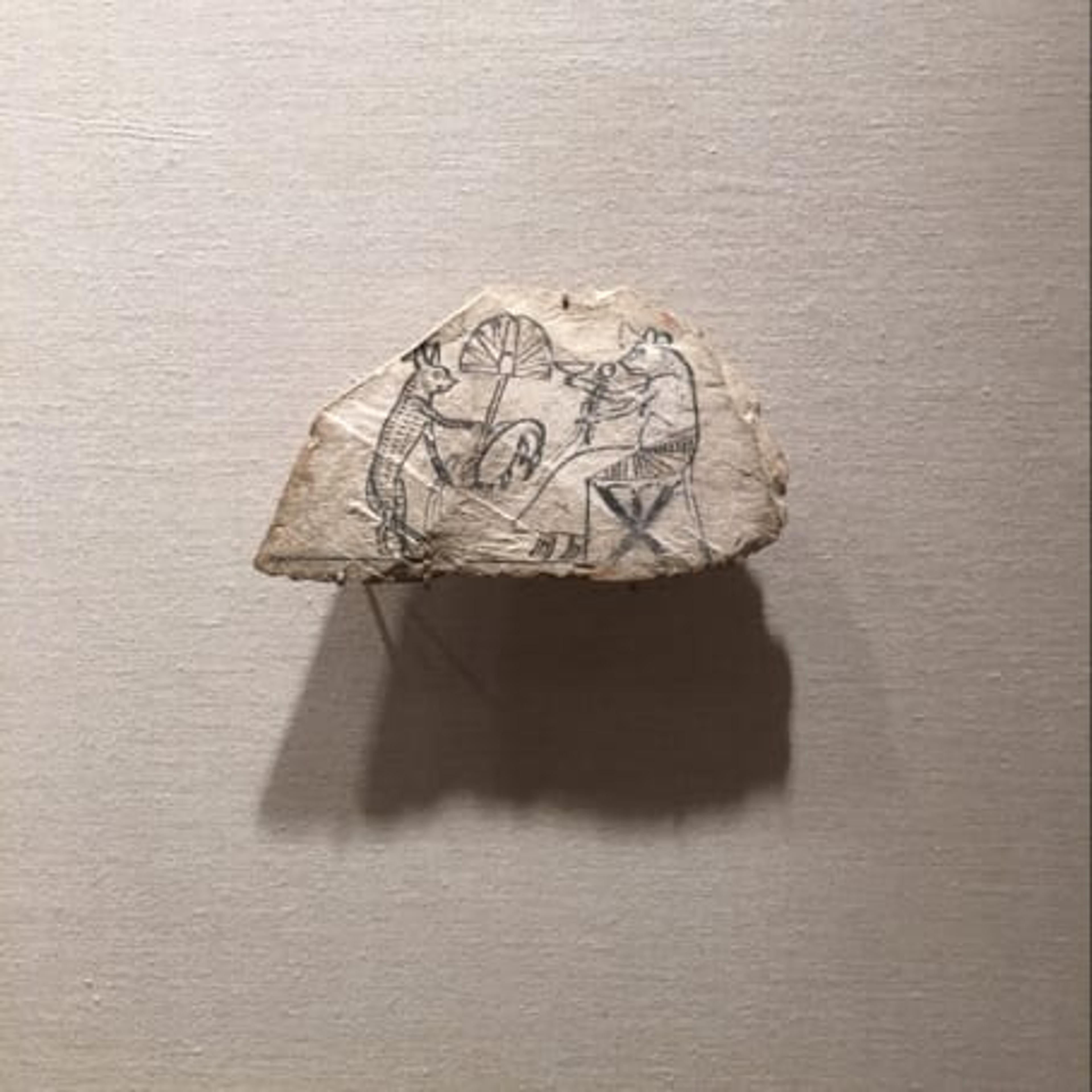 That's a really funny sketch from New Kingdom Egypt! Though the exact origin of this imagery is not known, scholars' best guess is that the cat serving the mouse scene comes from a fable that was popular during the 19th or 20th Dynasty. It think it's a fun departure from the typically programmatic Egyptian artwork in the galleries.
Do you know what kind of material they used to draw or paint in this sketch?
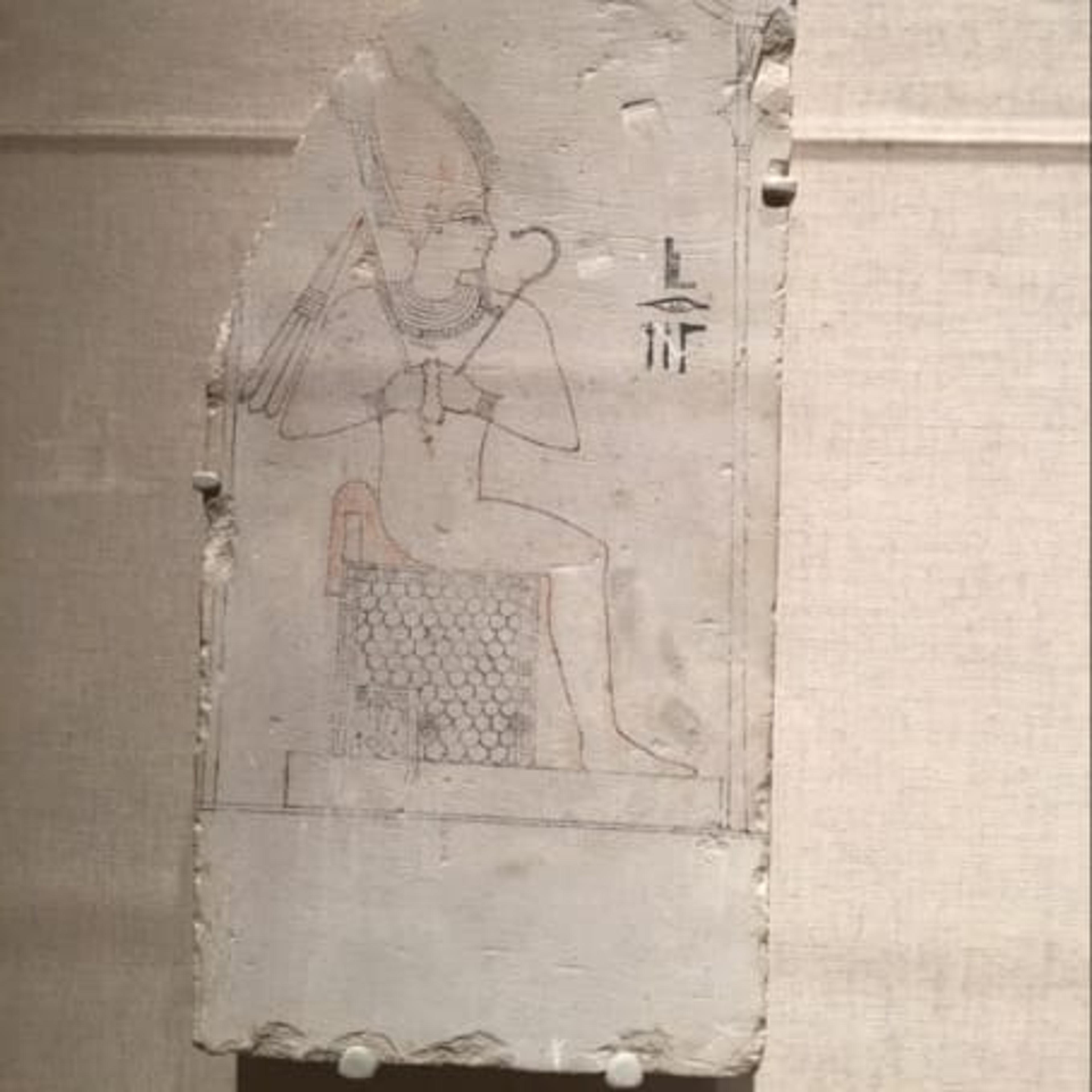 The Ancient Egyptians typically used mineral-based pigments like carbon black and ochre red. Iron oxides were also used for reds. As far as tools: reed brushes were common.The sketches give you a window into daily life. The cat and mouse were probably just for fun, but this image of the god Osiris may have been an artist's sketch while preparing for a larger piece or just practicing.
Tell me more about this cat and mouse.
The sketch comes from a town known today as Deir el-Medina which was, in ancient times, the village of the tomb builders in Thebes. The comedic scene may illustrate a fable or may just be something fun an artist drew in his spare time.What does 37.51E mean?
That is the object's accession number. It kind of works like an ID number for the museum. It's assigned when the object enters our collection and every piece has a different one.Usually the first numbers, either two or four digits, tell you what year the objects became a part of our collection! The object photographed entered the museum in 1937.
Have information?
Have information about an artwork? Contact us at