Sketch of Osiris
305–30 B.C.E.

1 of 3
Object Label
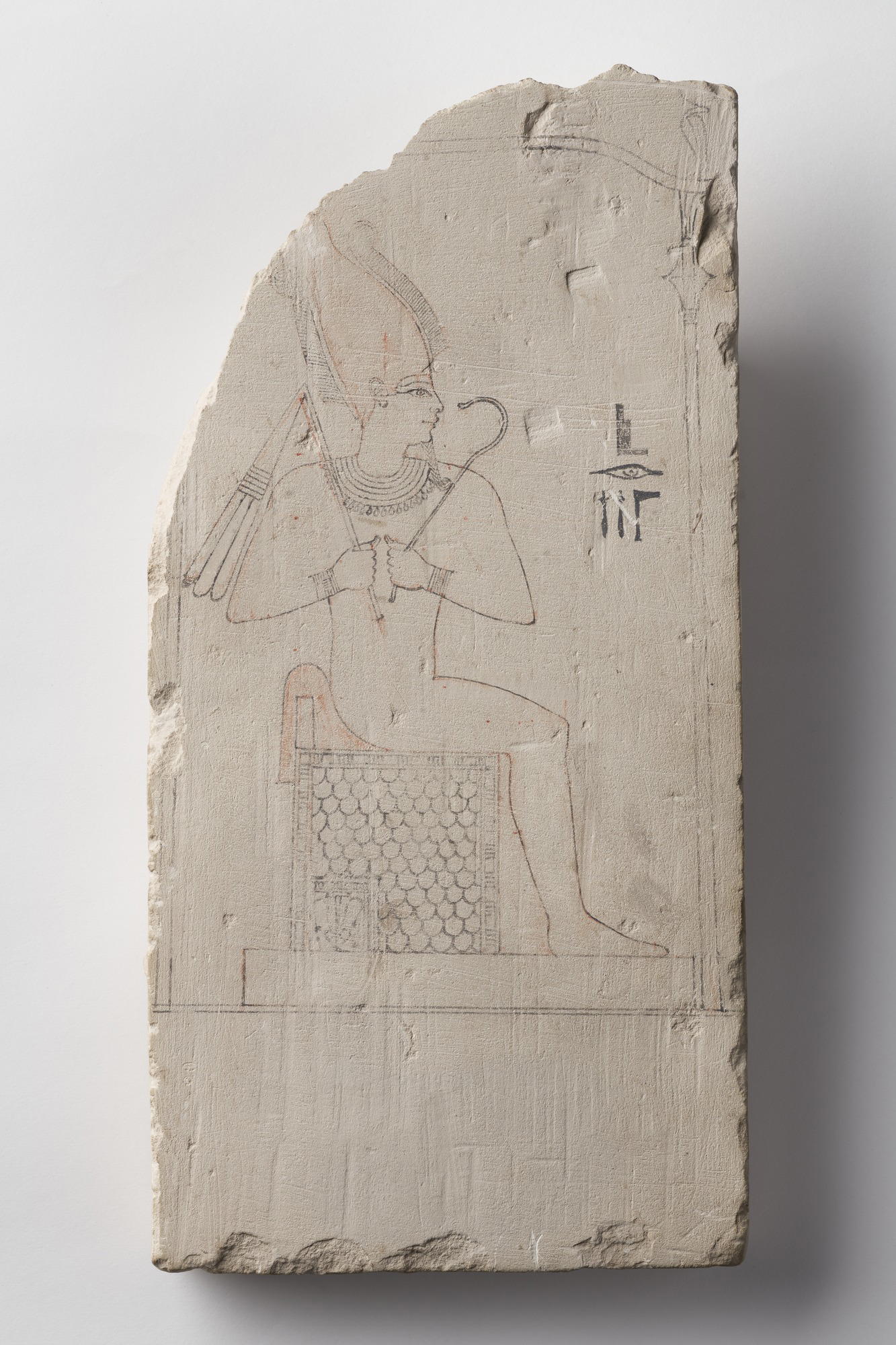
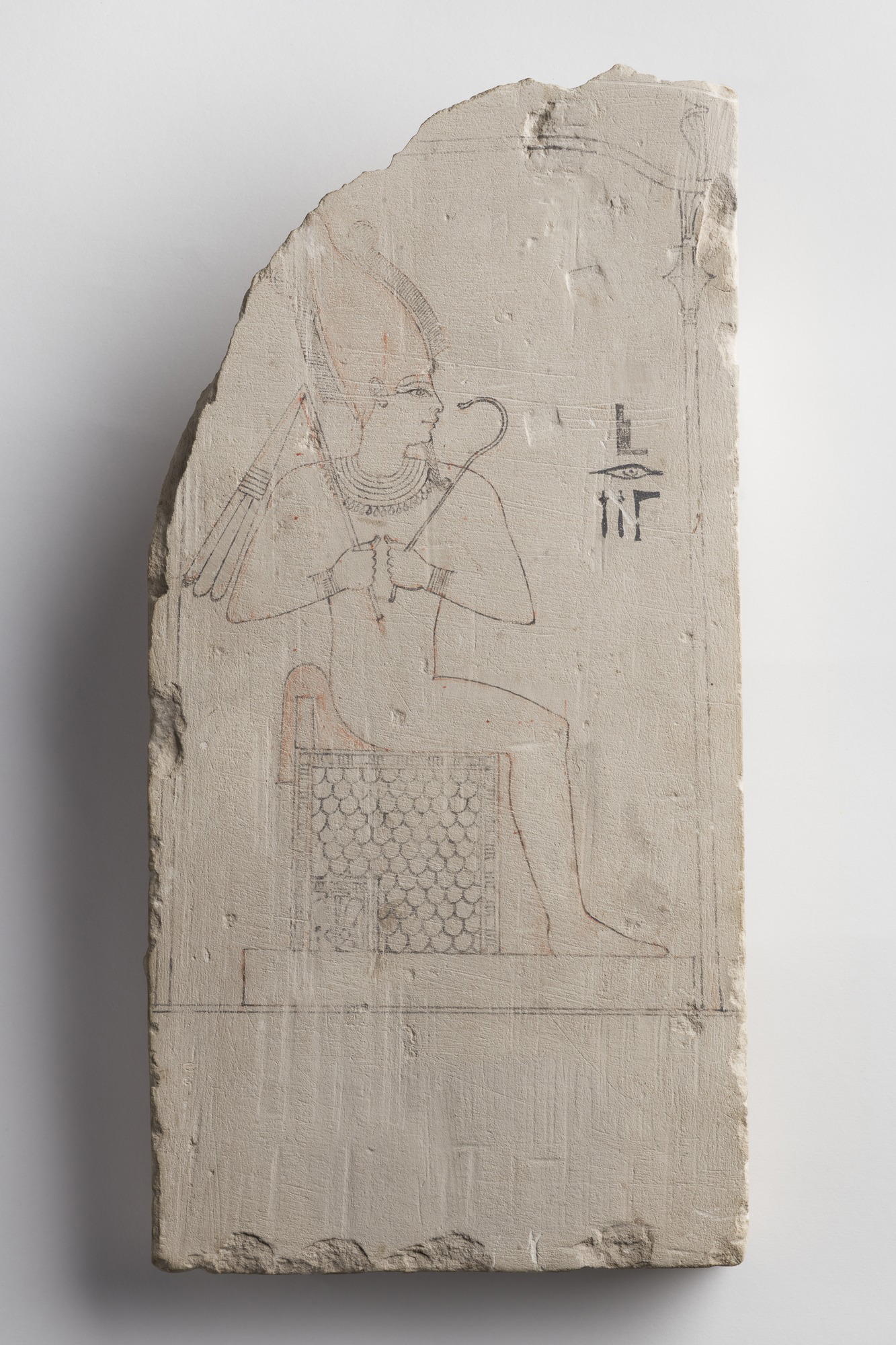
Even if he were not labeled by the hieroglyphs at the right ("Osiris, the great god"), this deity would be easy to identify. Osiris, lord of the underworld, is always shown as a mummy, often wearing the White Crown of Upper Egypt adorned with two feathers of Ma`at (cosmic harmony). Here the god holds his characteristic crook and flail and is seated in a shrine or under a canopy.
Though the almond eye, long nose, and full lips suggest a New Kingdom date (Dynasties 18–20, circa 1539–1070 B.C.E.), many other details indicate that the sketch was made in the Ptolemaic Period. The meticulous detail, manifest in the delineation of the ear, the eye, the plaited beard, the nostril, the thumbnails, and the feather pattern of the throne, is diagnostic for Egyptian drawing and relief of the fourth through first centuries B.C.E.
Though the almond eye, long nose, and full lips suggest a New Kingdom date (Dynasties 18–20, circa 1539–1070 B.C.E.), many other details indicate that the sketch was made in the Ptolemaic Period. The meticulous detail, manifest in the delineation of the ear, the eye, the plaited beard, the nostril, the thumbnails, and the feather pattern of the throne, is diagnostic for Egyptian drawing and relief of the fourth through first centuries B.C.E.
Caption
Sketch of Osiris, 305–30 B.C.E.. Limestone, pigment, 15 x 7 1/2 x 3 9/16 in. (38.1 x 19 x 9 cm). Brooklyn Museum, Charles Edwin Wilbour Fund, 37.52E. (Photo: Brooklyn Museum)
Gallery
Not on view
Gallery
Not on view
Title
Sketch of Osiris
Date
305–30 B.C.E.
Period
Ptolemaic Period
Geography
Possible place made: Thebes, Egypt, Reportedly from: Saqqara, Egypt
Medium
Limestone, pigment
Classification
Dimensions
15 x 7 1/2 x 3 9/16 in. (38.1 x 19 x 9 cm)
Credit Line
Charles Edwin Wilbour Fund
Accession Number
37.52E
Frequent Art Questions
Do you know what kind of material they used to draw or paint in this sketch?
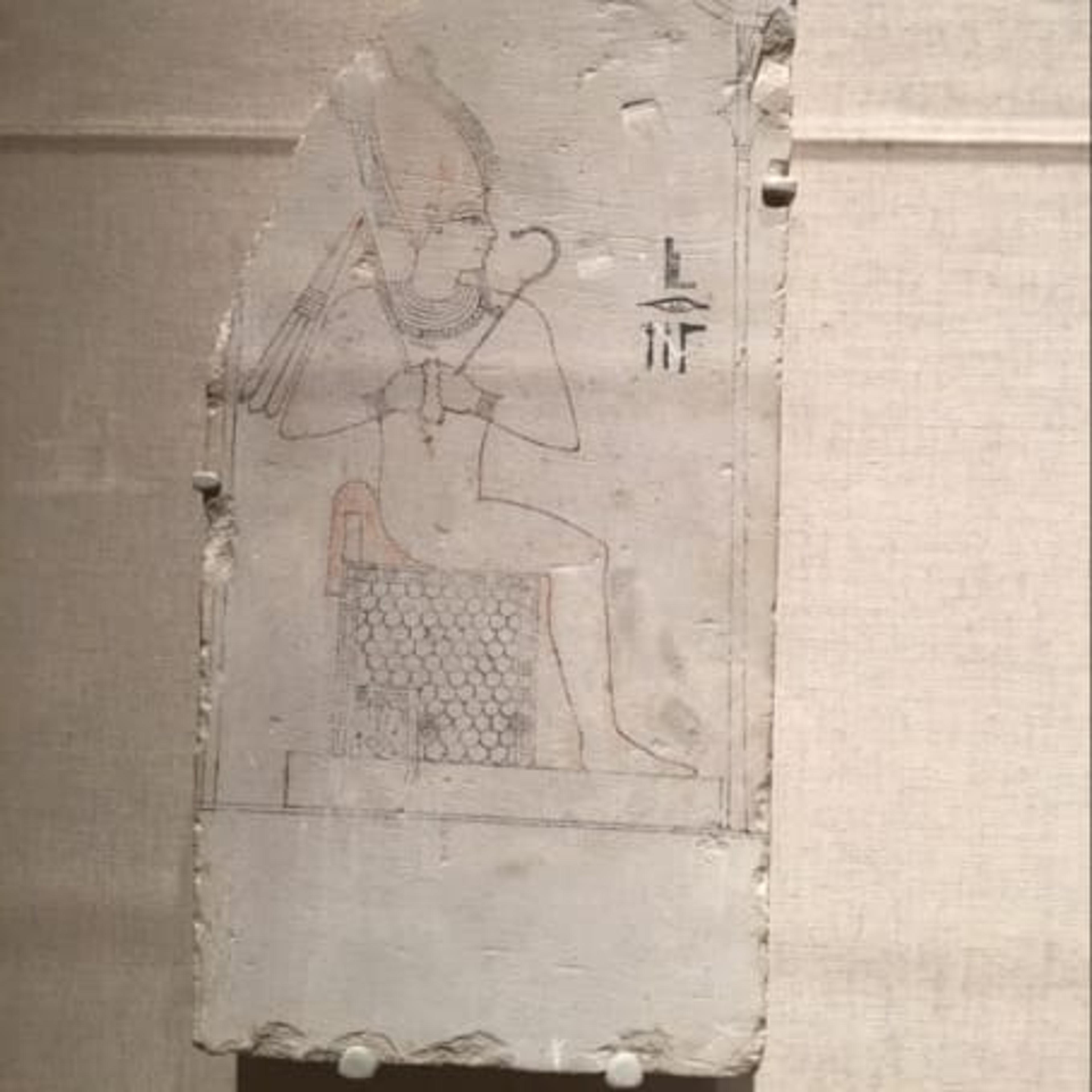 The Ancient Egyptians typically used mineral-based pigments like carbon black and ochre red. Iron oxides were also used for reds. As far as tools: reed brushes were common.The sketches give you a window into daily life. The cat and mouse were probably just for fun, but this image of the god Osiris may have been an artist's sketch while preparing for a larger piece or just practicing.
Would this "sketch" have been made to be left as is, or would it be to guide the sculptor in carving out the figure?
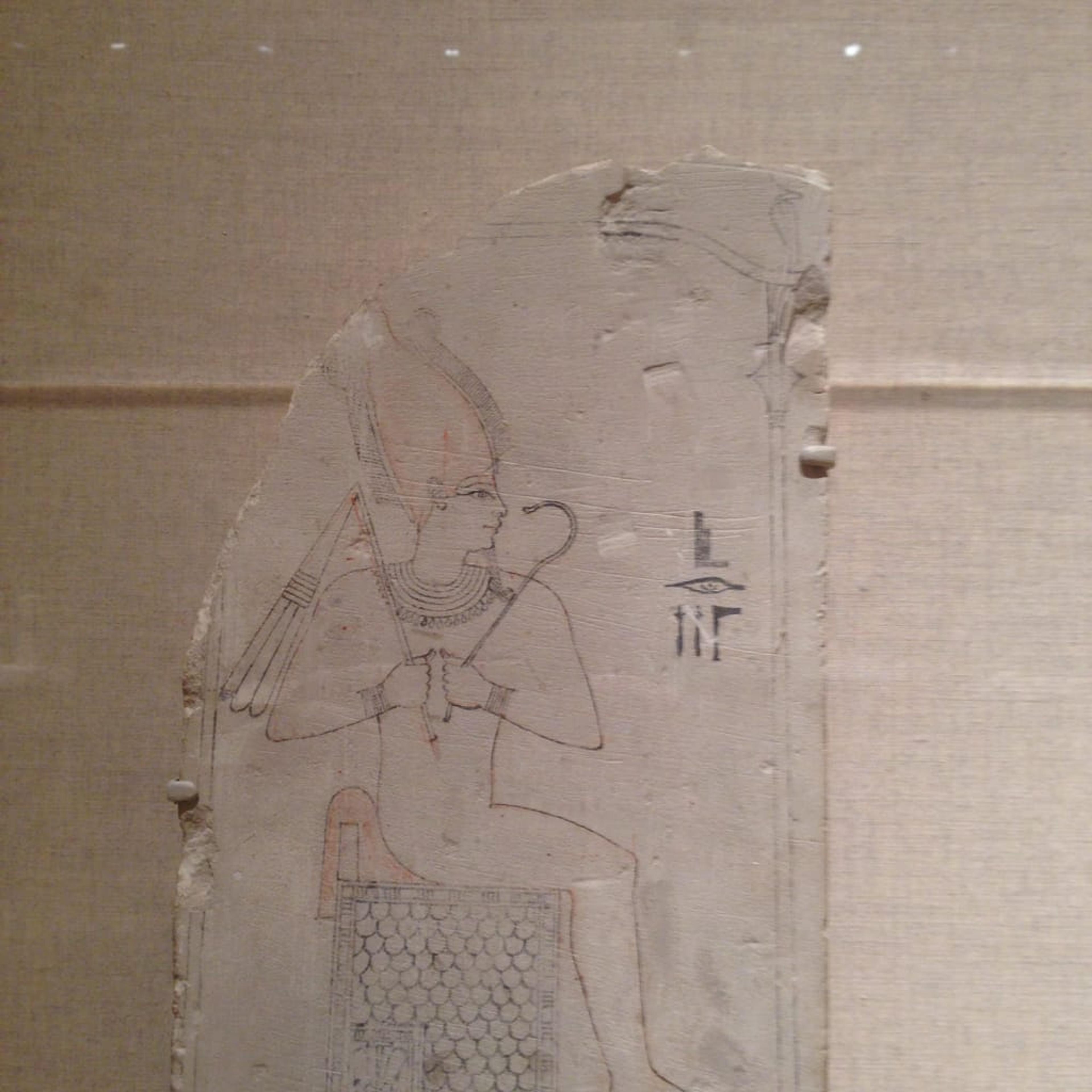 It doesn't seem to have been a preparatory sketch for a sculpture, as it is missing the grid that artists used to block out the figure.I thought that grids were just used to copy an image from one surface to another? Did they draw images onto stone before carving it?Ancient Egyptian art was so regulated with such an emphasis on perfection that artisans used a grid system to lay out the proportions of figures in formal compositions. As the term sketch suggests, this is likely an example of an artisan's practice drawing.Sculpted images were certainly drawn first. There is a great example of an unfinished relief in the Mummy Chamber.Sometimes, artisans did simply paint 2-D images onto stone.Thank you. I didn't know that.Would the painting without carving have been a cost saving method or an artistic choice?It would have been a choice made by the person who commissioned the work. The more intensive the work process, such as relief carving, the more expensive the work would be for the patron. Funerary equipment, for example, could be commissioned specifically or come though a more "off the rack" fashion. Much of what we seen in the gallery today would have been created for more wealthy patrons.
Have information?
Have information about an artwork? Contact us at