The Arch
Henry Ossawa Tanner

Brooklyn Museum photograph
Object Label
In this dramatic nocturnal scene, Henry Ossawa Tanner recorded the Celebration of the Dead, held on July 13, 1919, in Paris to honor those who died defending France during World War I. Here, the crowd is rendered as a largely anonymous mass; the figures converge before a brilliantly illuminated cenotaph, or empty tomb, temporarily erected behind the Arc de Triomphe. As in many of Tanner’s religious nocturnes, the cool cerulean palette and muted tonalities evoke a solemn, even spiritual, mood.
Paris was a familiar subject for Tanner, an African American expatriate artist of international renown who resided in the French capital and in Brittany for most of his adult life. During these decades abroad, Tanner experienced racial prejudice to a lesser degree than he had in the United States and enjoyed greater artistic freedom and opportunity.
Paris was a familiar subject for Tanner, an African American expatriate artist of international renown who resided in the French capital and in Brittany for most of his adult life. During these decades abroad, Tanner experienced racial prejudice to a lesser degree than he had in the United States and enjoyed greater artistic freedom and opportunity.
Caption
Henry Ossawa Tanner (American, 1859–1937). The Arch, 1919. Oil on canvas, 39 1/4 x 38 3/16 in. (99.7 x 97 cm) Frame: 42 7/8 x 42 x 2 5/8 in. (108.9 x 106.7 x 6.7 cm). Brooklyn Museum, Gift of Alfred W. Jenkins, 32.10. (Photo: Brooklyn Museum)
Gallery
Not on view
Collection
Gallery
Not on view
Collection
Artist
Title
The Arch
Date
1919
Medium
Oil on canvas
Classification
Dimensions
39 1/4 x 38 3/16 in. (99.7 x 97 cm) Frame: 42 7/8 x 42 x 2 5/8 in. (108.9 x 106.7 x 6.7 cm)
Signatures
Signed lower left: "H.O. TANNER / PARIS July 13 191[9]"
Markings
Incised lower left: "H.O. TANNER"
Credit Line
Gift of Alfred W. Jenkins
Accession Number
32.10
Frequent Art Questions
I like this monochromatic color scheme painted by an African American artist in Paris.
Great eye. It's true that Tanner's work became more monochromatic throughout his career. He was heavily inspired by the artist James McNeill Whistler, who experimented with tonal harmonies in his painting.And yes, I often wonder what it was like for Tanner to be a minority in such a predominantly white painting environment.His use of blue is so incredible. As I look at it, I feel like it hovers between day and night, really creating the effect of twilight.Is this in Paris?
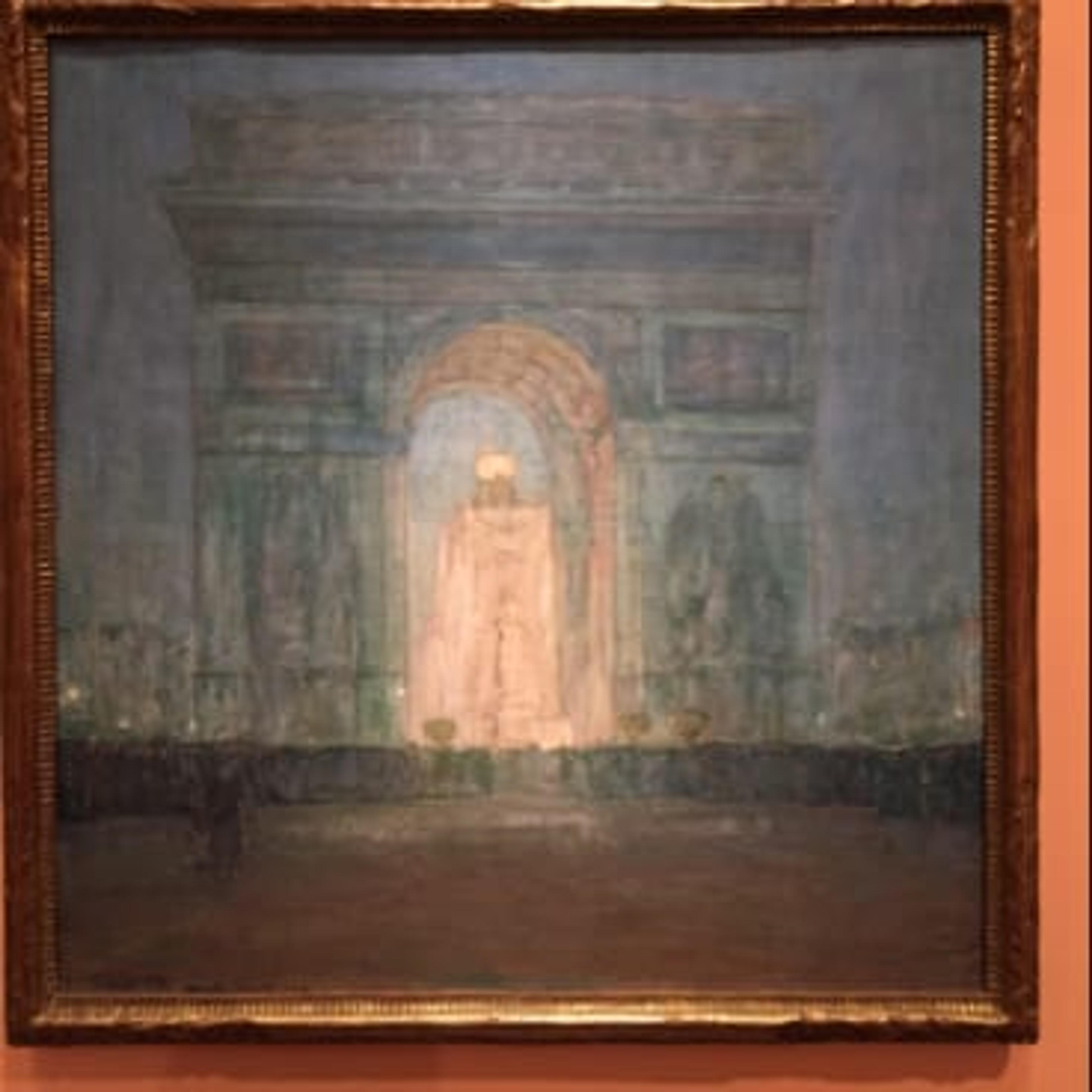 Yes, Tanner is depicting the Arc de Triomphe in Paris, with a crowd gathered at the Place d'Etoile.Tanner was American, but he spent most of his career in Paris. Some scholars have argued that this work may have been related to Tanner's emotions as an American expatriate in France during World War I. This scene shows a ceremony to honor the wartime dead.By the way, Tanner's work was influenced by Whistler, and we have a great portrait of Whistler on the 3rd floor by the elevators.
Was Tanner interested in the work of Claude Monet? The colors in this painting remind me of French Impressionism.
 That's interesting, I have never thought of it that way. Henry Ossawa Tanner was heavily inspired by the artist James McNeill Whistler, who experimented with tonal harmonies in his painting.Here, Tanner is depicting the Arc de Triomphe in Paris, with a crowd gathered at the Place d'Etoile, you aren't far off in thinking about French Impressionism in terms of subject matter.Thanks! I love how the image appears to be constantly fading, but is vibrant and symbolic. Again, thanks much!I totally agree. Let us know if you have more questions as you explore!
What's happening here?
 Henry Ossawa Tanner painted the Arc de Triomphe in Paris in 1919 and depicted a ceremony honoring those who died in World War I. Tanner spent most of his career in Paris. What drew you to this painting today?The similarity to French Impressionist paintings.Yeah, I can see that influence in this work of Tanner's! I think it comes through in his use of color, especially the subtle and layered shades of blue. He was also influenced by the work of James McNeill Whistler, who emphasized color harmonies in his art.
Which arch is this supposed to be?
 This is the Arc de Triomphe in Paris as viewed from from the Place d'Etoile.Tanner spent most of his career in Paris. Some scholars have argued that this work may have been related to Tanner's emotions as an American expatriate in France during World War I. This scene shows a ceremony to honor the wartime dead.Thanks! So the blue was related more to the emotional connection to the scene rather than a study of light?That's an interesting thought. Tanner favored this particular shade of blue, painted in this washes, for various works and subjects. Also, blue is the color often used to show twilight, and in French the term for twilight is "the blue hour," or "l’heure bleu."
Was this some specific event at the Arch?
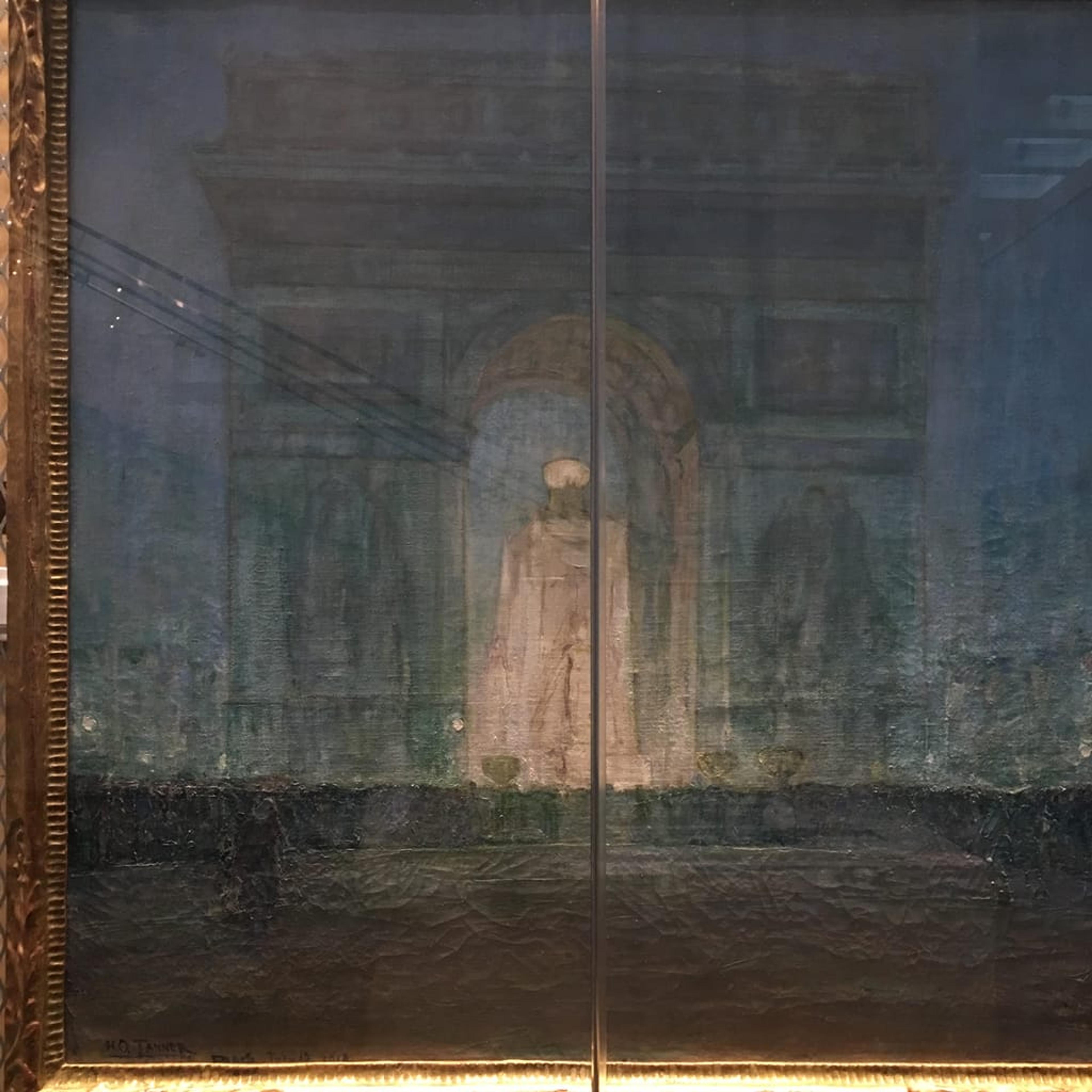 Yes, there was. Tanner is recording the Celebration of the Dead, which occurred at the Arc de Triomphe in Paris on July 13, 1919. The event was to honor French soldiers who had lost their lives during World War I. The white object in the center of the arch was constructed for the event---it was supposed to resemble a tomb.Interesting! I appreciate your expertise. Thank you!
Can you tell me about this artist?
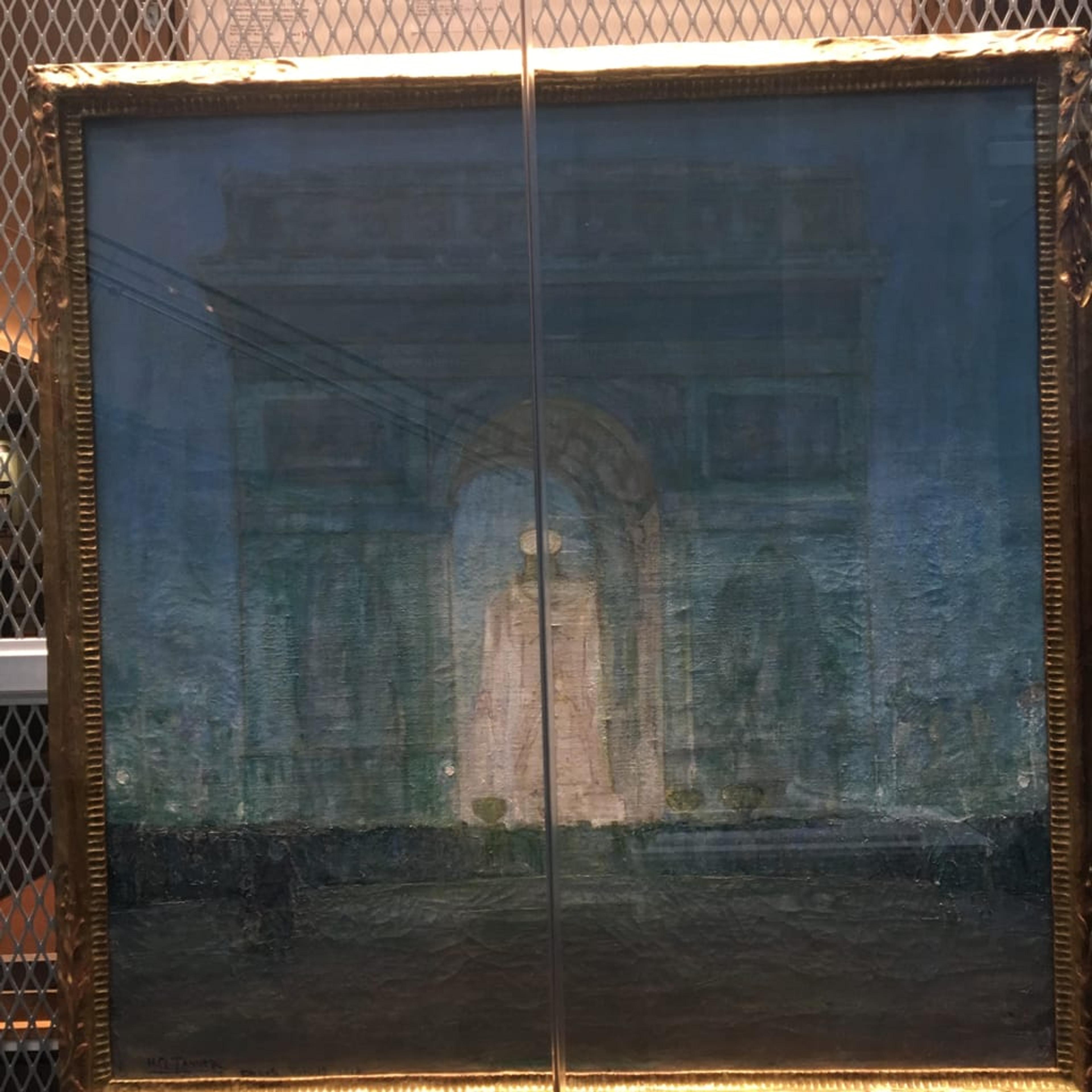 This painting is by Henry Ossawa Tanner. It is titled "The Arch" and was painted in 1919. Tanner was an internationally acclaimed African American artist. He studied closely under Thomas Eakins at the Pennsylvania Academy of Fine Arts. After moving abroad to Europe, Tanner found wider acceptance in Paris where his race mattered less in the art world.
I was wondering if you knew if the frame on this painting is a Carrig-Rohane frame?
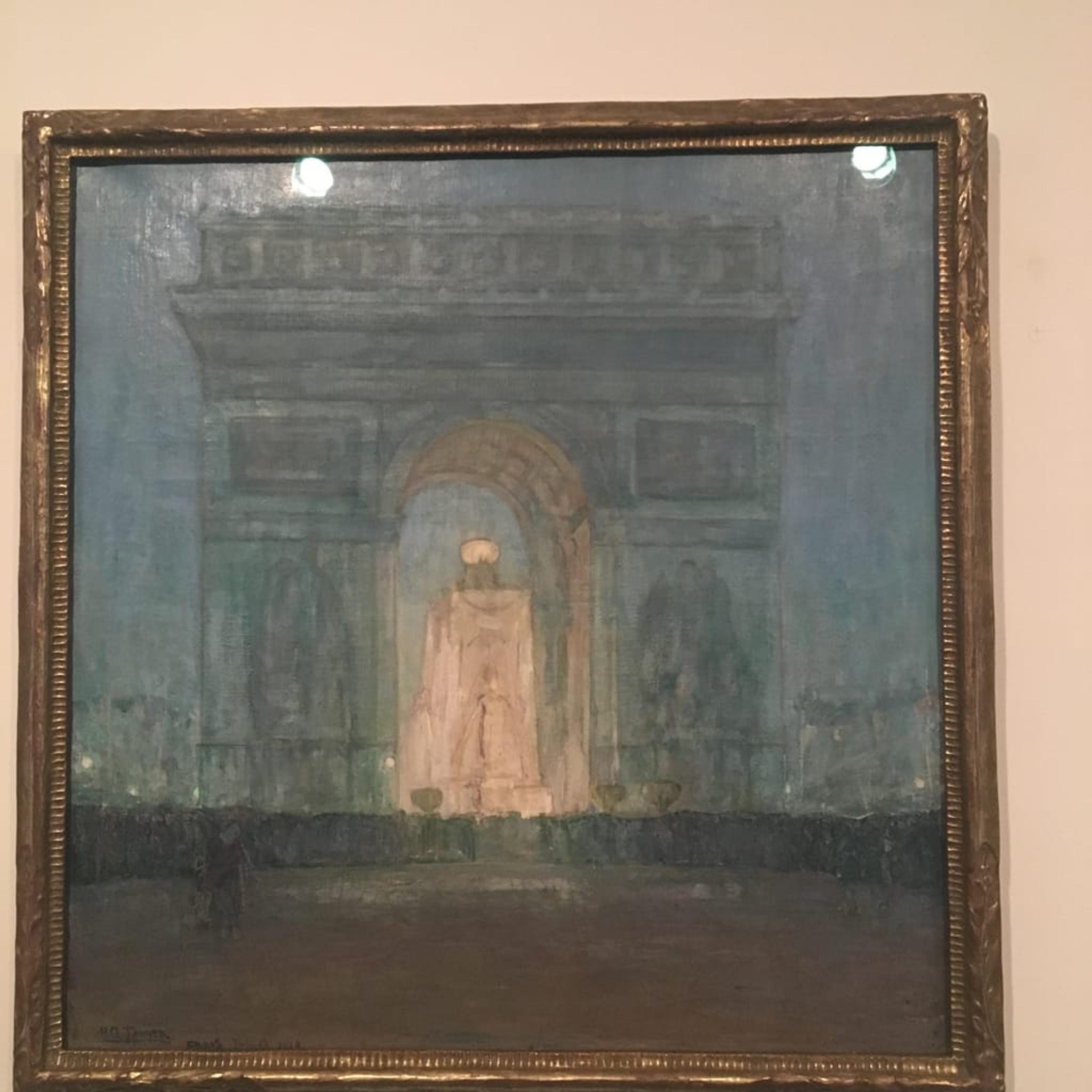 We don't know, unfortunately!Bummer, it sure looks like it. Thank you!
Have information?
Have information about an artwork? Contact us at