Handle of a Fly Whisk (?) in the Form of Bound Nubian
Egyptian


1 of 24
Object Label
Wood, Bone, and Ivory in the New Kingdom
Egyptian artists were resourceful in overcoming the problems of working with difficult materials to make the objects seen here.
Egyptian trees, such as acacia, sycamore, and tamarisk, are too small to produce large planks. Carpenters working with native woods thus had to develop complicated joinery techniques to build large objects like coffins and furniture. For expensive luxury items they used timbers such as ebony, cedar, and juniper, imported from Nubia and Punt to the south and Syria and Lebanon to the northeast. Ancient craftsmen used tools that would be familiar to modern carpenters, including adzes, chisels, reamers, and saws. Many ancient Egyptian wooden objects left in tombs as funerary offerings have survived remarkably well. Undisturbed tombs maintain extremely stable climatic conditions, slowing the effects of repeated expansion and contraction that are so damaging to wood. Egypt’s relatively dry climate also discourages the growth of mold, insects, and microorganisms that feed on wood.
Ancient Egyptian ivory used for carving came from the tusks of elephants and hippopotami. Elephants had probably disappeared from Egypt by the end of the Predynastic Period (circa 3100 B.C.E.), so their ivory had to be imported from Nubia. Hippopotami remained common in the lower Nile Valley until the seventeenth century C.E. Some antiquities mistakenly said to be made of ivory are actually made of the bones or antlers of cattle, sheep, goats, and antelopes. Egyptians used the often ideally shaped leg bones of these animals to create the handles of tools or weapons.
Egyptian artists were resourceful in overcoming the problems of working with difficult materials to make the objects seen here.
Egyptian trees, such as acacia, sycamore, and tamarisk, are too small to produce large planks. Carpenters working with native woods thus had to develop complicated joinery techniques to build large objects like coffins and furniture. For expensive luxury items they used timbers such as ebony, cedar, and juniper, imported from Nubia and Punt to the south and Syria and Lebanon to the northeast. Ancient craftsmen used tools that would be familiar to modern carpenters, including adzes, chisels, reamers, and saws. Many ancient Egyptian wooden objects left in tombs as funerary offerings have survived remarkably well. Undisturbed tombs maintain extremely stable climatic conditions, slowing the effects of repeated expansion and contraction that are so damaging to wood. Egypt’s relatively dry climate also discourages the growth of mold, insects, and microorganisms that feed on wood.
Ancient Egyptian ivory used for carving came from the tusks of elephants and hippopotami. Elephants had probably disappeared from Egypt by the end of the Predynastic Period (circa 3100 B.C.E.), so their ivory had to be imported from Nubia. Hippopotami remained common in the lower Nile Valley until the seventeenth century C.E. Some antiquities mistakenly said to be made of ivory are actually made of the bones or antlers of cattle, sheep, goats, and antelopes. Egyptians used the often ideally shaped leg bones of these animals to create the handles of tools or weapons.
Caption
Egyptian. Handle of a Fly Whisk (?) in the Form of Bound Nubian, ca. 1539–1292 B.C.E.. Wood, 1 7/16 x 8 3/16 in. (3.6 x 20.8 cm). Brooklyn Museum, Charles Edwin Wilbour Fund, 37.275E.
Culture
Frequent Art Questions
What is a fly whisk?
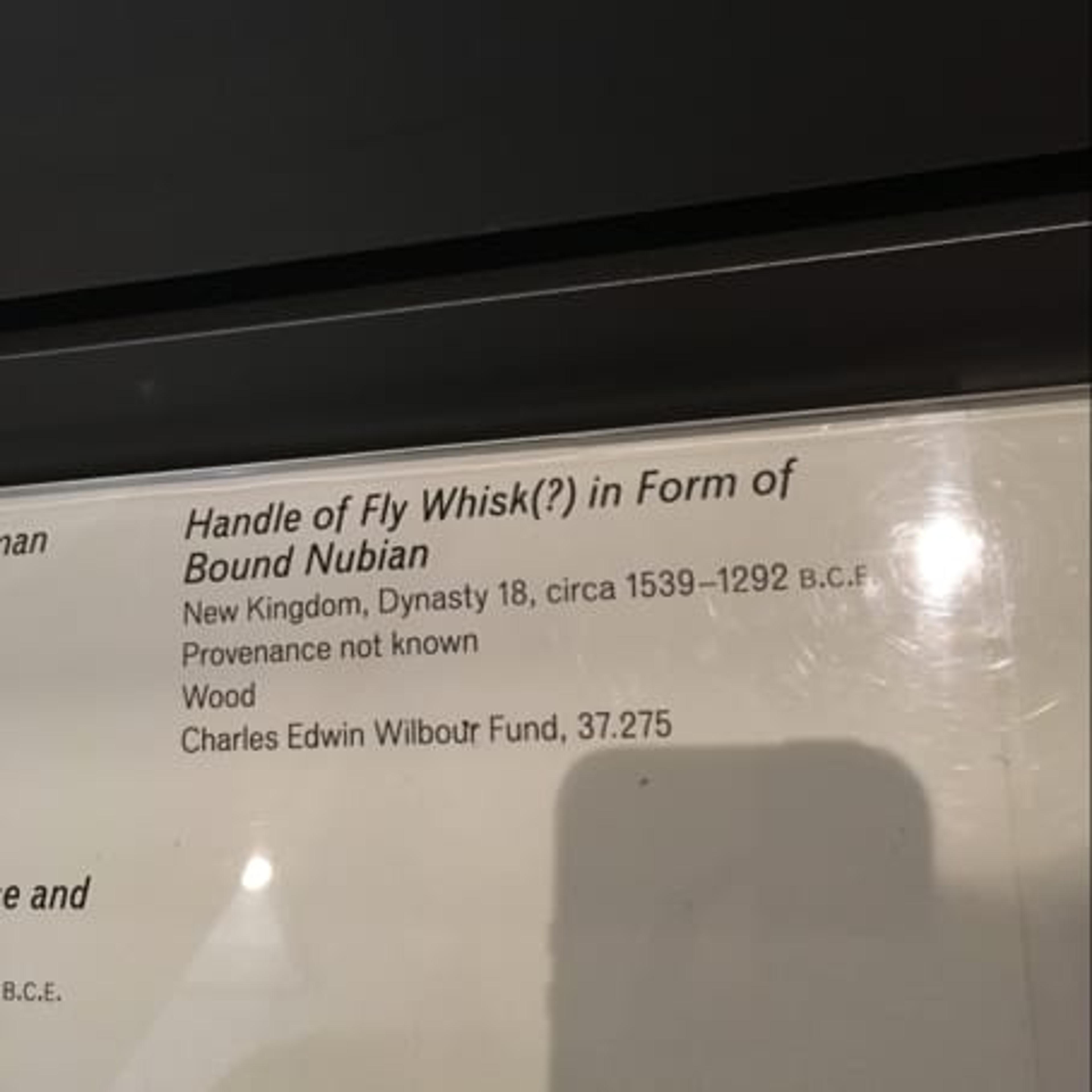 It functions kind of like a fly swatter. A fly whisk is not unlike a horse's tail. Ancient people used them to shoo flies away and keep them from biting.
Perplexing, What is this for? What is this image of?
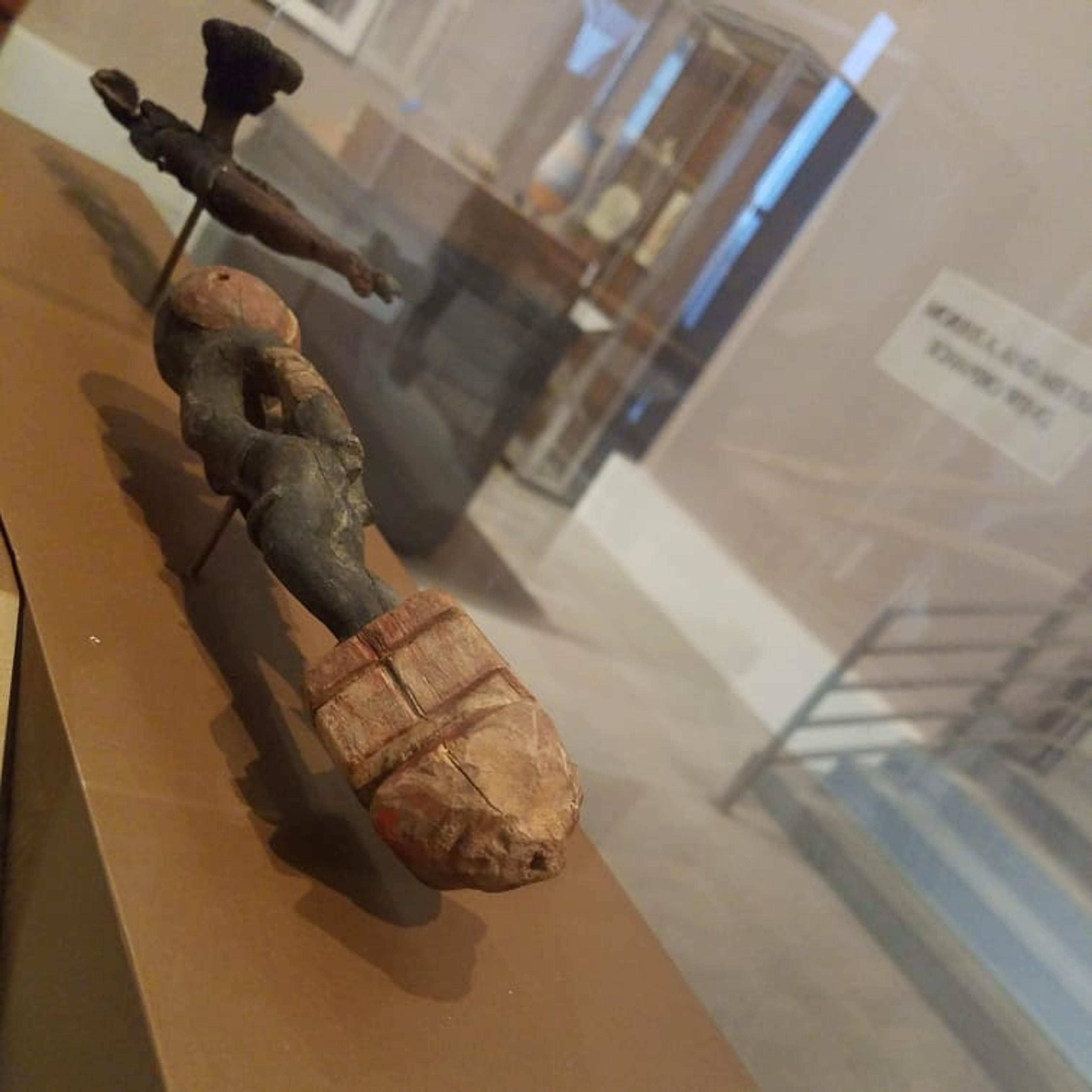 This is the handle to a fly whisk! It's in the shape of a bound prisoner from Nubia.
What's a fly whisk?
A fly whisk works much the same way as a horse tail, and is usually the same shape. Something like horse hair would come out the end and could be swished around to deter flies.
Have information?
Have information about an artwork? Contact us at