One of the Souls of Buto in the Pose of Rejoicing
ca. 664–525 B.C.E. or later


1 of 7
Object Label
The bau of Buto were other-than-human powers believed to reside in that ancient and sacred northern Egyptian city; they were usually associated with bau of the sacred southern city of Hierakonpolis. Images of them in the round normally have the pose of this figure, a three-dimensional hieroglyphic writing of the verb "to praise" or "to acclaim." They were used to adorn cult objects, on which they served to praise the deity of the cult.
Caption
One of the Souls of Buto in the Pose of Rejoicing, ca. 664–525 B.C.E. or later. Bronze, 6 5/16 x 4 7/16 x 4 5/16 in. (16 x 11.2 x 11 cm) mount (display dimensions): 8 1/2 x 5 x 5 in. (21.6 x 12.7 x 12.7 cm). Brooklyn Museum, Charles Edwin Wilbour Fund, 37.420E. (Photo: Brooklyn Museum)
Title
One of the Souls of Buto in the Pose of Rejoicing
Date
ca. 664–525 B.C.E. or later
Dynasty
Dynasty 26, or later
Period
Late Period
Geography
Reportedly from: Memphis, Egypt
Medium
Bronze
Classification
Dimensions
6 5/16 x 4 7/16 x 4 5/16 in. (16 x 11.2 x 11 cm) mount (display dimensions): 8 1/2 x 5 x 5 in. (21.6 x 12.7 x 12.7 cm)
Credit Line
Charles Edwin Wilbour Fund
Accession Number
37.420E
Frequent Art Questions
What does this mean?
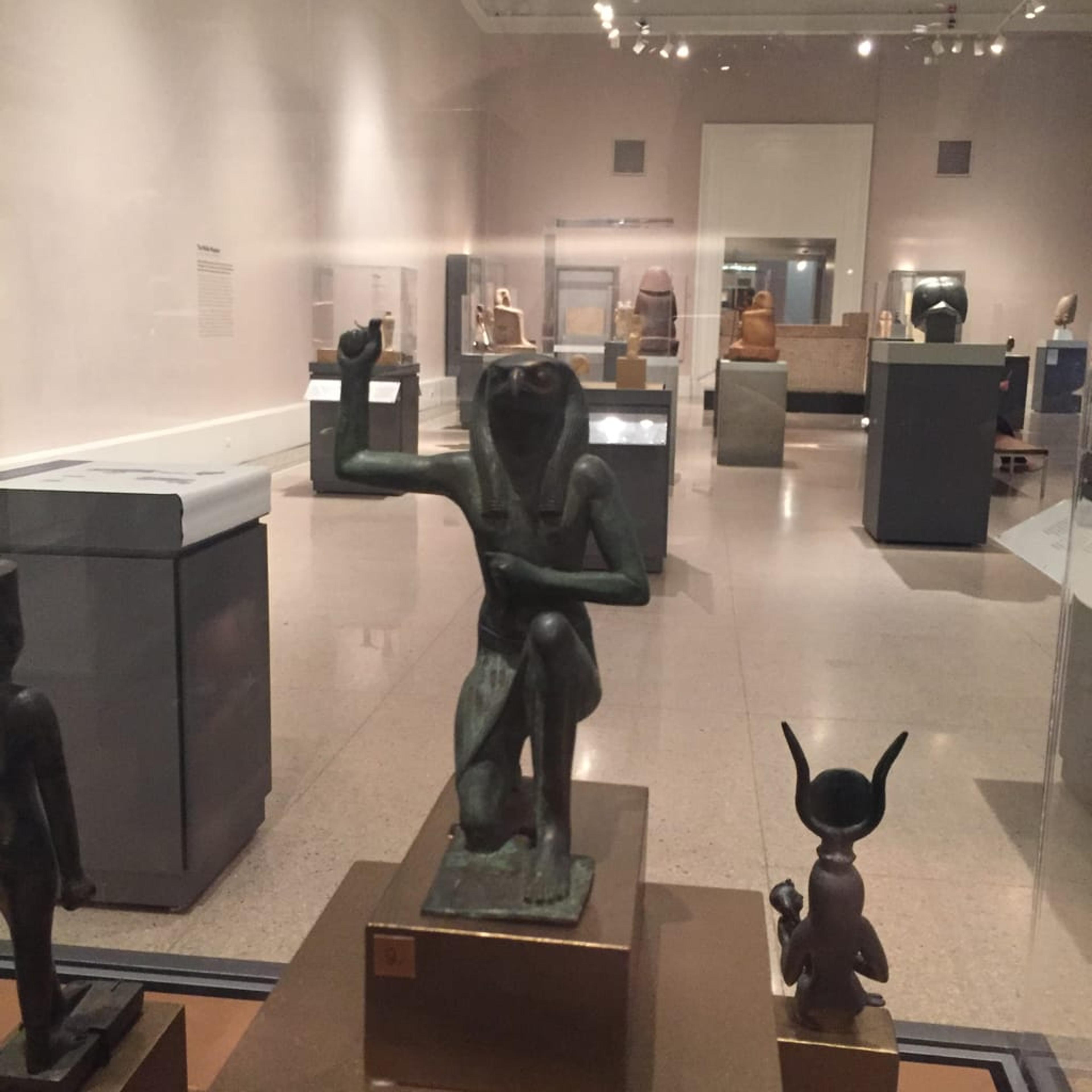 This pose is the same as the hieroglyph for rejoicing. The figure depicts one of the "Souls of Buto." Buto is a sacred city in norther Egypt.And why does it have an eagle face?It's actually a falcon. Most Egyptian deities were associated with an animal or animals and they were frequently depicted with a human body and the head of their animal. Many deities were associated with falcons, the ancient Egyptians held them in high regard.
Who is this?
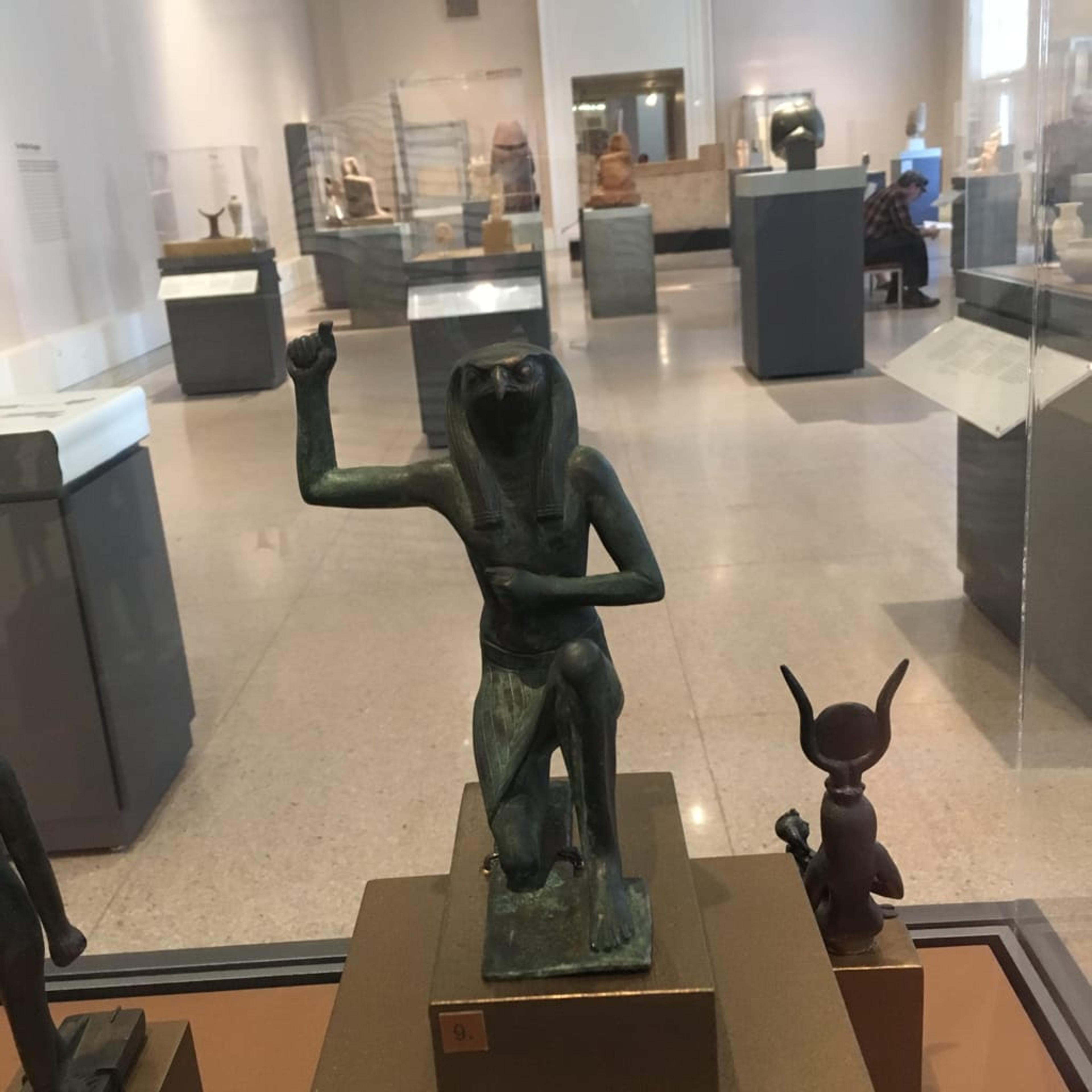 This statue depicts one of the "Souls of Buto" in a pose of rejoicing. His face is that of a falcon. A soul traveling to the afterlife you encounter the Souls of Buto on their journey.Ancient Egyptians held falcons in high regard and a number of deities were associated with them. Animal associations with deities were often expressed through the use of animal heads on human bodies.
Have information?
Have information about an artwork? Contact us at