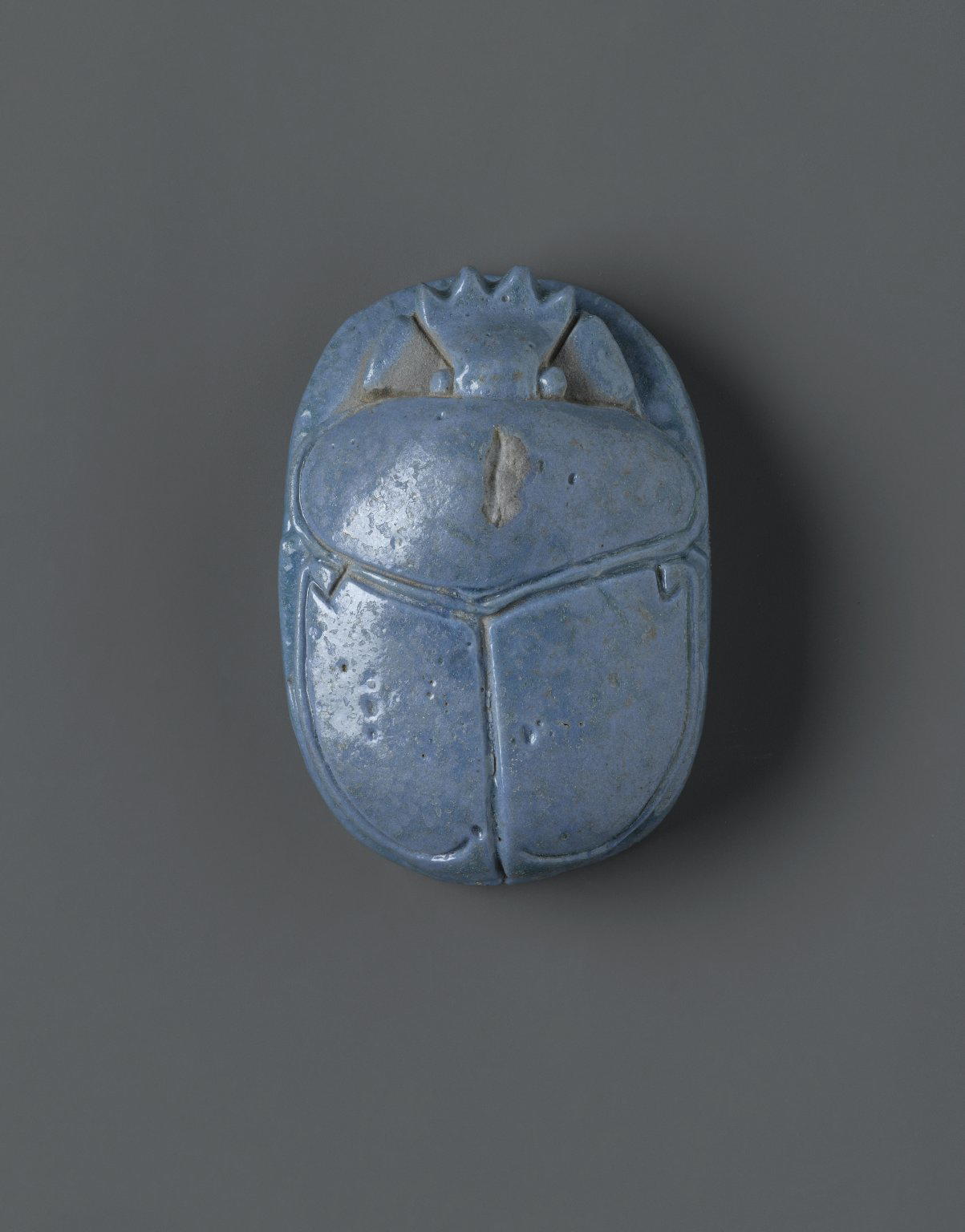
"Marriage Scarab" of Amunhotep III and Queen Tiye
ca. 1390–1353 B.C.E.


1 of 11
Object Label
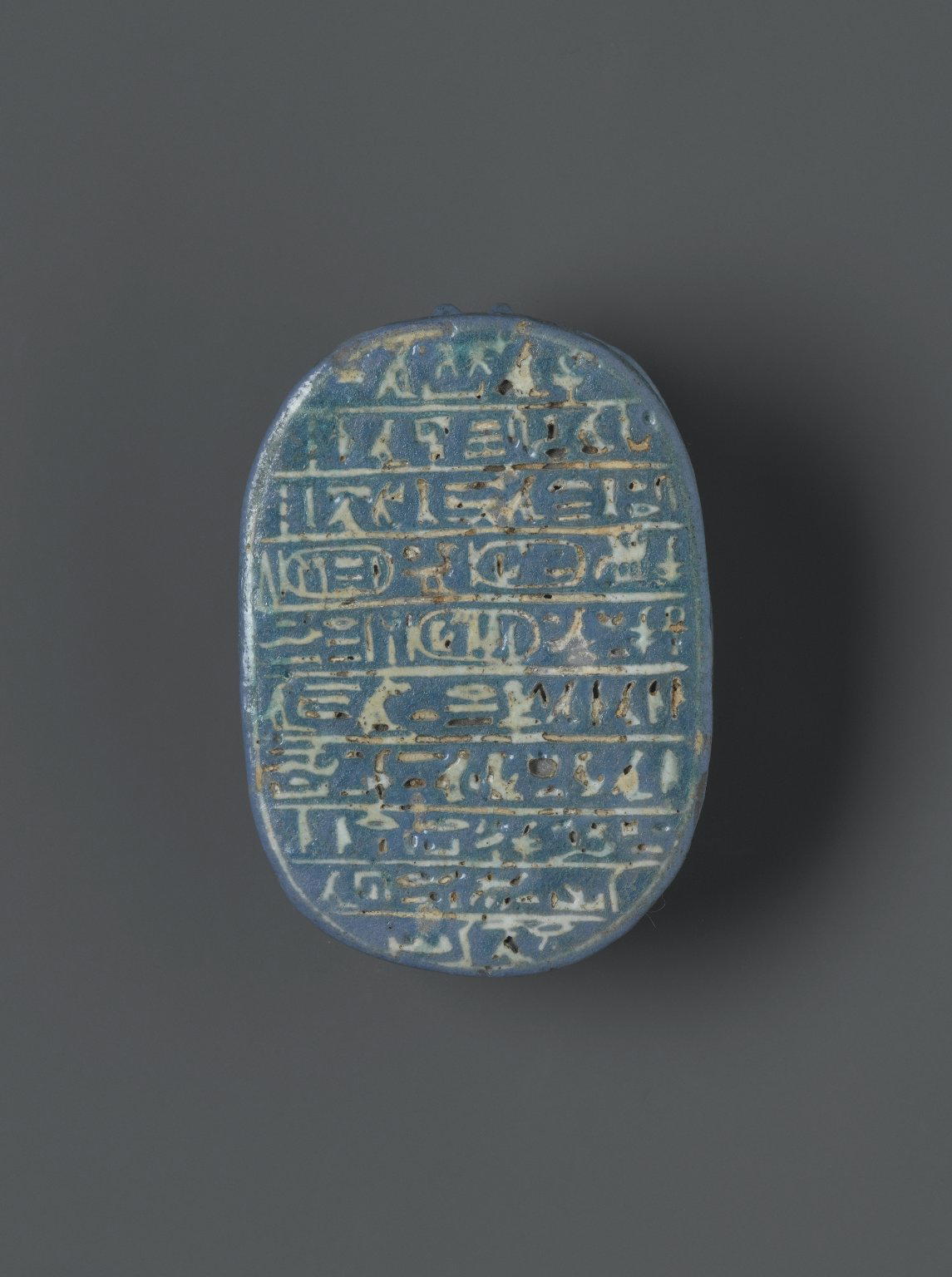
In the first eleven years of his reign, Amunhotep III issued more than two hundred large scarabs (beetle-shaped amulets) inscribed with descriptions of important events, such as a wild-cattle hunt or the building of an artificial lake. Of these commemorative scarabs, fifty-six list the king’s complete titles, the boundaries of the empire, and Queen Tiye’s title and parents’ names. This formal statement of Tiye’s lineage and her official link to Amunhotep III have led most Egyptologists to call these objects “marriage scarabs” even though they do not mention the royal union.
Caption
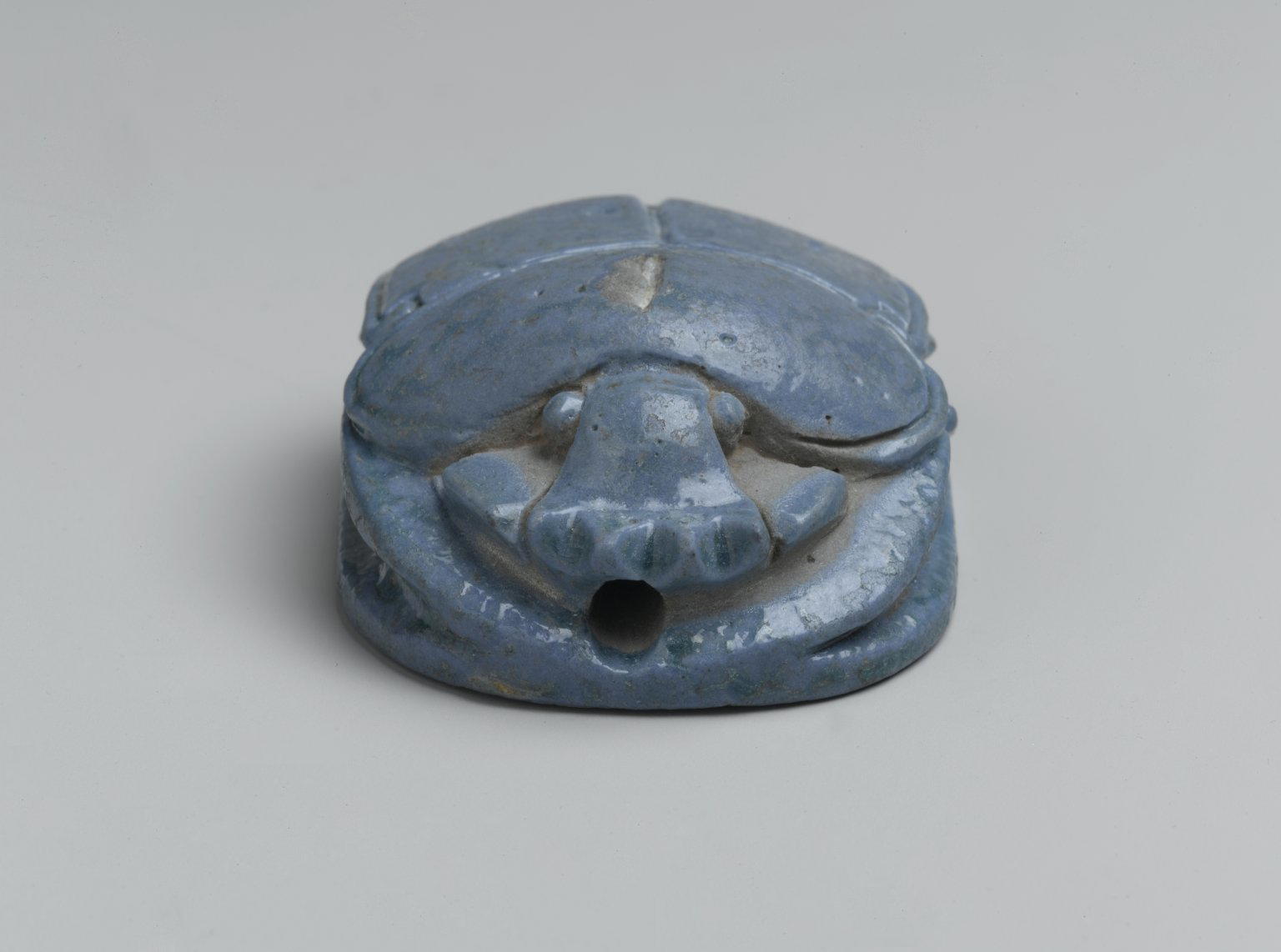
"Marriage Scarab" of Amunhotep III and Queen Tiye, ca. 1390–1353 B.C.E.. Faience, 1 1/8 x 1 15/16 x 2 3/4 in. (2.8 x 5 x 7 cm). Brooklyn Museum, Charles Edwin Wilbour Fund, 37.475E. (Photo: Brooklyn Museum)
Frequent Art Questions
What's this?
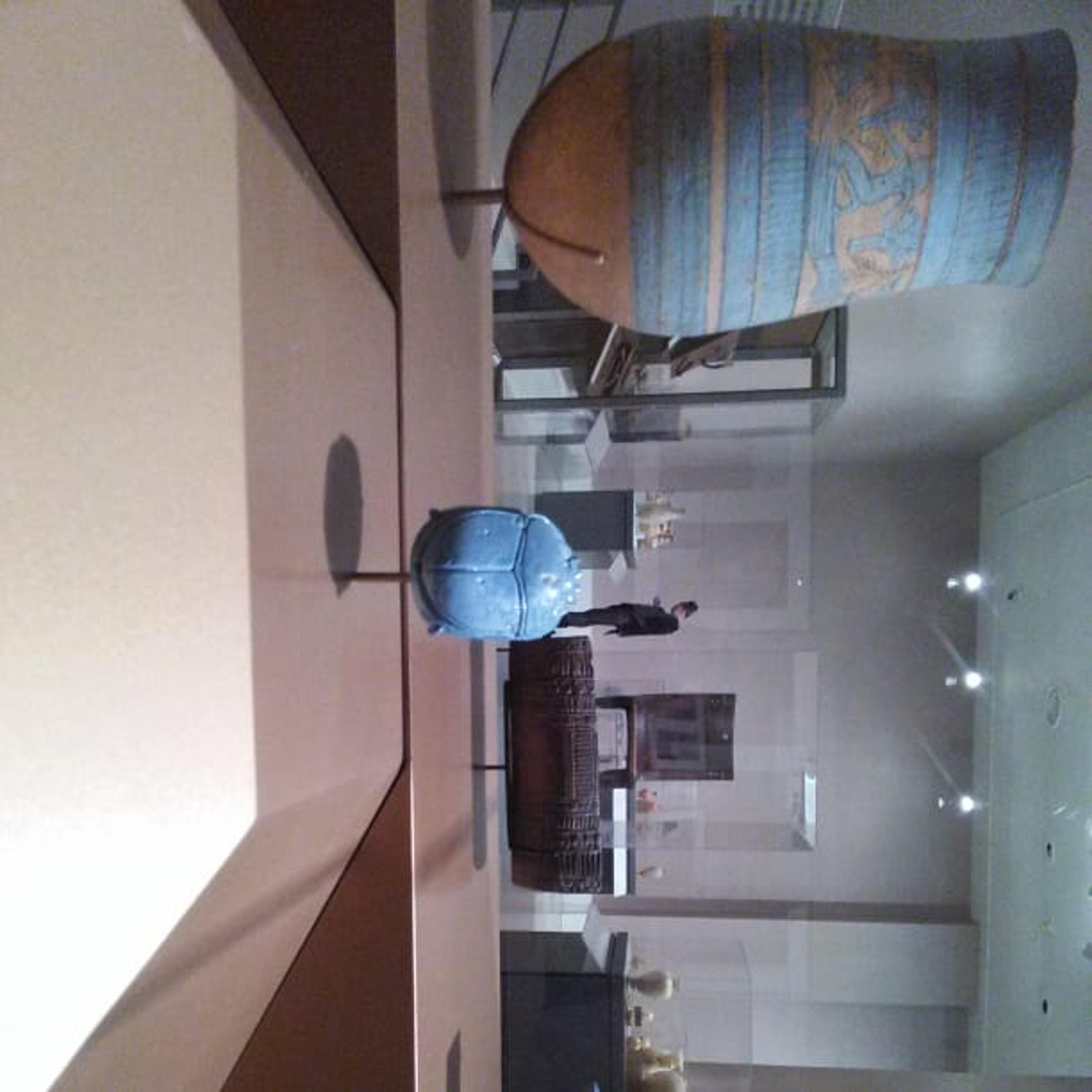 You may see many of these scarabs around the Egyptian galleries--This kind of beetle--the dung beetle--was highly symbolic to ancient Egyptians. It represented rebirth and renewal.The underside of this particular scarab has an inscription commemorating the marriage of King Amunhotep III who is depicted nearby and his Queen, Tiye.
Tell me more.
Scarabs represented, to the Egyptians, the cycle of the sun, rebirth, and the god Khepri. Just as scarabs rolled balls of dung filled with their eggs around the desert, the Egyptians believed that a similar beetle rolled the sun in the sky. Because of this symbolism, sculptures of scarab beetles became very popular for seals and inscriptions. This one commemorates the marriage of King Amunhotep III and Queen Tiye.
Have information?
Have information about an artwork? Contact us at