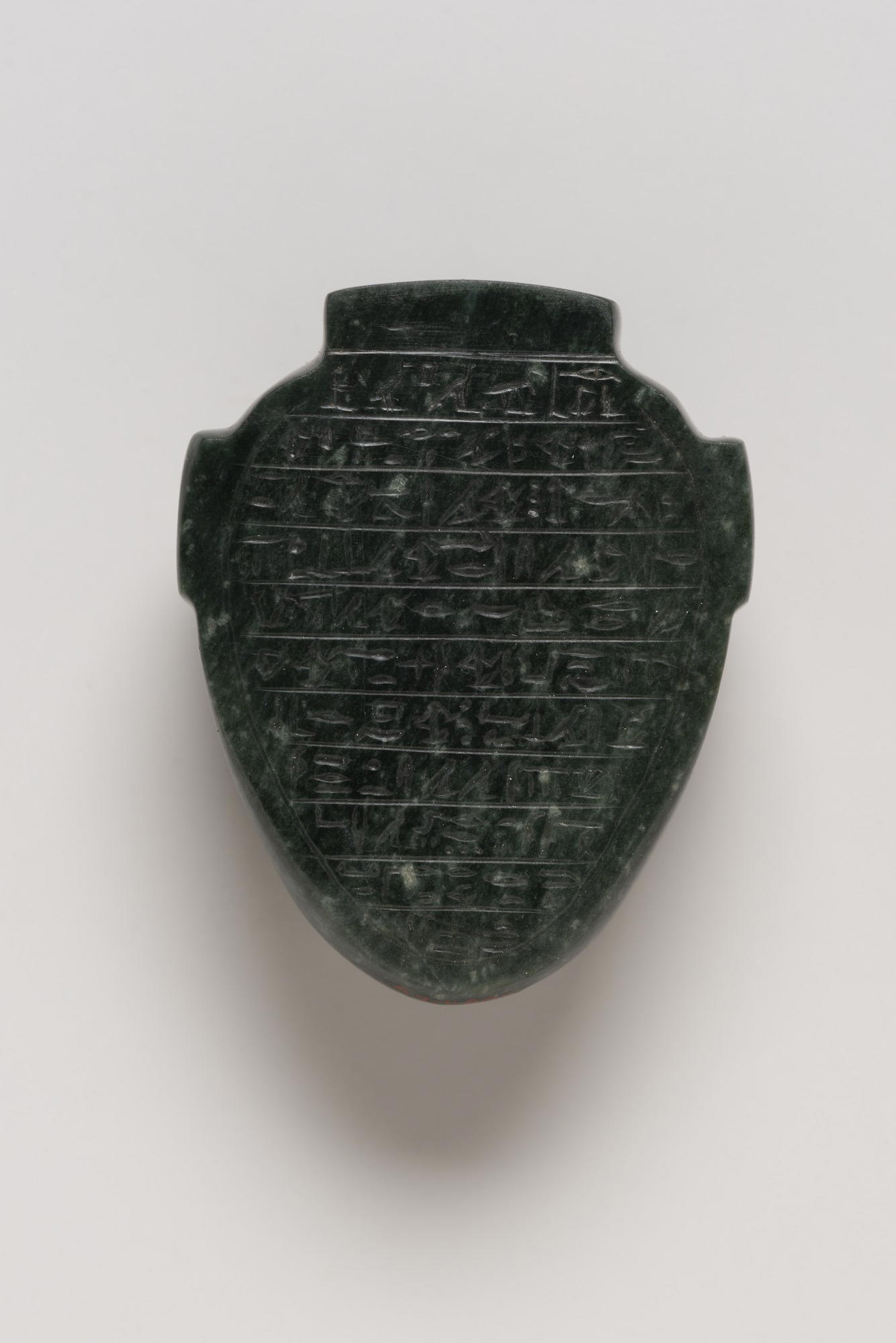
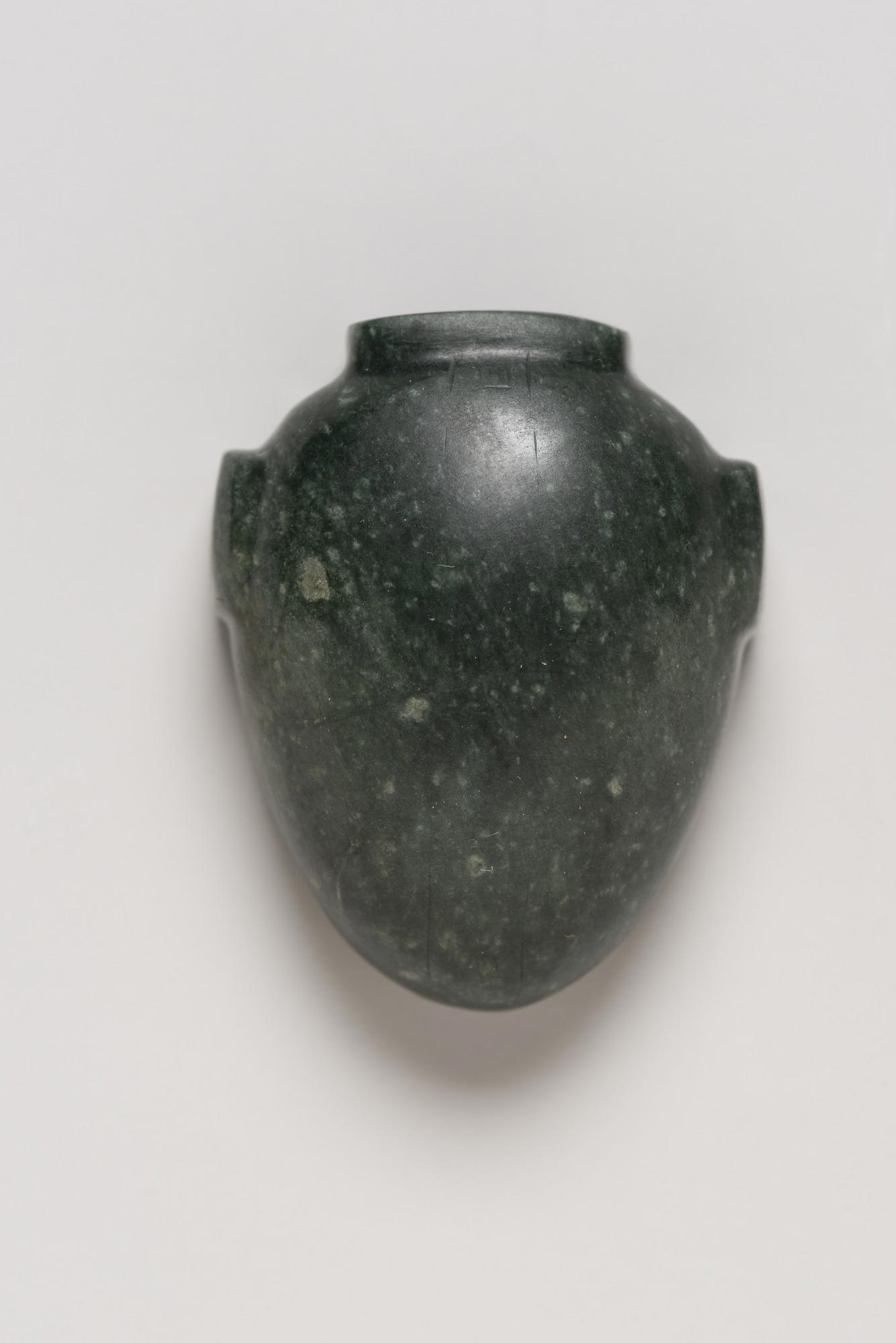
Heart Scarab of Bapu
ca. 1539–1075 B.C.E.

1 of 3
Object Label
Amulets
In the New Kingdom, amulets represented magic in miniature form.
At that time, the Egyptians frequently wore amulets proclaiming their devotion to the cult of major deities such as Thoth, god of wisdom, or Hathor, an ancient goddess associated with music and love. These charms were intended to provide protection from specific dangers. Amulets of birth-gods, for example, were believed to protect women during pregnancy and childbirth and to watch over a newborn in the first years of life.
In the Eighteenth Dynasty, certain amulets began to be placed within mummy bandages to guarantee life after death. The most common included wedjat-eyes, signifying the restoration of wholeness; tyt-amulets, emblems of the goddess Isis, who restored her dead husband Osiris to life; and flowers, traditional symbols of fertility. Beads inscribed with a person’s name ensured that the memory of the individual would survive throughout eternity.
So-called heart scarabs, known since the Thirteenth Dynasty, are frequently found on New Kingdom mummies. The Egyptians believed that a deceased person’s fate would be determined by weighing his or her heart against the “Feather of Truth” on a divine balance. Texts carved on heart scarabs prevented the deceased’s heart from revealing anything negative during the weighing ritual.
In the New Kingdom, amulets represented magic in miniature form.
At that time, the Egyptians frequently wore amulets proclaiming their devotion to the cult of major deities such as Thoth, god of wisdom, or Hathor, an ancient goddess associated with music and love. These charms were intended to provide protection from specific dangers. Amulets of birth-gods, for example, were believed to protect women during pregnancy and childbirth and to watch over a newborn in the first years of life.
In the Eighteenth Dynasty, certain amulets began to be placed within mummy bandages to guarantee life after death. The most common included wedjat-eyes, signifying the restoration of wholeness; tyt-amulets, emblems of the goddess Isis, who restored her dead husband Osiris to life; and flowers, traditional symbols of fertility. Beads inscribed with a person’s name ensured that the memory of the individual would survive throughout eternity.
So-called heart scarabs, known since the Thirteenth Dynasty, are frequently found on New Kingdom mummies. The Egyptians believed that a deceased person’s fate would be determined by weighing his or her heart against the “Feather of Truth” on a divine balance. Texts carved on heart scarabs prevented the deceased’s heart from revealing anything negative during the weighing ritual.
Caption
Heart Scarab of Bapu, ca. 1539–1075 B.C.E.. Jasper, 1 15/16 × 1 9/16 × 1 in. (4.9 × 4 × 2.5 cm). Brooklyn Museum, Charles Edwin Wilbour Fund, 37.480E. (Photo: Brooklyn Museum)
Frequent Art Questions
Do you know what this says?
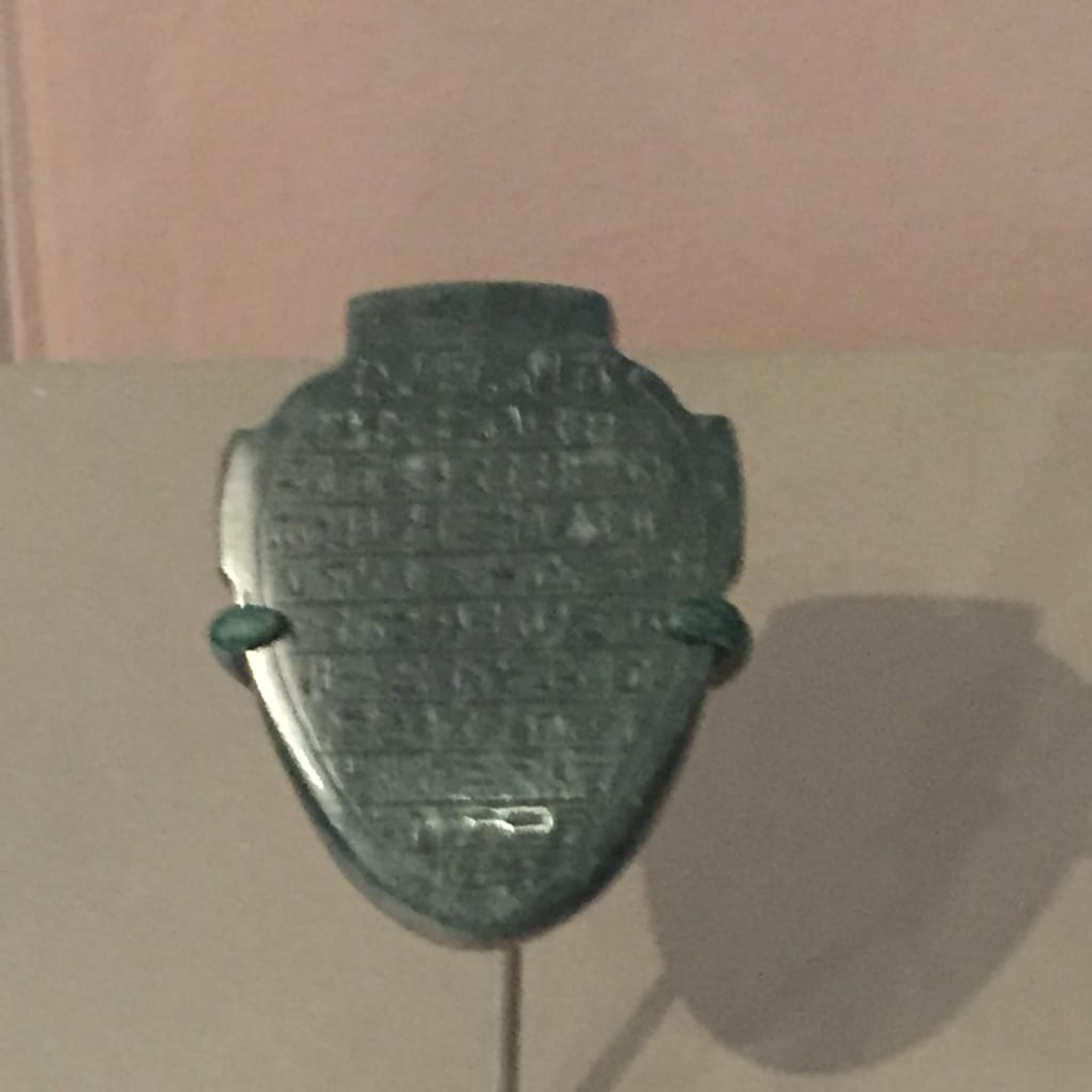 I don't have a full translation, but I can give you a general idea. Many inscriptions on objects like this were quite standardized.This heart scarab belonged to a person named Bapu. It would have been buried with his mummy to assist in his journey to the afterlife. Inscriptions on heart scarabs are related to judgement and resurrection.There was a fear that your heart might betray you to the gods, admitting that you had done wrong in your life and preventing you from gaining access to the afterlife. The scarab was basically a message to your heart.Wow I would have never expected that.
Have information?
Have information about an artwork? Contact us at