Cosmetic Container in Form of Recumbent Gazelle
ca. 1539–1292 B.C.E.


1 of 2
Object Label
Cosmetic Dishes
Like spoons, cosmetic dishes may have been used for mixing ointments in the home, or for ritual purposes in a temple, or both.
Many of the dishes have images that seem to refer to beliefs about life after death. Both the lotus and the fish, for example, were associated with rebirth. Other subjects, such as the oryx (a type of antelope), may allude to the desire to maintain universal order. Because the oryx lived in the mysterious desert—beyond the ordered realm of Egyptian civilization—a bound oryx represented victory over chaos.
Like spoons, cosmetic dishes may have been used for mixing ointments in the home, or for ritual purposes in a temple, or both.
Many of the dishes have images that seem to refer to beliefs about life after death. Both the lotus and the fish, for example, were associated with rebirth. Other subjects, such as the oryx (a type of antelope), may allude to the desire to maintain universal order. Because the oryx lived in the mysterious desert—beyond the ordered realm of Egyptian civilization—a bound oryx represented victory over chaos.
Caption
Cosmetic Container in Form of Recumbent Gazelle, ca. 1539–1292 B.C.E.. Wood, ivory, 2 9/16 × 2 1/2 × 7 11/16 in. (6.5 × 6.4 × 19.5 cm). Brooklyn Museum, Charles Edwin Wilbour Fund, 37.601E. (Photo: Brooklyn Museum)
Title
Cosmetic Container in Form of Recumbent Gazelle
Date
ca. 1539–1292 B.C.E.
Dynasty
Dynasty 18
Period
New Kingdom
Geography
Reportedly from: Saqqara, Egypt
Medium
Wood, ivory
Classification
Dimensions
2 9/16 × 2 1/2 × 7 11/16 in. (6.5 × 6.4 × 19.5 cm)
Credit Line
Charles Edwin Wilbour Fund
Accession Number
37.601E
Frequent Art Questions
Tell me more.
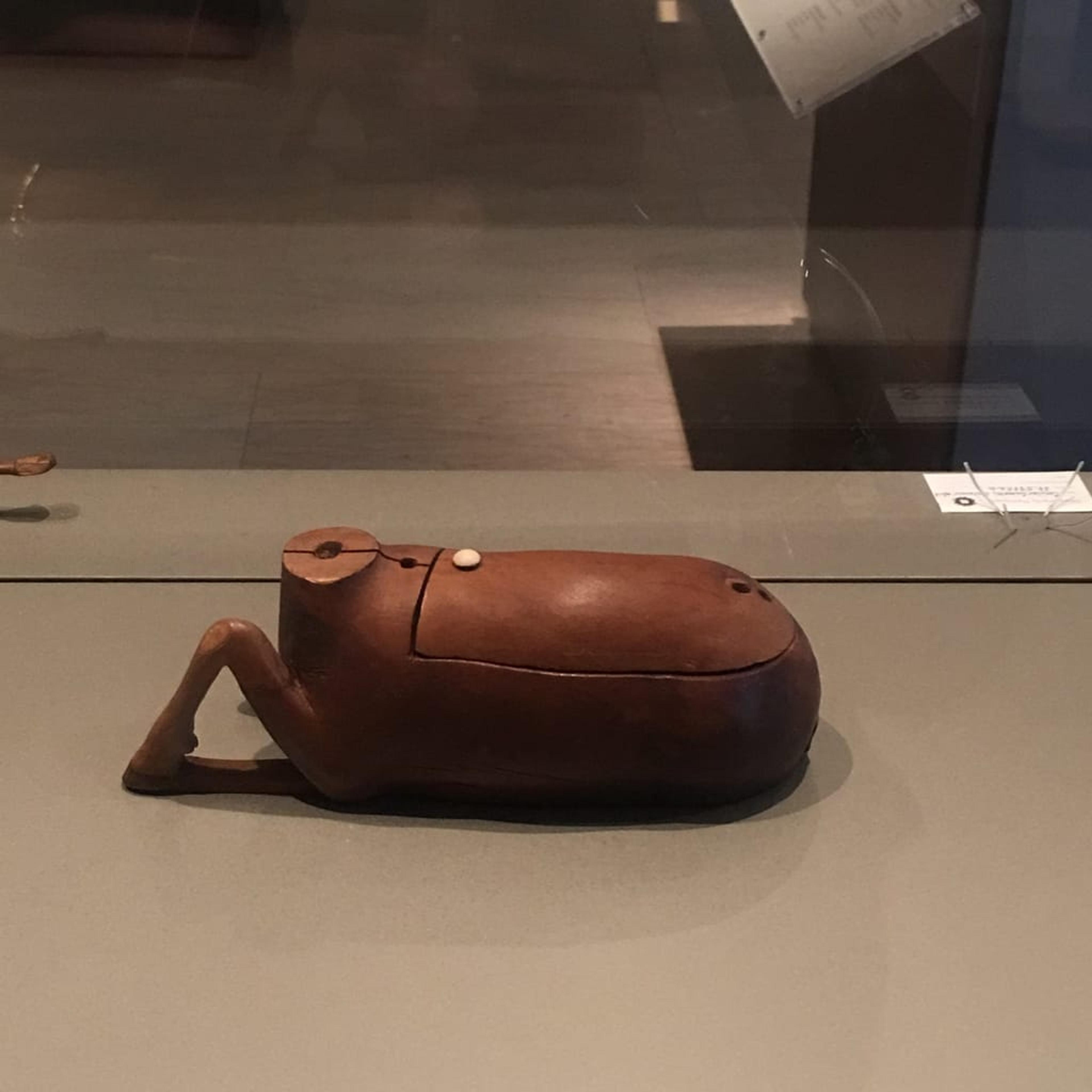 Cosmetic containers in the shape of animals, humans, flowers, and gods were quite common in ancient Egypt, and you'll see various examples of them throughout the ancient Egyptian galleries.A section of this gazelle’s back is removable to access the cavity for storing the actual material. It likely held powdered cosmetics, such as kohl, a black powder used to line the eyes!
Have information?
Have information about an artwork? Contact us at