Cosmetic Dish in the Form of a Fish


1 of 2
Object Label
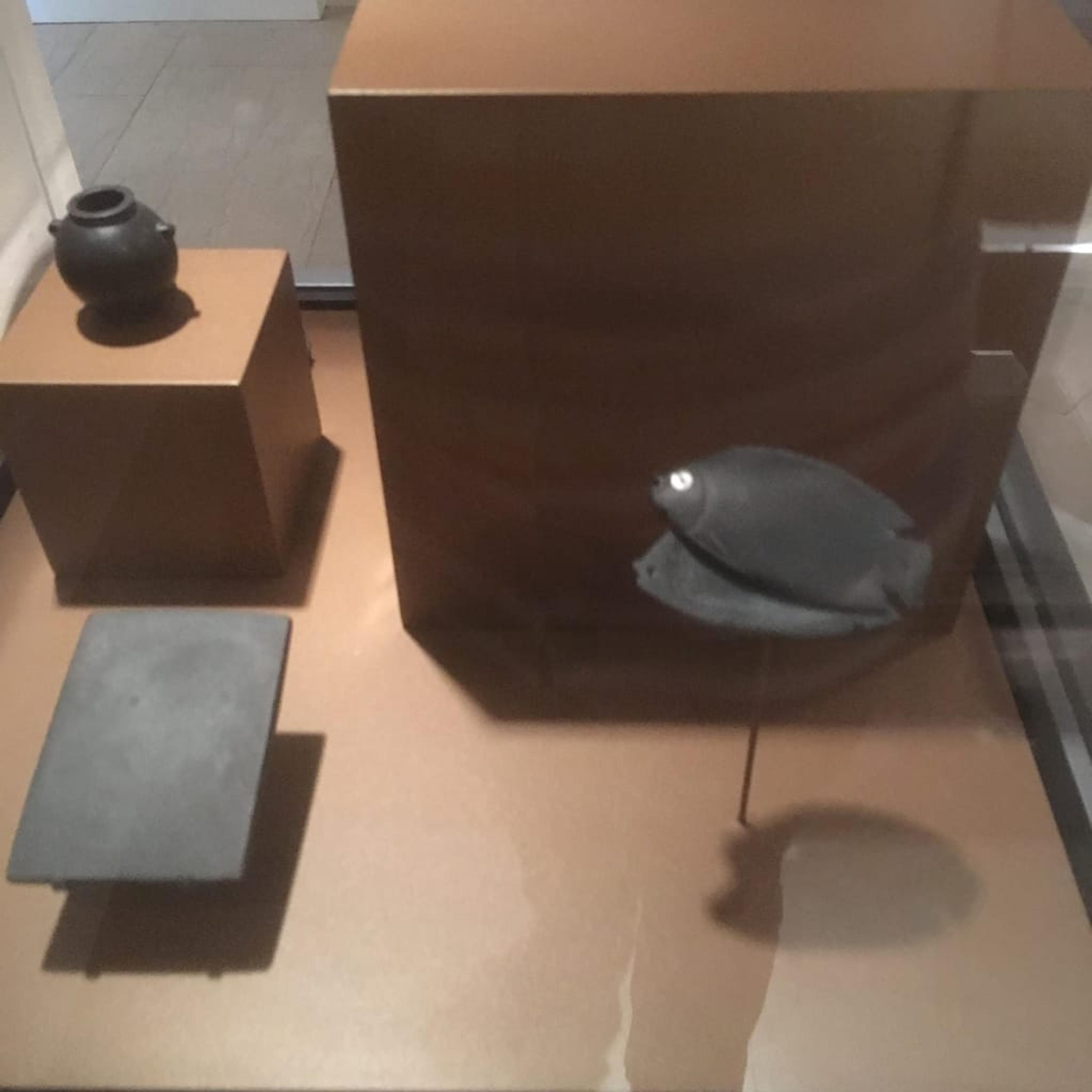
A container for cosmetics or possibly medical ointment, this covered dish represents a tilapia fish. The tilapia symbolized fertility and was believed to promote abundance on earth and a renewed life after death. This container’s lid swivels open at the tail.
Caption
Cosmetic Dish in the Form of a Fish, ca. 3000–2800 B.C.E.. Graywacke, inlay of shell and black paste, 3 1/4 x 1 3/4 in. (8.3 x 4.4 cm). Brooklyn Museum, Charles Edwin Wilbour Fund, 37.629Ea-b. (Photo: Brooklyn Museum)
Title
Cosmetic Dish in the Form of a Fish
Date
ca. 3000–2800 B.C.E.
Dynasty
Dynasty 1
Period
early Dynastic Period
Geography
Reportedly from: Saqqara, Egypt
Medium
Graywacke, inlay of shell and black paste
Classification
Dimensions
3 1/4 x 1 3/4 in. (8.3 x 4.4 cm)
Credit Line
Charles Edwin Wilbour Fund
Accession Number
37.629Ea-b
Frequent Art Questions
Were smaller palettes used more by ancient Egyptians than larger ones?
 I’m not sure of the statistics on palette sizes, but, like anything, larger, more decorative palettes reflect a greater expense and some likely only served symbolic purposes. Most palettes you'll see in the museum were used to grind pigment for eyepaints. The size and level of decoration was also likely a reflection of the status of the owner, in addition to utility!
Have information?
Have information about an artwork? Contact us at