Mirror
ca. 1478–1390 B.C.E.


1 of 10
Object Label
The hairstyle of the nude female figure on the handle of this mirror—thick braids surrounding the face—was popular in the middle of the Eighteenth Dynasty, allowing art historians to date the work.
Caption
Mirror, ca. 1478–1390 B.C.E.. Silver and copper alloy, 9 3/4 x diam. 5 1/2 in. (24.7 x 14 cm). Brooklyn Museum, Charles Edwin Wilbour Fund, 37.635E. (Photo: Brooklyn Museum)
Title
Mirror
Date
ca. 1478–1390 B.C.E.
Dynasty
Dynasty 18
Period
New Kingdom
Geography
Reportedly from: Aswan, Egypt
Medium
Silver and copper alloy
Classification
Dimensions
9 3/4 x diam. 5 1/2 in. (24.7 x 14 cm)
Credit Line
Charles Edwin Wilbour Fund
Accession Number
37.635E
Frequent Art Questions
Did mirrors in Ancient Egypt have a more reflective surface than this? Was there a layer that went on top?
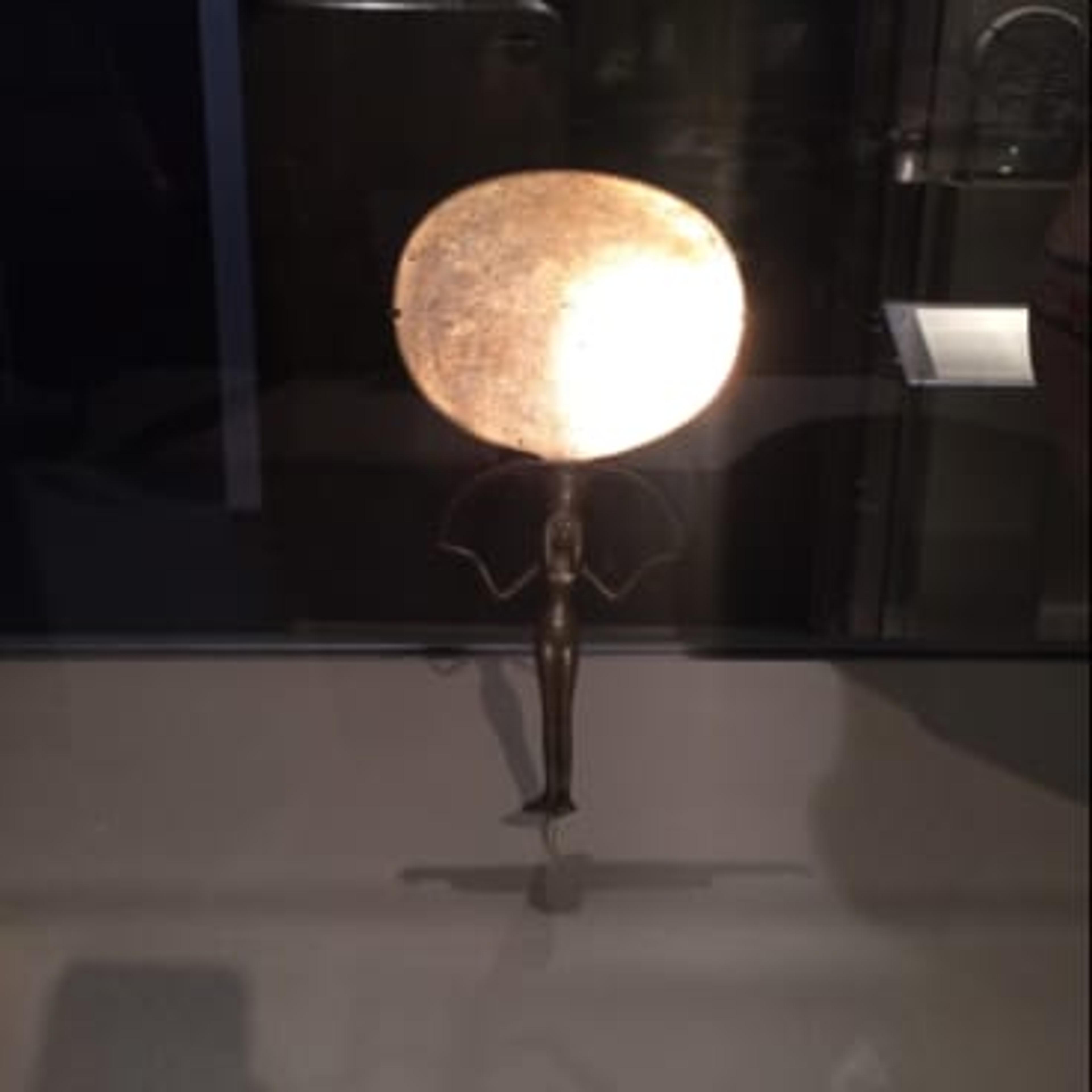 That's a great question. There would not have been another layer actually, it would just have been hammered and then buffed and buffed until the surface became reflective.
Do you know how shiny these mirrors were? Would one be able to see their reflection in it if it was polished?
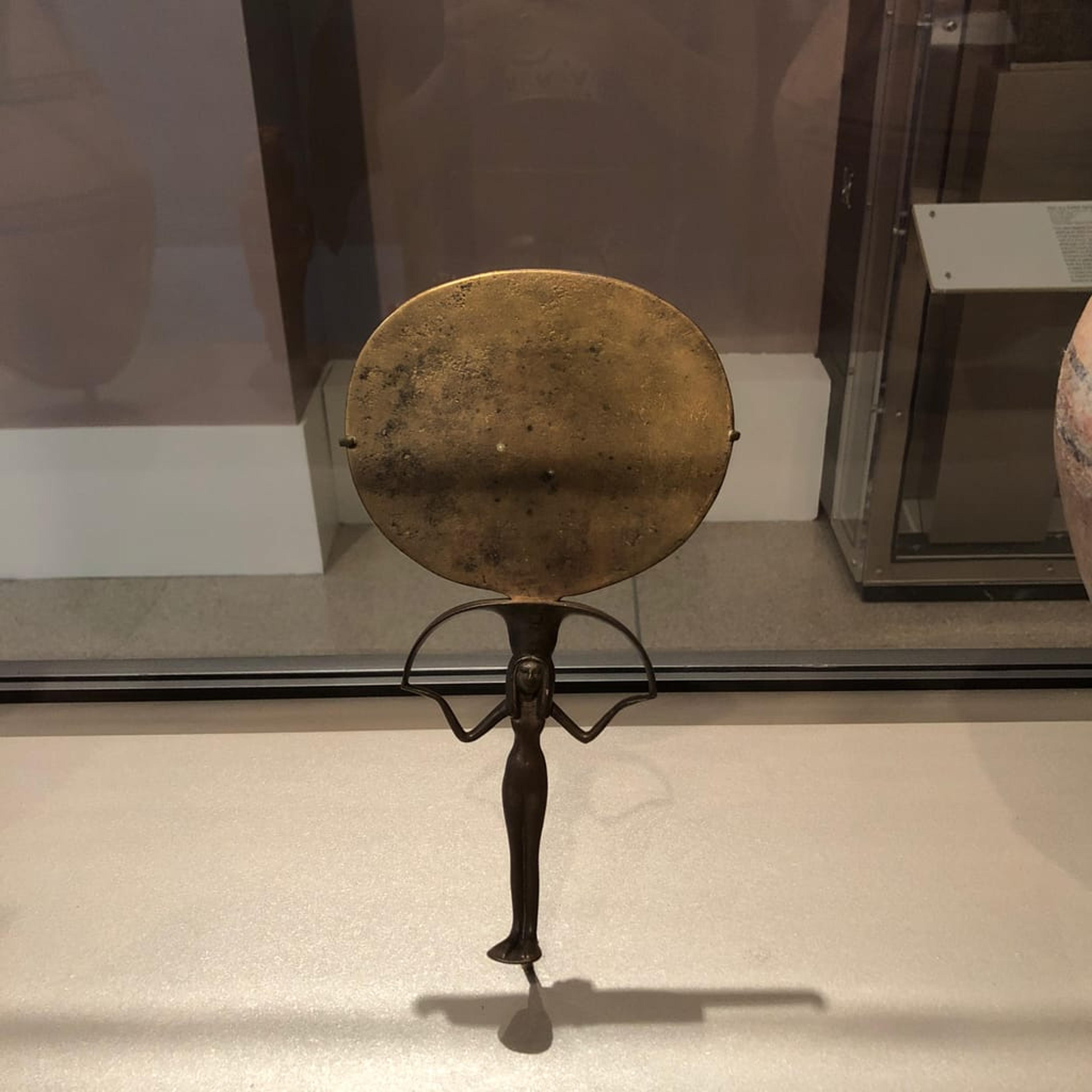 They would! We can tell from the quality of polished stone that the ancient Egyptians were adept at using abrasives to create exceptionally smooth surfaces.Metal just doesn't retain a polished surface the same way that diorite does.We also know that cosmetic application and hair dressing were important parts of Egyptian society that would have required being able to see one's self.
Have information?
Have information about an artwork? Contact us at