Bull's Head
664–332 B.C.E.


1 of 3
Object Label
Worship of individual bulls as gods was known from earliest times in Egypt. Bull mummies were buried with early kings. The king was associated with the bull because of its strength and fertility.
Specific bulls, chosen as sacred incarnations of gods, had particular markings. This dark bull with a white mark on its forehead is the Apis bull, an intermediary with the god Ptah.
Specific bulls, chosen as sacred incarnations of gods, had particular markings. This dark bull with a white mark on its forehead is the Apis bull, an intermediary with the god Ptah.
Caption
Bull's Head, 664–332 B.C.E.. Wood, glass, bone (bovine?), 11 3/4 x 15 x 14 in. (29.8 x 38.1 x 35.6 cm). Brooklyn Museum, Charles Edwin Wilbour Fund, 37.1532E. (Photo: Brooklyn Museum)
Gallery
Not on view
Gallery
Not on view
Title
Bull's Head
Date
664–332 B.C.E.
Dynasty
Dynasty 26 to Dynasty 30
Period
Late Period
Geography
Reportedly from: Giza, Egypt
Medium
Wood, glass, bone (bovine?)
Classification
Dimensions
11 3/4 x 15 x 14 in. (29.8 x 38.1 x 35.6 cm)
Credit Line
Charles Edwin Wilbour Fund
Accession Number
37.1532E
Frequent Art Questions
Where is the glass?
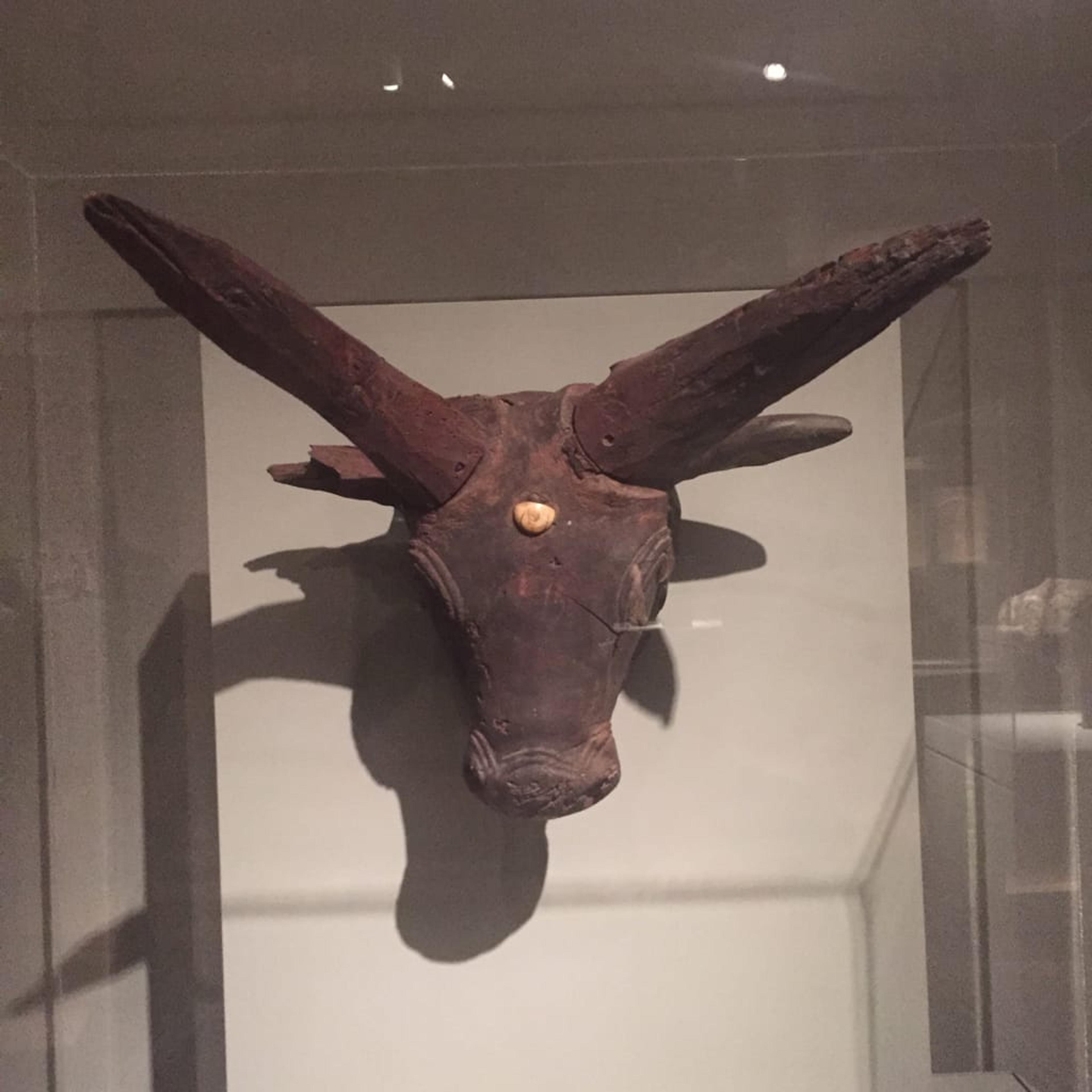 As to the glass on the bull's head, there are residual amounts of glass in the eyes, which would have originally been glass inlays.Interesting. I didn’t know they made glass that far back.Yes! The earliest glass was made in the Near East. The Egyptians began producing glass (using techniques learned from their neighbors) in the New Kingdom period.
Have information?
Have information about an artwork? Contact us at