Canopic Jar with Lid in the Form of a Human Head
ca.1539–1353 B.C.E.
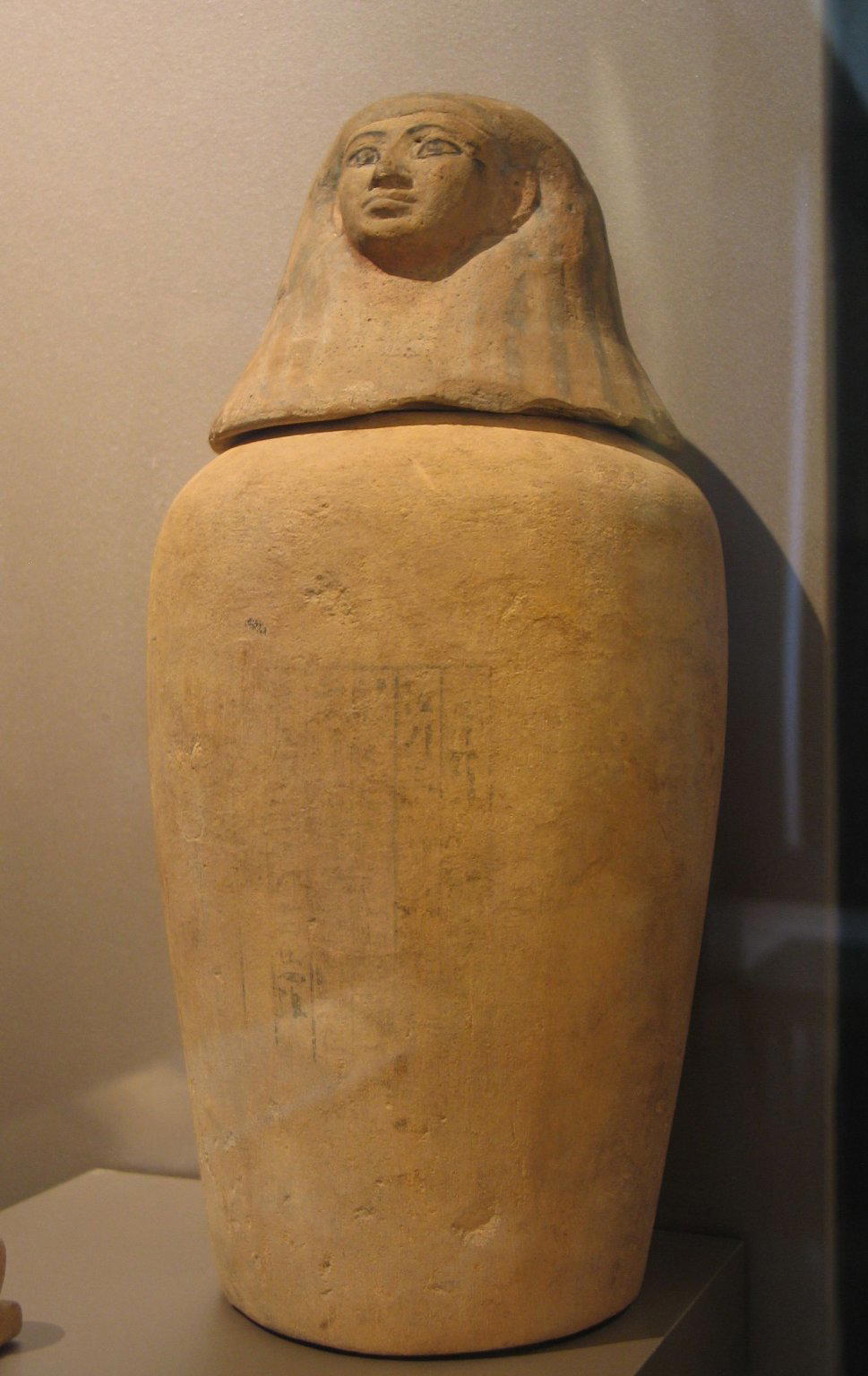
Brooklyn Museum photograph
Object Label
Canopic Jars
The practice of mummifying human remains led to the development of a new kind of jar.
During the mummification process, the liver, stomach, intestines, and lungs had to be removed to allow the corpse’s interior to dry. In the Fourth Dynasty, the Egyptians began storing these vital organs in four separate vessels, called canopic jars, and burying them with the mummy. Eighteenth Dynasty craftsmen started making canopic jar lids representing the four “Sons of Horus”—deities specifically charged with defending the organs. The human-headed god Imsety protected the liver.
The practice of mummifying human remains led to the development of a new kind of jar.
During the mummification process, the liver, stomach, intestines, and lungs had to be removed to allow the corpse’s interior to dry. In the Fourth Dynasty, the Egyptians began storing these vital organs in four separate vessels, called canopic jars, and burying them with the mummy. Eighteenth Dynasty craftsmen started making canopic jar lids representing the four “Sons of Horus”—deities specifically charged with defending the organs. The human-headed god Imsety protected the liver.
Caption
Canopic Jar with Lid in the Form of a Human Head, ca.1539–1353 B.C.E.. Limestone, clay, pigment, Other (A): 10 1/4 x 4 5/16 in. (26.1 x 11 cm) Other (B): 5 7/16 x 3 1/8 in. (13.8 x 8 cm). Brooklyn Museum, Charles Edwin Wilbour Fund, 37.1733Ea-b. (Photo: Brooklyn Museum)
Title
Canopic Jar with Lid in the Form of a Human Head
Date
ca.1539–1353 B.C.E.
Dynasty
Dynasty 18
Period
New Kingdom
Geography
Place made: Egypt
Medium
Limestone, clay, pigment
Classification
Dimensions
Other (A): 10 1/4 x 4 5/16 in. (26.1 x 11 cm) Other (B): 5 7/16 x 3 1/8 in. (13.8 x 8 cm)
Credit Line
Charles Edwin Wilbour Fund
Accession Number
37.1733Ea-b
Frequent Art Questions
What organs are put in the Canopic jars?
The Canopic jars usually contained the liver, intestines, lungs, and stomach. The ancient Egyptians believed that these organs would be needed in the afterlife. The jars protected them so the deceased could bring them on their journey to the Afterlife.
Have information?
Have information about an artwork? Contact us at