Storage Vessel with Simple Incised Decoration
ca. 1539–1425 B.C.E.


1 of 2
Object Label
Pottery Manufacture
Available materials, construction technique, and even social status all played a role in the manufacture of pottery.
Most ancient Egyptian towns had at least one skilled potter who served the entire community. Palaces, estates, and temples employed dozens of craftsmen to fashion luxury and ritual wares.
Potters used two principal materials: alluvial silt (soil deposited by the floodwaters of the Nile) and soft desert shale called marl. Silt contains iron oxides and fires red; marl, rich in calcium carbonate, fires to a buff color. To make both clays more workable, potters added straw, crushed stone, or pulverized pottery.
Potters constructed vessels by hand or on a wheel. Hand building involved shaping the clay manually and with simple tools. To create vessels on a wheel, artisans rotated the clay rapidly on a low, flat turntable and let centrifugal force pull it into shape. Spiral marks, evident on several examples in this case, indicate wheel manufacture.
Available materials, construction technique, and even social status all played a role in the manufacture of pottery.
Most ancient Egyptian towns had at least one skilled potter who served the entire community. Palaces, estates, and temples employed dozens of craftsmen to fashion luxury and ritual wares.
Potters used two principal materials: alluvial silt (soil deposited by the floodwaters of the Nile) and soft desert shale called marl. Silt contains iron oxides and fires red; marl, rich in calcium carbonate, fires to a buff color. To make both clays more workable, potters added straw, crushed stone, or pulverized pottery.
Potters constructed vessels by hand or on a wheel. Hand building involved shaping the clay manually and with simple tools. To create vessels on a wheel, artisans rotated the clay rapidly on a low, flat turntable and let centrifugal force pull it into shape. Spiral marks, evident on several examples in this case, indicate wheel manufacture.
Caption
Storage Vessel with Simple Incised Decoration, ca. 1539–1425 B.C.E.. Clay, 19 15/16 x Diam. 8 9/16 in. (50.6 x 21.7 cm). Brooklyn Museum, Charles Edwin Wilbour Fund, 07.447.444. (Photo: Brooklyn Museum)
Title
Storage Vessel with Simple Incised Decoration
Date
ca. 1539–1425 B.C.E.
Dynasty
Dynasty 18
Period
New Kingdom
Geography
Place excavated: Kelabieh, Egypt
Medium
Clay
Classification
Dimensions
19 15/16 x Diam. 8 9/16 in. (50.6 x 21.7 cm)
Credit Line
Charles Edwin Wilbour Fund
Accession Number
07.447.444
Frequent Art Questions
How did these vessels with pointed bottoms stay upright in ancient Egypt?
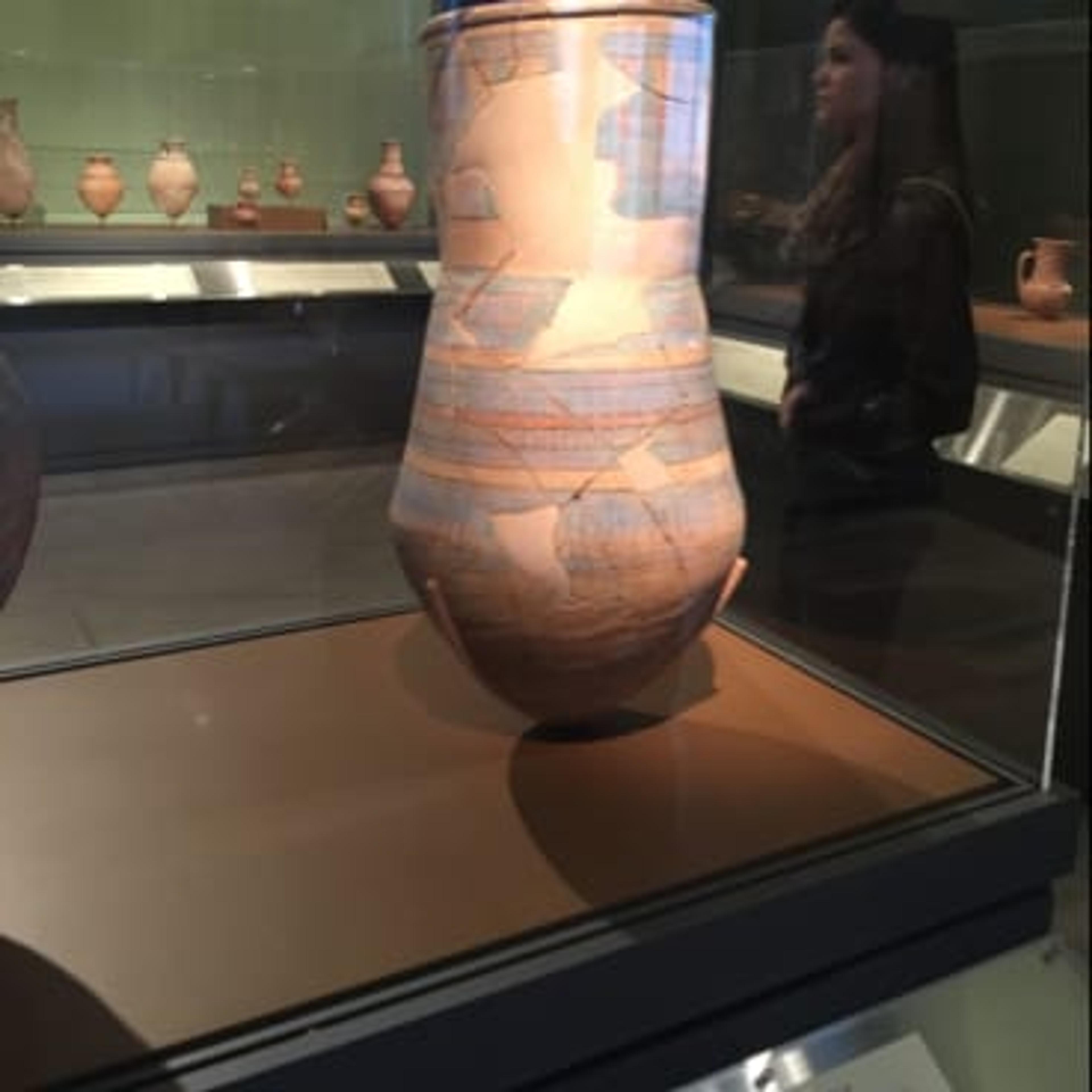 We get that question often. Vessels like this one may have stood in specially designed racks with openings to hold those pointed bottoms. They also may have been placed in holes dug into earth floors, or simply have been leaned against walls.You'll notice the color blue on many objects in this gallery. For the ancient Egyptians, blue symbolized water, necessary for all forms of life, and especially crucial in a desert climate!
Can you explain why so many of the Egyptian storage vessels have rounded bottoms, as opposed to flat ones?
Sure! The rounded bottoms could be stored in several different ways. Many pots like this would be set into stands that would help them to sit on flat ground. In other cases, they could be placed in a hole in a dirt or sand floor, which the more conical bottom would enable! They could also be leant against walls.Great! Thank you!
Have information?
Have information about an artwork? Contact us at