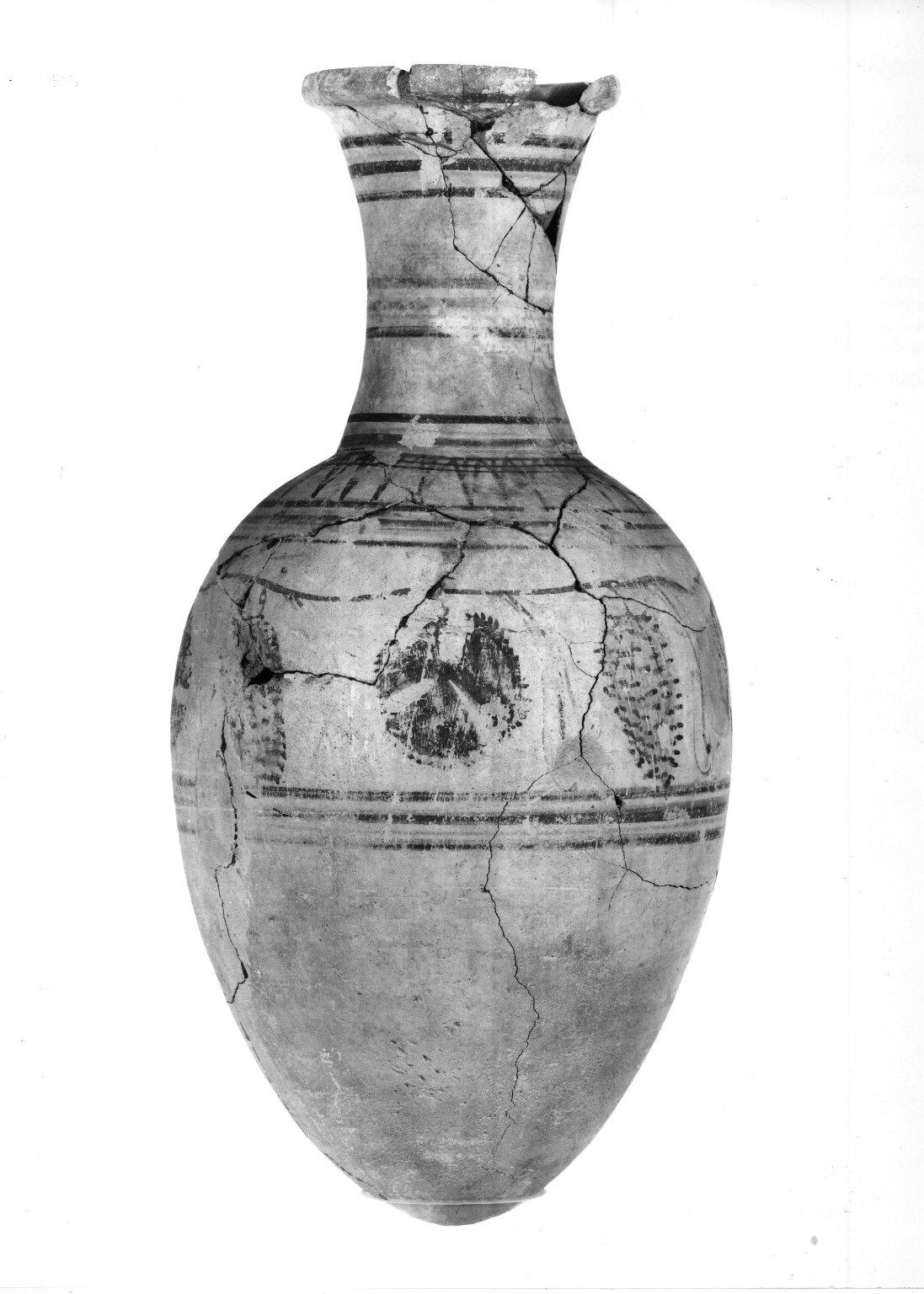
Wine Jar Showing Grapevine
ca. 1479–1425 B.C.E.

1 of 2
Object Label
Vessels with Blue-Painted Designs
The most innovative pottery of the Eighteenth Dynasty—so-called bluepainted ware—began under Thutmose III.
The pastel pigment was made from groundup blue frit, a mixture of cobalt and alum. Initially, potters relied on blue paint to accentuate small details, such as the grape cluster hanging from a vine on the wine jar in this case. Over time, though, artists began to use blue paint for more complex designs and figures.
The most innovative pottery of the Eighteenth Dynasty—so-called bluepainted ware—began under Thutmose III.
The pastel pigment was made from groundup blue frit, a mixture of cobalt and alum. Initially, potters relied on blue paint to accentuate small details, such as the grape cluster hanging from a vine on the wine jar in this case. Over time, though, artists began to use blue paint for more complex designs and figures.
Caption
Wine Jar Showing Grapevine, ca. 1479–1425 B.C.E.. Clay, pigment, 18 1/4 x Diam. 8 3/4 in. (46.3 x 22.2 cm). Brooklyn Museum, Charles Edwin Wilbour Fund, 07.447.447. (Photo: Brooklyn Museum)
Title
Wine Jar Showing Grapevine
Date
ca. 1479–1425 B.C.E.
Dynasty
Dynasty 18
Period
New Kingdom
Geography
Place excavated: Esna, Egypt
Medium
Clay, pigment
Classification
Dimensions
18 1/4 x Diam. 8 3/4 in. (46.3 x 22.2 cm)
Credit Line
Charles Edwin Wilbour Fund
Accession Number
07.447.447
Have information?
Have information about an artwork? Contact us at