Egyptian Imitation of Western Asiatic Oil Bottle
ca. 1539–1390 B.C.E.


1 of 2
Object Label
Pottery Decoration
After a pottery vessel had dried to a leathery consistency, it was ready to be decorated and fired.
The simplest technique was to apply a layer of clay, paint, and water—called slip—on the pot’s drab exterior. Other methods included incising designs with pointed objects, polishing the surface with a cloth, or using a stone to burnish it, creating an attractive sheen.
Painted decorations appear on pottery throughout the Eighteenth Dynasty. Early designs included thin lines and long pendant triangles. Around the time of Thutmose III, artists invented a pastel blue paint that eventually dominated pottery decoration. A rare type of pot made exclusively for tombs was painted to reproduce the appearance of stones such as breccia.
After decorating the vessel, the potter placed it in a kiln for firing. Potters wrapped cords around large unfired vessels to prevent them from collapsing. These ropes burned away during firing, but traces of them remain on the sides of some pots.
After a pottery vessel had dried to a leathery consistency, it was ready to be decorated and fired.
The simplest technique was to apply a layer of clay, paint, and water—called slip—on the pot’s drab exterior. Other methods included incising designs with pointed objects, polishing the surface with a cloth, or using a stone to burnish it, creating an attractive sheen.
Painted decorations appear on pottery throughout the Eighteenth Dynasty. Early designs included thin lines and long pendant triangles. Around the time of Thutmose III, artists invented a pastel blue paint that eventually dominated pottery decoration. A rare type of pot made exclusively for tombs was painted to reproduce the appearance of stones such as breccia.
After decorating the vessel, the potter placed it in a kiln for firing. Potters wrapped cords around large unfired vessels to prevent them from collapsing. These ropes burned away during firing, but traces of them remain on the sides of some pots.
Caption
Egyptian Imitation of Western Asiatic Oil Bottle, ca. 1539–1390 B.C.E.. Clay, 12 5/8 x Diam. of foot 2 7/16 in. (32 x 6.2 cm). Brooklyn Museum, Charles Edwin Wilbour Fund, 07.447.459. (Photo: Brooklyn Museum)
Title
Egyptian Imitation of Western Asiatic Oil Bottle
Date
ca. 1539–1390 B.C.E.
Dynasty
Dynasty 18
Period
New Kingdom
Medium
Clay
Classification
Dimensions
12 5/8 x Diam. of foot 2 7/16 in. (32 x 6.2 cm)
Credit Line
Charles Edwin Wilbour Fund
Accession Number
07.447.459
Frequent Art Questions
Are all 3 of these bottles slipped? Only the one on the right says so but they have similar textures.
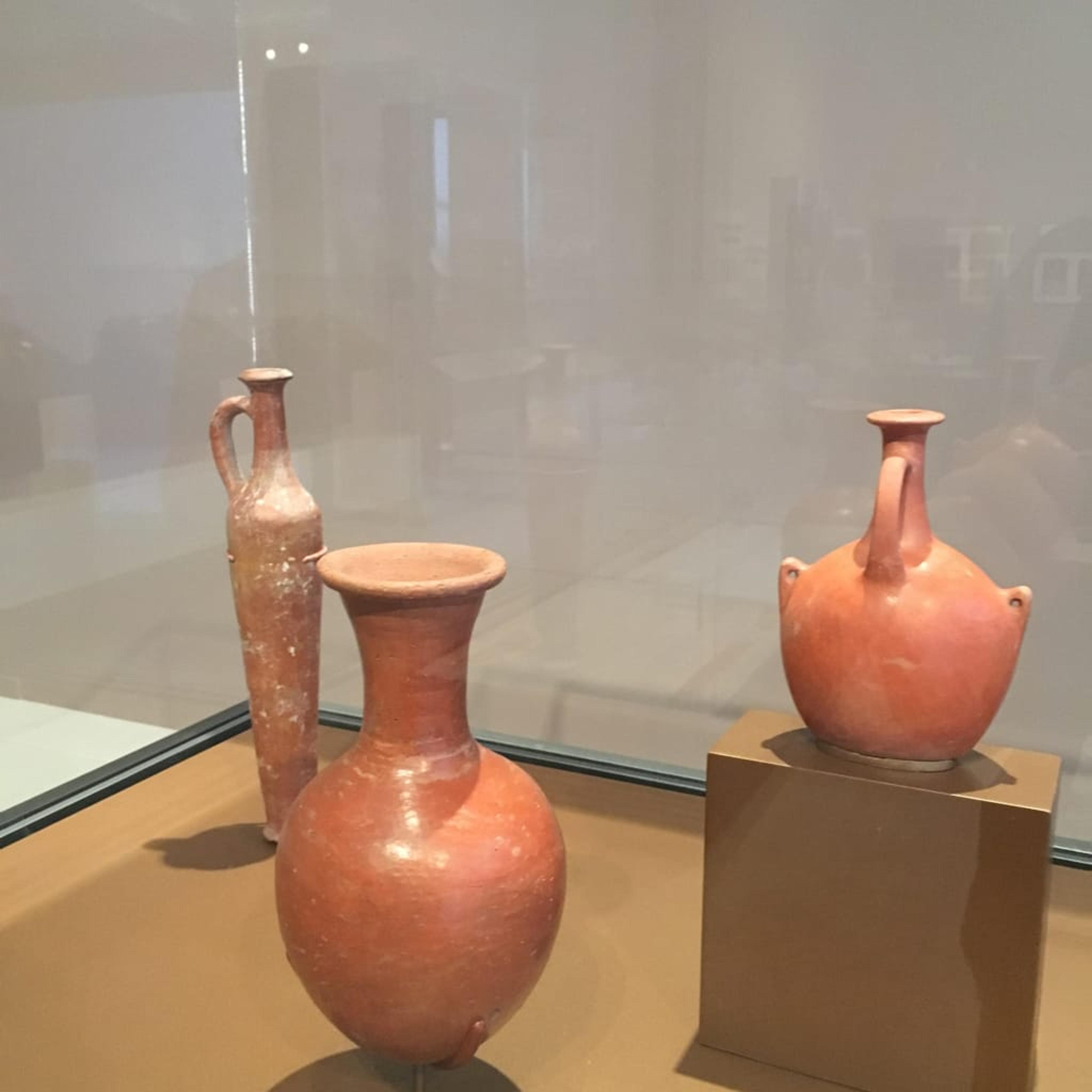 The texture you see was produced by burnishing, or rubbing the surface of the vessel after the clay had dried. You're right, only the bottle on the right of your photo has a slip applied; the slip would have been applied before the burnishing process.
Have information?
Have information about an artwork? Contact us at