Human Figure Wearing Crocodile Mask

1 of 7
Object Label
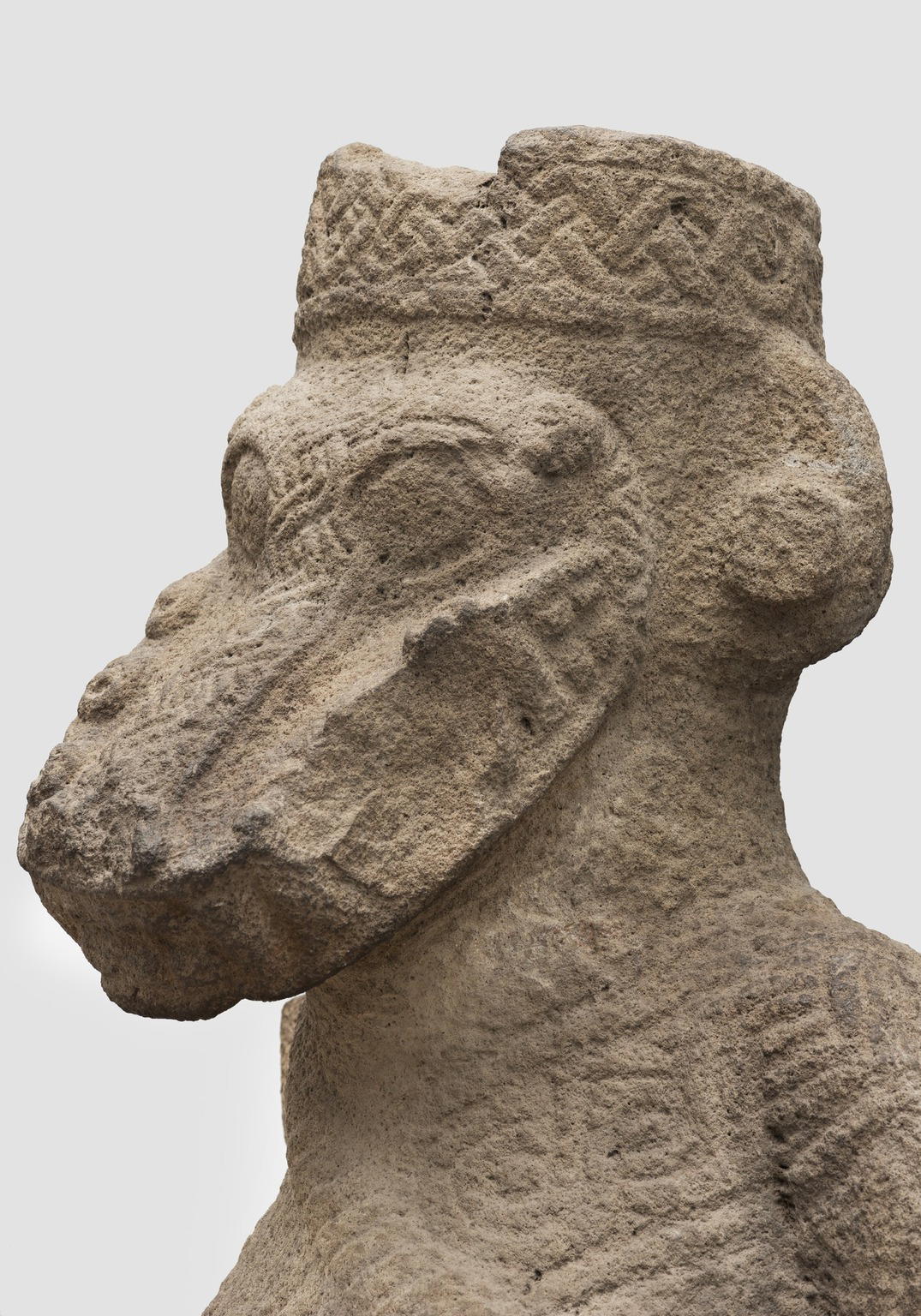
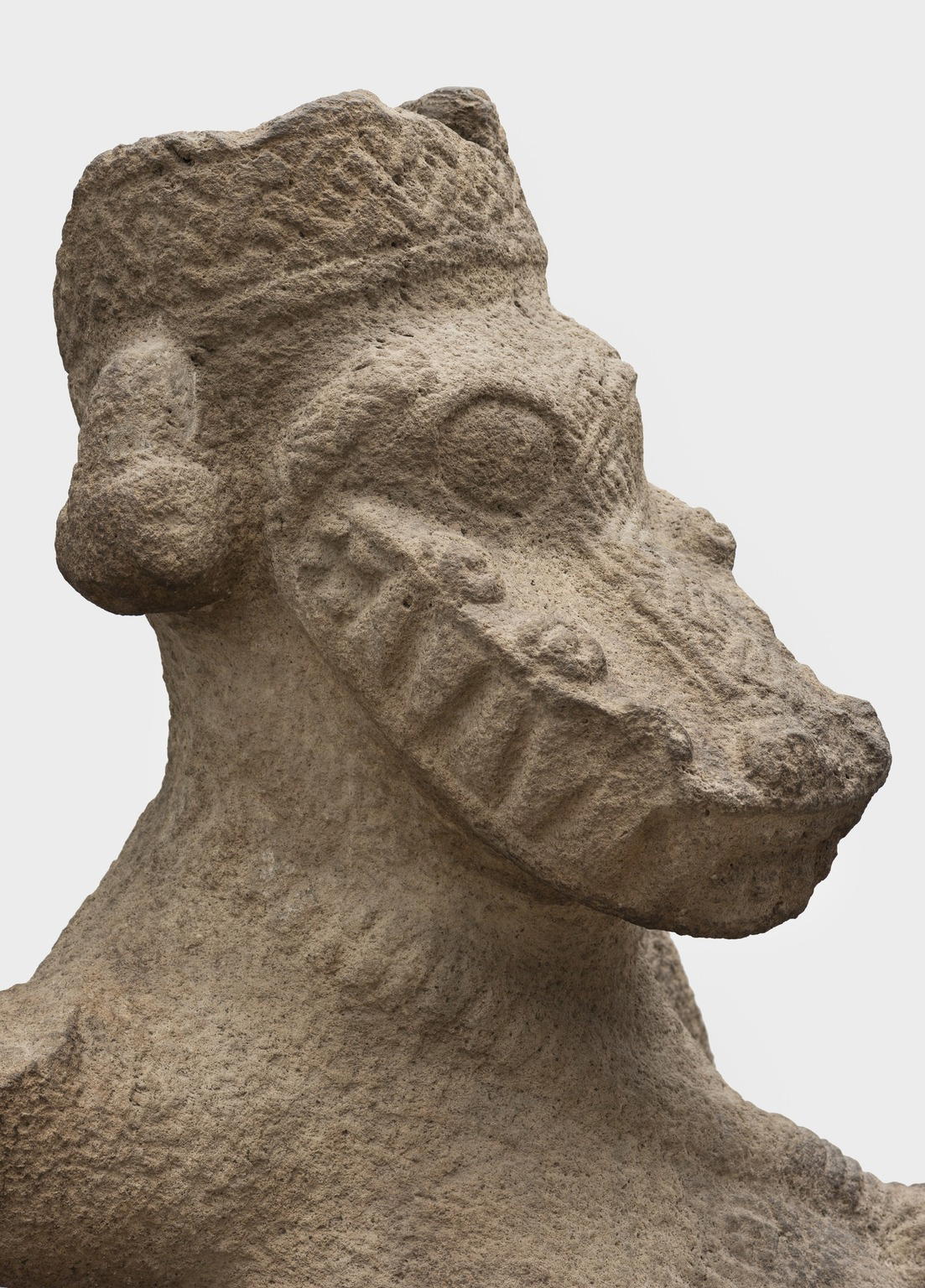
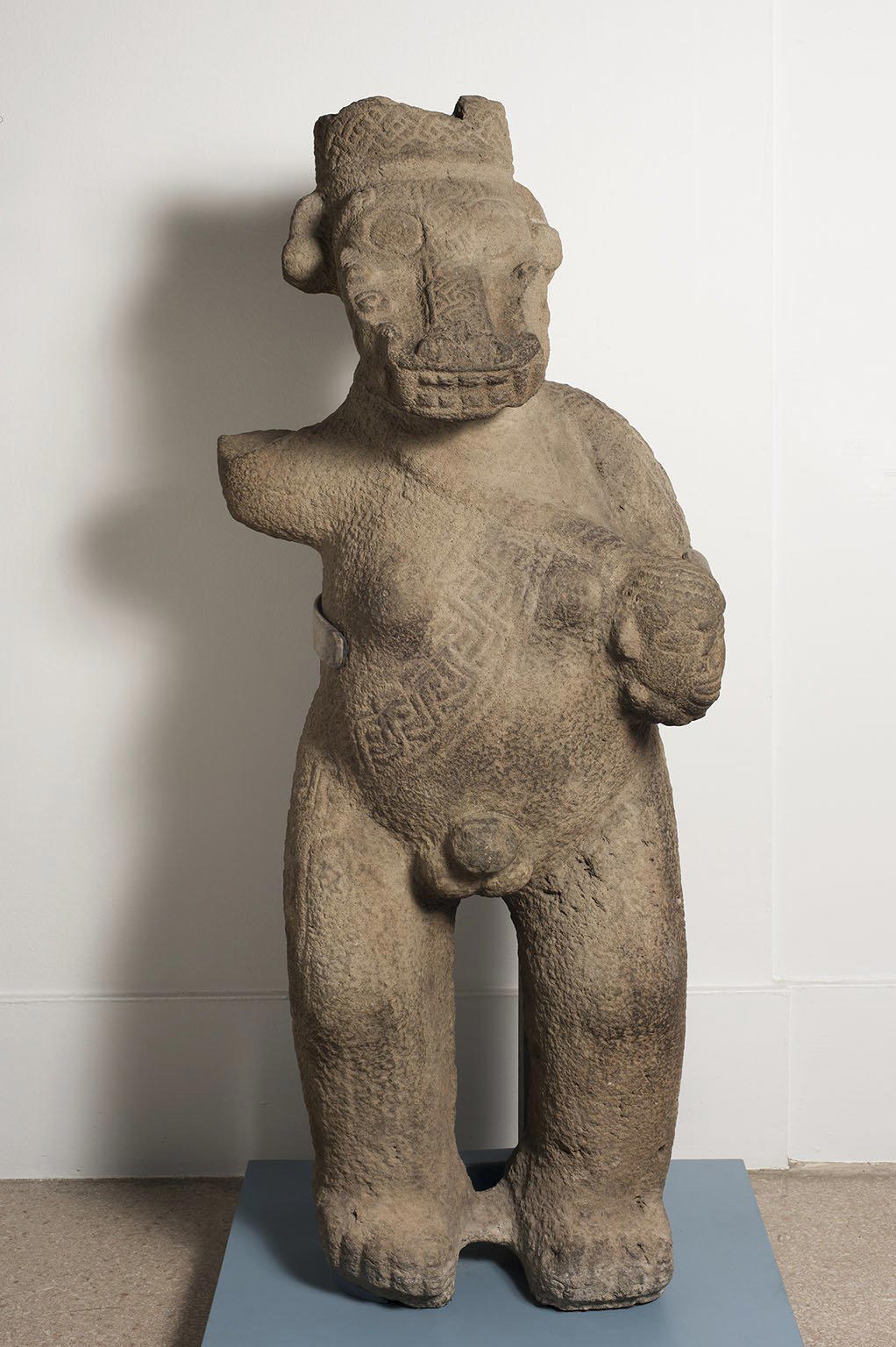
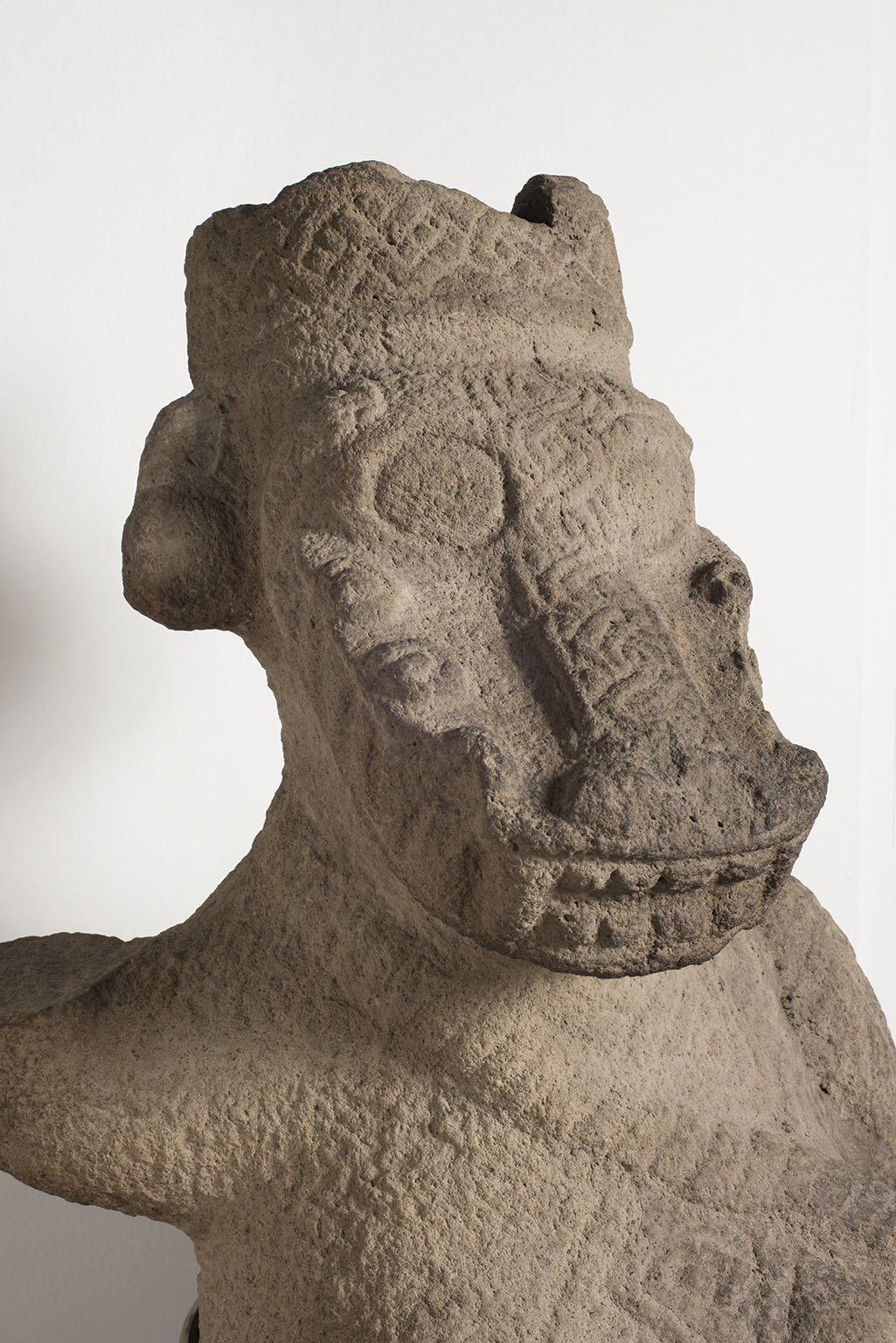
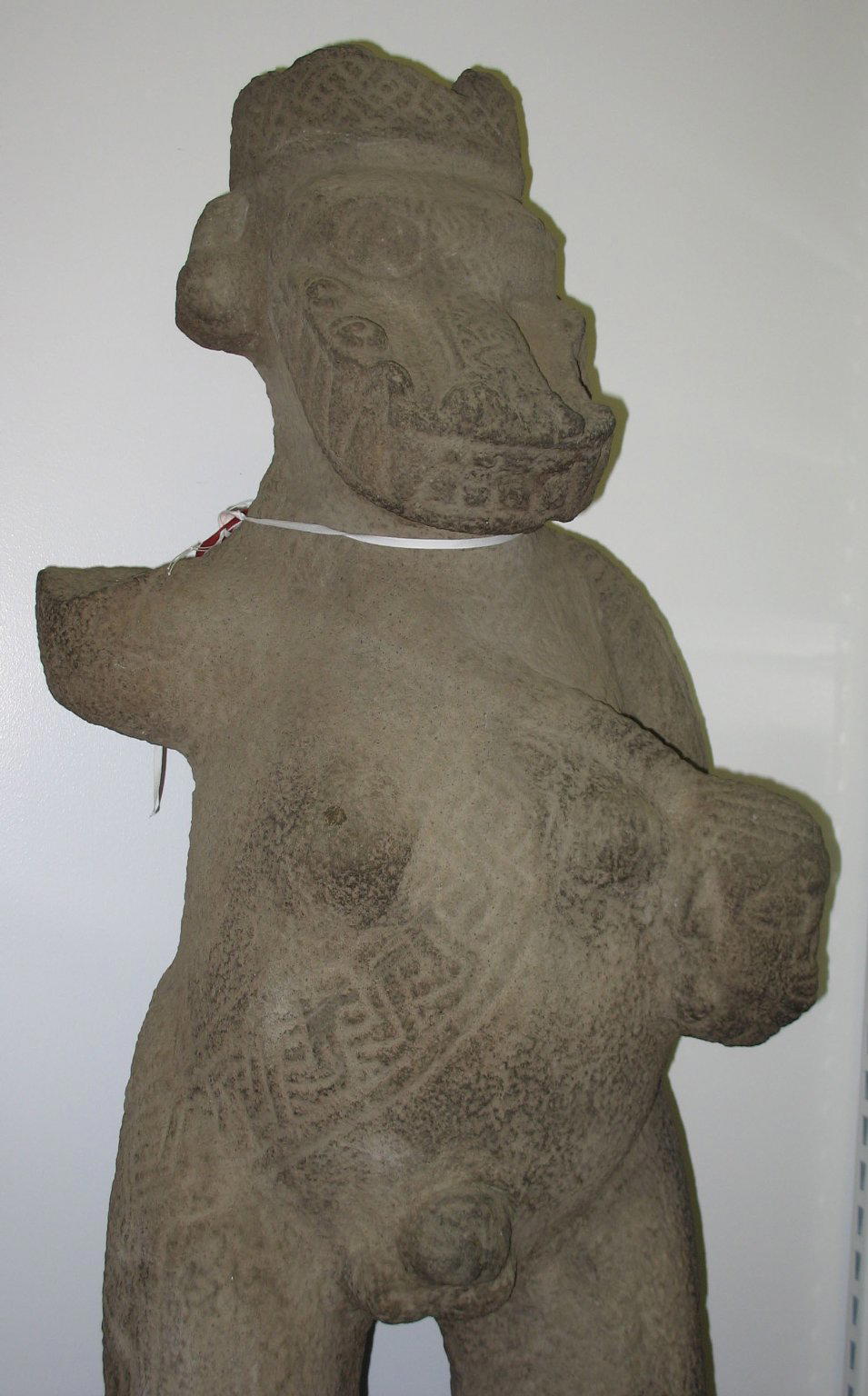
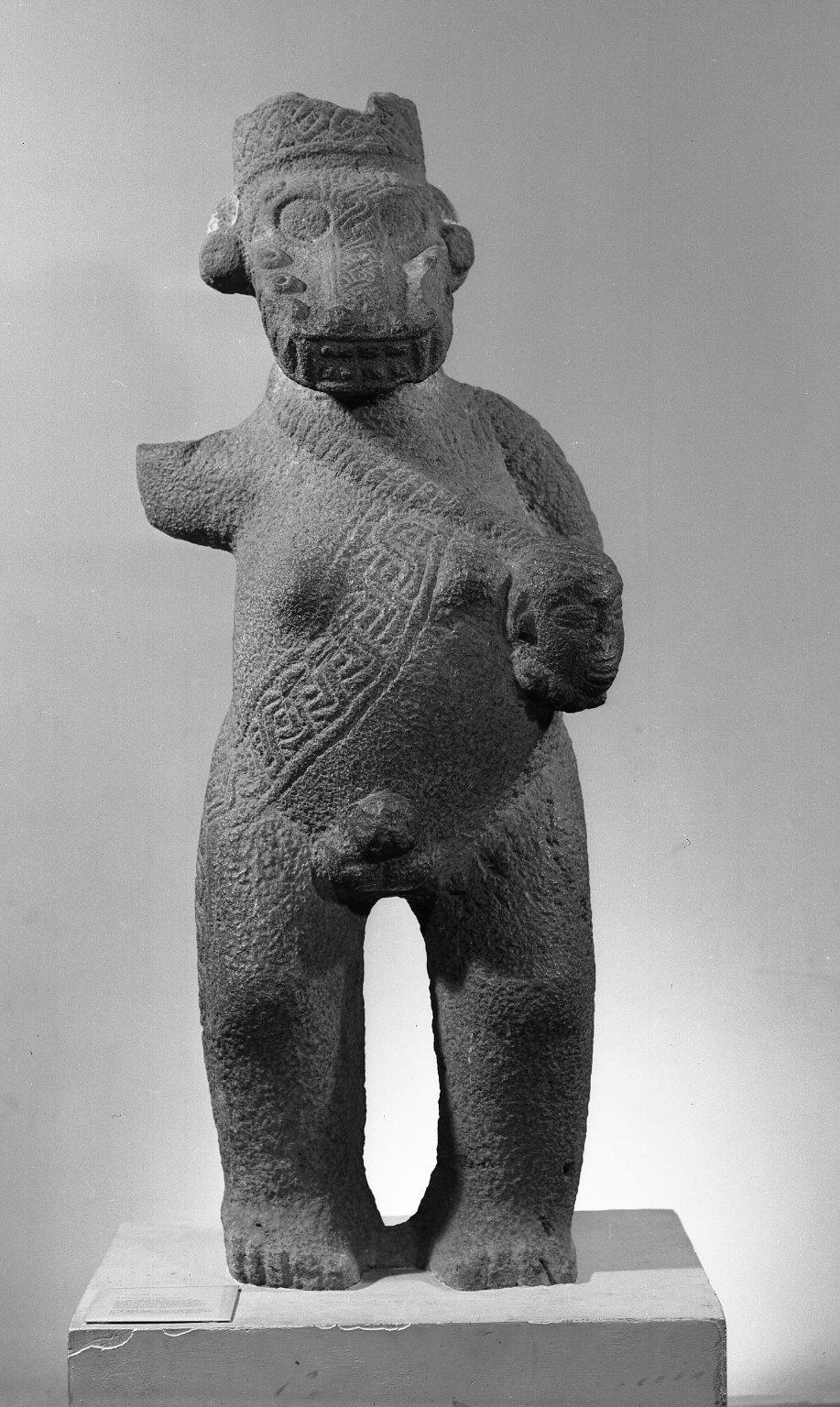
This warrior figure is wearing a fearsome crocodile mask, as an actual warrior would have done in the hope of accruing that creature’s power to himself. The figure carries a severed human head, representing a decapitated enemy. (The taking and displaying of trophy heads were common practices in ancient Costa Rica. ) Represented as androgynous, the figure has pronounced breasts, a penis, and testicles. The right arm is missing but appears to have been flexed upward, probably to hold an ax. The hat, mask, ear spools, and shoulder band are covered with incised geometric designs.
Caption
Central Caribbean. Human Figure Wearing Crocodile Mask, 700–1000. Vesicular (porous) andesite, 61 x 24 1/2 x 20 in., 631 lb. (154.9 x 62.2 x 50.8 cm, 286.22kg). Brooklyn Museum, Alfred W. Jenkins Fund, 34.5084. (Photo: Brooklyn Museum)
Gallery
Not on view
Collection
Gallery
Not on view
Collection
Culture
Title
Human Figure Wearing Crocodile Mask
Date
700–1000
Period
Late Period V to early Period VI
Geography
Place found: Costa Rica
Medium
Vesicular (porous) andesite
Classification
Dimensions
61 x 24 1/2 x 20 in., 631 lb. (154.9 x 62.2 x 50.8 cm, 286.22kg)
Credit Line
Alfred W. Jenkins Fund
Accession Number
34.5084
Frequent Art Questions
What is this?
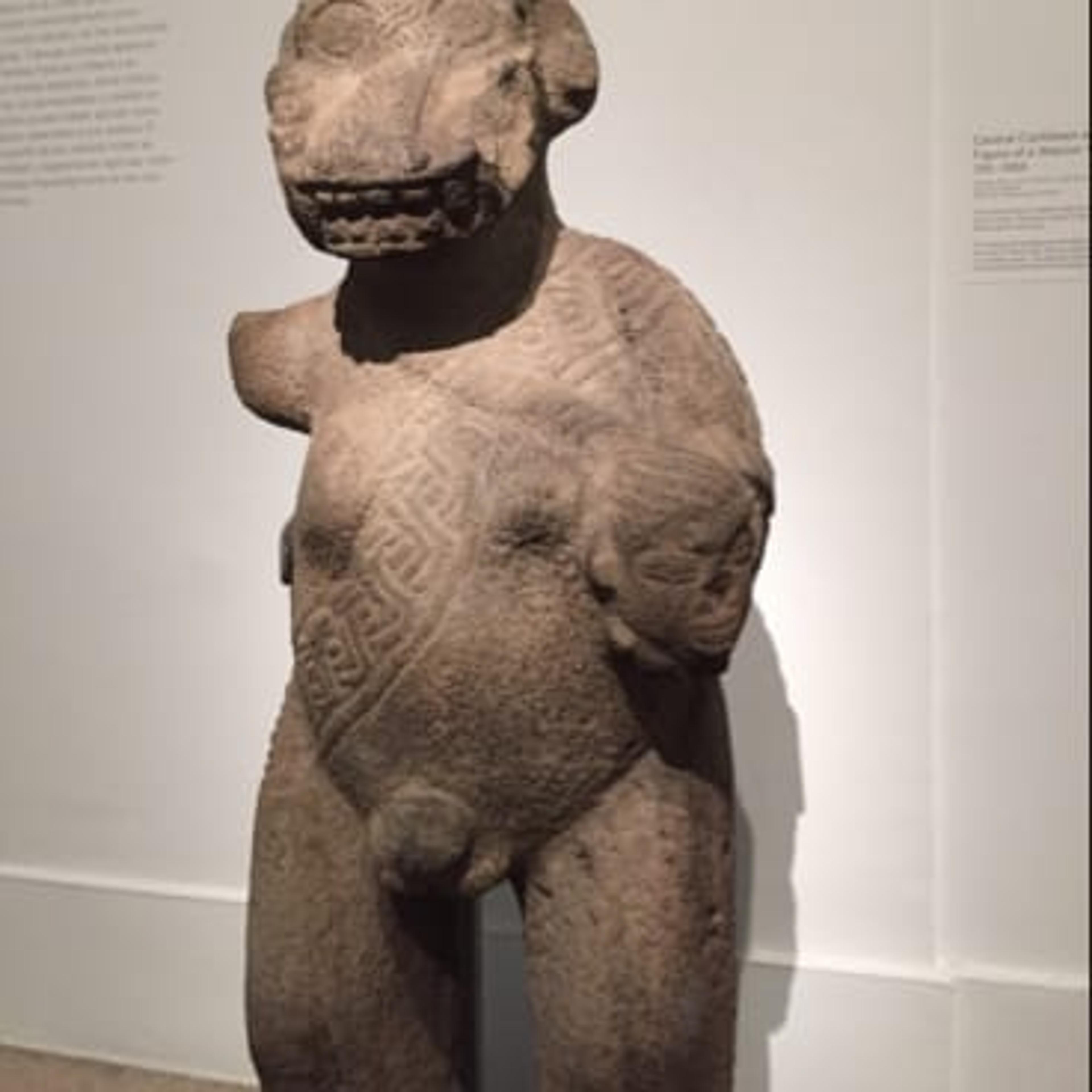 This statue was made between the 8th to the 11th century by the indigenous people in the Central Caribbean in the region of Costa Rica. It represents a male warrior wearing a crocodile mask. The figure has pronounced breasts and male genitalia. His right arm is broken and missing but appears to have been flexed upward, probably holding an axe similar to other sculptures of this genre. The carved and incised crocodilian head has a broad, flat snout with visible fangs and teeth. Scholars suggest that the statue could have been used as a kind of mask during ritual.
Stone?
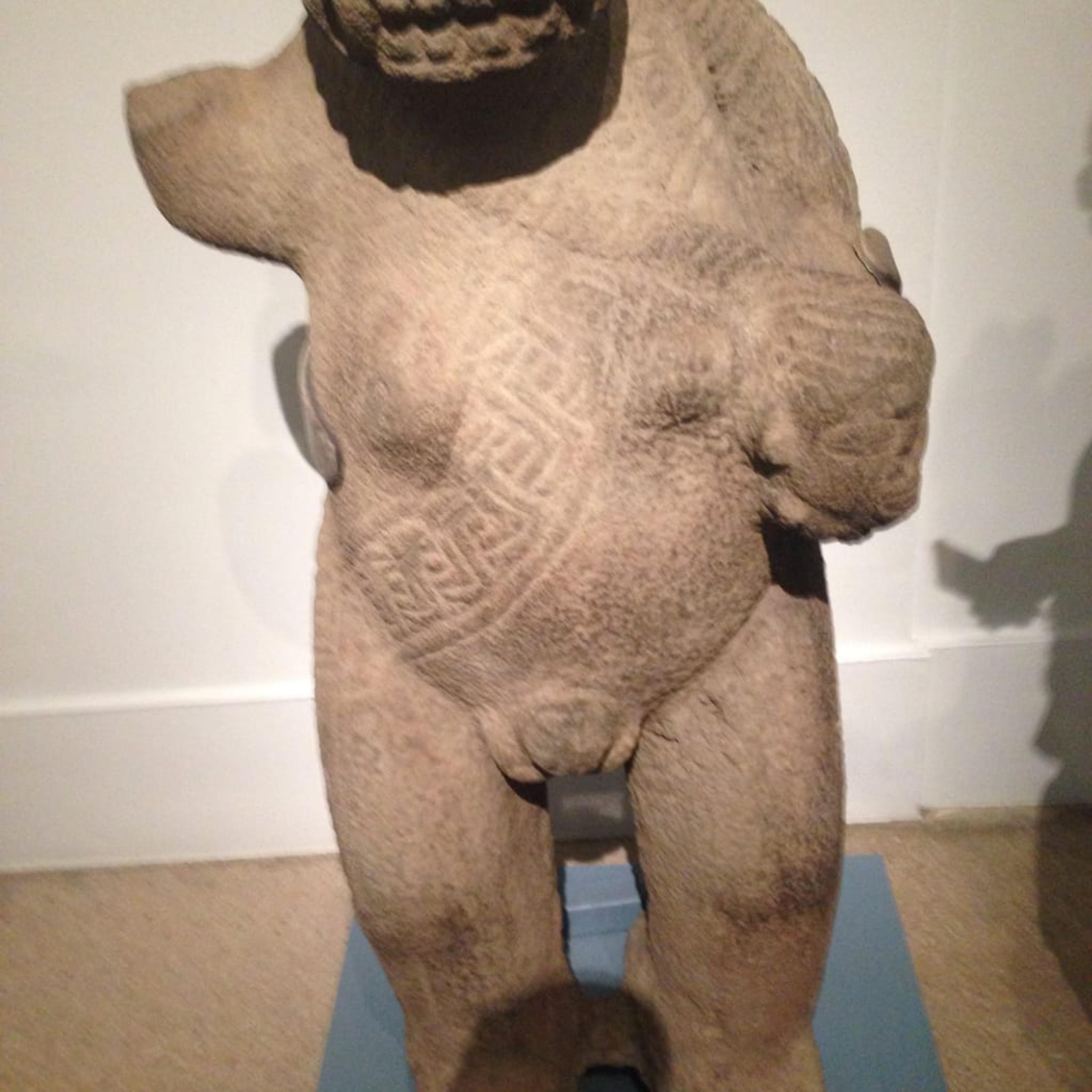 Yes, stone! More specifically it is made of Vesicular andesite. It was made between the 8th and 11th century by the indigenous people of the Central Caribbean. It represents a male warrior wearing a crocodile mask.
Why is he holding a human head in his hand?
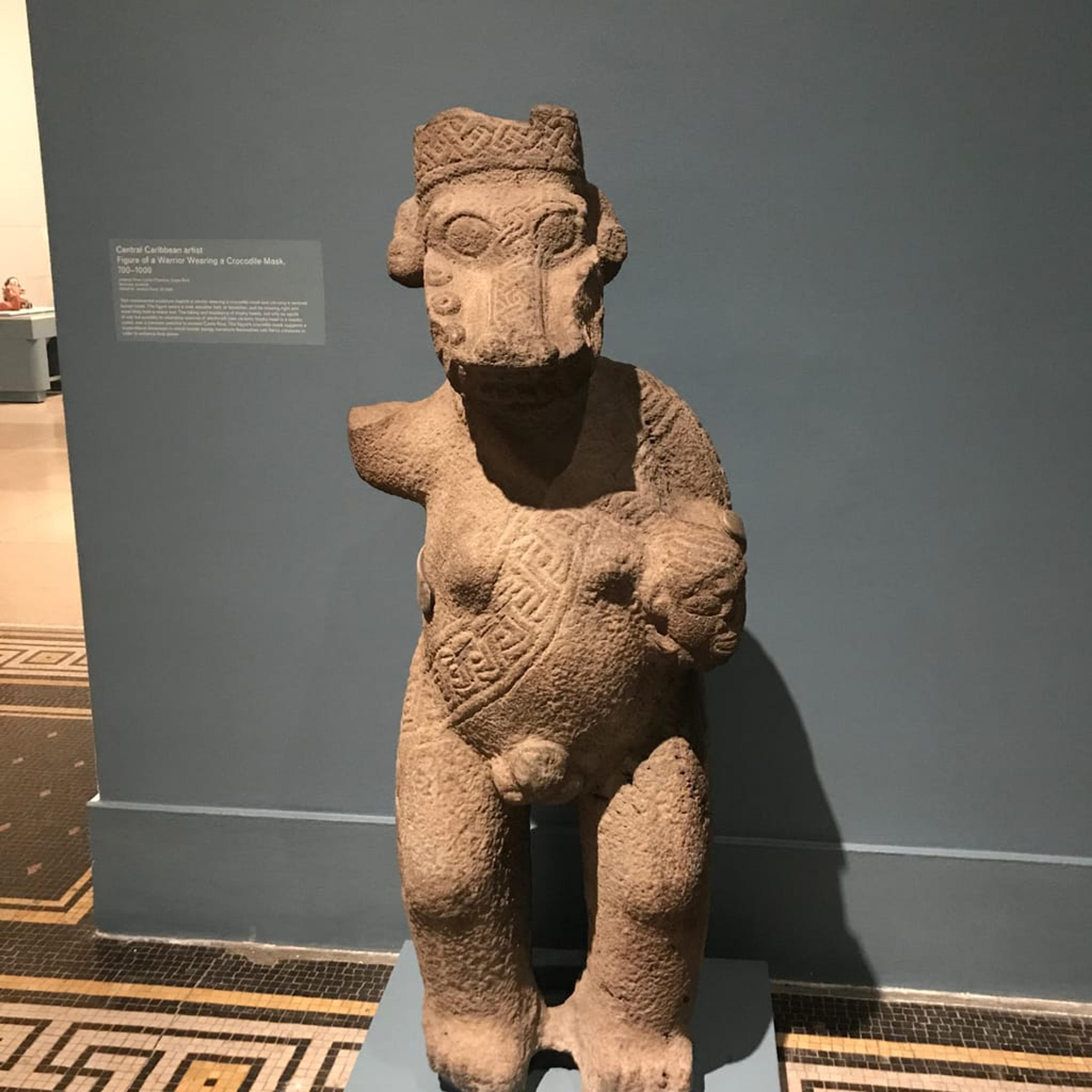 The head in his hand is identified as a "severed human trophy head." The taking of trophy heads was a common practice in several Caribbean and South American cultures and was often linked with warfare and religious ritual
Have information?
Have information about an artwork? Contact us at