Hippopotamus
ca. 1938–1539 B.C.E.


1 of 4
Object Label
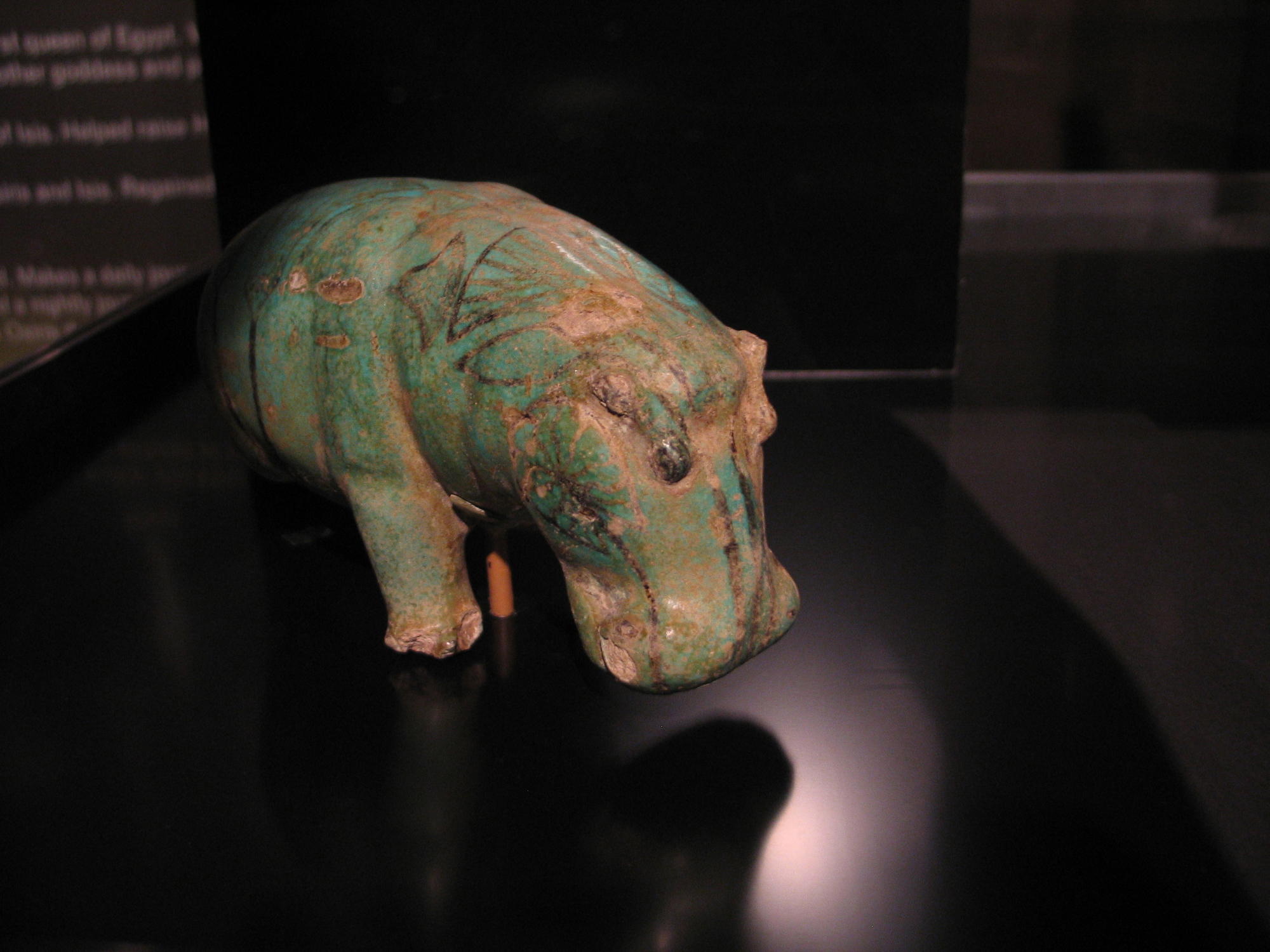
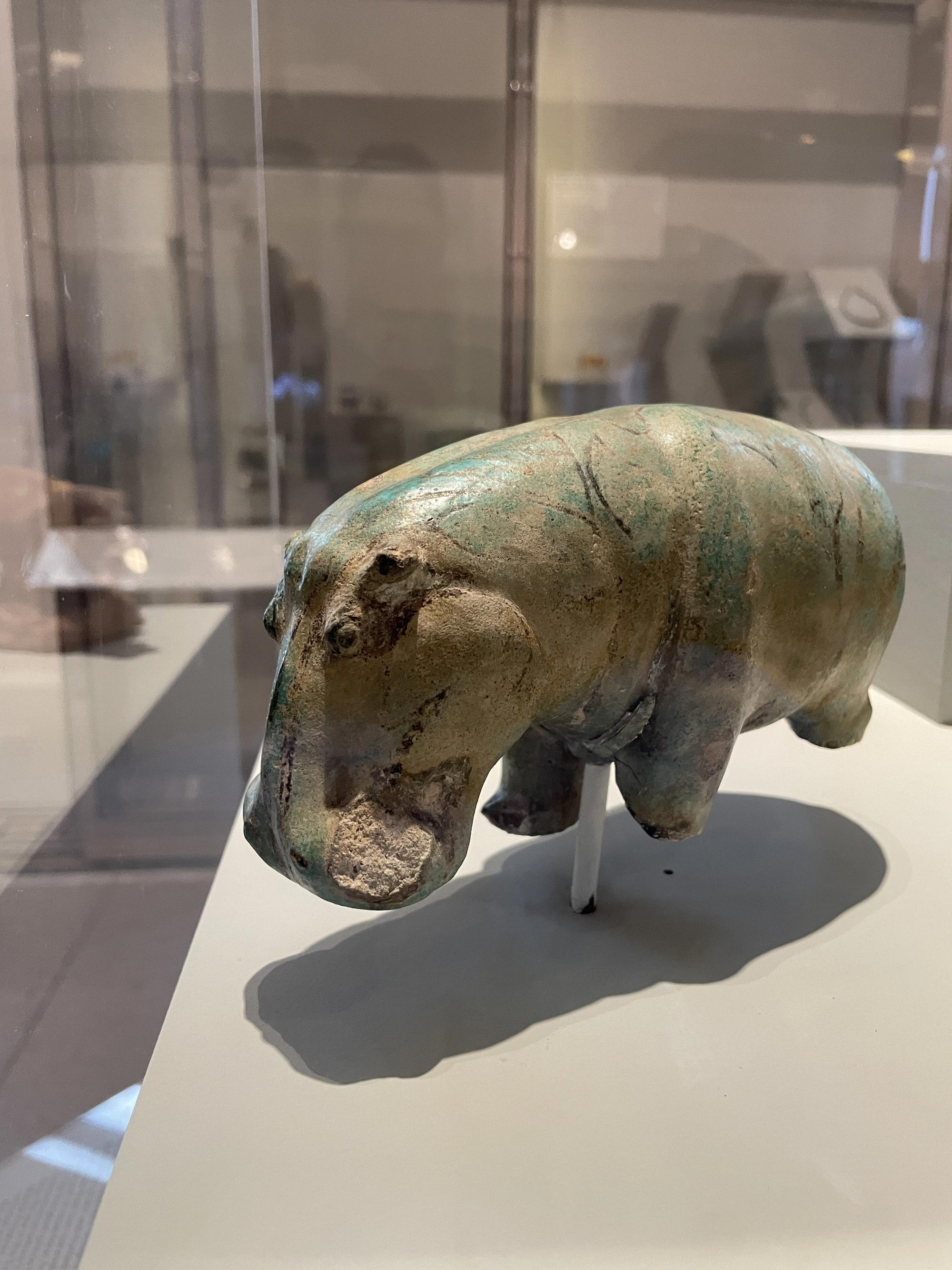
The standing hippopotamus represented Seth, the brother of Osiris who murdered him and then claimed his throne. It was thus a symbol of chaos. Egyptians controlled negative forces in the tomb by including a hippopotamus with the legs purposely broken. The lotus flowers drawn on its flanks reflect the animal as it would be seen standing in the Nile among the natural vegetation.
Caption
Hippopotamus, ca. 1938–1539 B.C.E.. Faience, 4 5/16 × 2 15/16 × 7 3/16 in., 2 lb. (11 × 7.5 × 18.3 cm, 0.91kg). Brooklyn Museum, Gift of the Ernest Erickson Foundation, Inc., 86.226.2. (Photo: Brooklyn Museum)
Gallery
Not on view
Gallery
Not on view
Title
Hippopotamus
Date
ca. 1938–1539 B.C.E.
Dynasty
Dynasty 12 to Dynasty 17
Period
Middle Kingdom to Second Intermediate Period
Geography
Place made: Egypt
Medium
Faience
Classification
Dimensions
4 5/16 × 2 15/16 × 7 3/16 in., 2 lb. (11 × 7.5 × 18.3 cm, 0.91kg)
Credit Line
Gift of the Ernest Erickson Foundation, Inc.
Accession Number
86.226.2
Frequent Art Questions
Why are the legs broken off?
Hippos are one of the most dangerous creatures in Egypt. They hide in the water and can rise up and capsize a boat suddenly. They are also violently protective of their young.Ancient Egyptians would break the legs of a hippo sculpture and place it in the tomb, in order to remove the threat of dangerous and chaotic animals in the afterlife!Why is the hippo blue?
The blue color was associated with the marshes where the hippos lived, and where life is said to have originated according to Egyptian mythology.
Have information?
Have information about an artwork? Contact us at