Royal Head
ca. 1352–1332 B.C.E.


1 of 6
Object Label
In Egyptian art, one symbol could represent both a trait and its opposite. The hippopotamus could represent great danger and chaos or, alternatively, fertility and protection in childbirth. The statuette of a male hippopotamus could represent the god Seth, who embodied danger, chaos, and disorder in the world. Yet the rare limestone statuette of hippopotami mating perhaps served as a symbol that preserved the fertility of the earth. And a necklace consisting of images of the female hippopotamus goddess Taweret could protect a woman in labor.
Caption
Royal Head, ca. 1352–1332 B.C.E.. Limestone, pigment, 1 3/4 × 2 1/16 × 2 7/16 in. (4.5 × 5.2 × 6.2 cm) mount: 9 × 3 × 3 in. (22.9 × 7.6 × 7.6 cm). Brooklyn Museum, Gift of the Ernest Erickson Foundation, Inc., 86.226.20. (Photo: Brooklyn Museum)
Gallery
Not on view
Gallery
Not on view
Title
Royal Head
Date
ca. 1352–1332 B.C.E.
Dynasty
late Dynasty 18
Period
New Kingdom, Amarna Period
Geography
Possible place collected: Tell el-Amarna, Egypt
Medium
Limestone, pigment
Classification
Dimensions
1 3/4 × 2 1/16 × 2 7/16 in. (4.5 × 5.2 × 6.2 cm) mount: 9 × 3 × 3 in. (22.9 × 7.6 × 7.6 cm)
Credit Line
Gift of the Ernest Erickson Foundation, Inc.
Accession Number
86.226.20
Frequent Art Questions
Why are the Wilbour Plaque and the Unidentified Queen similar?
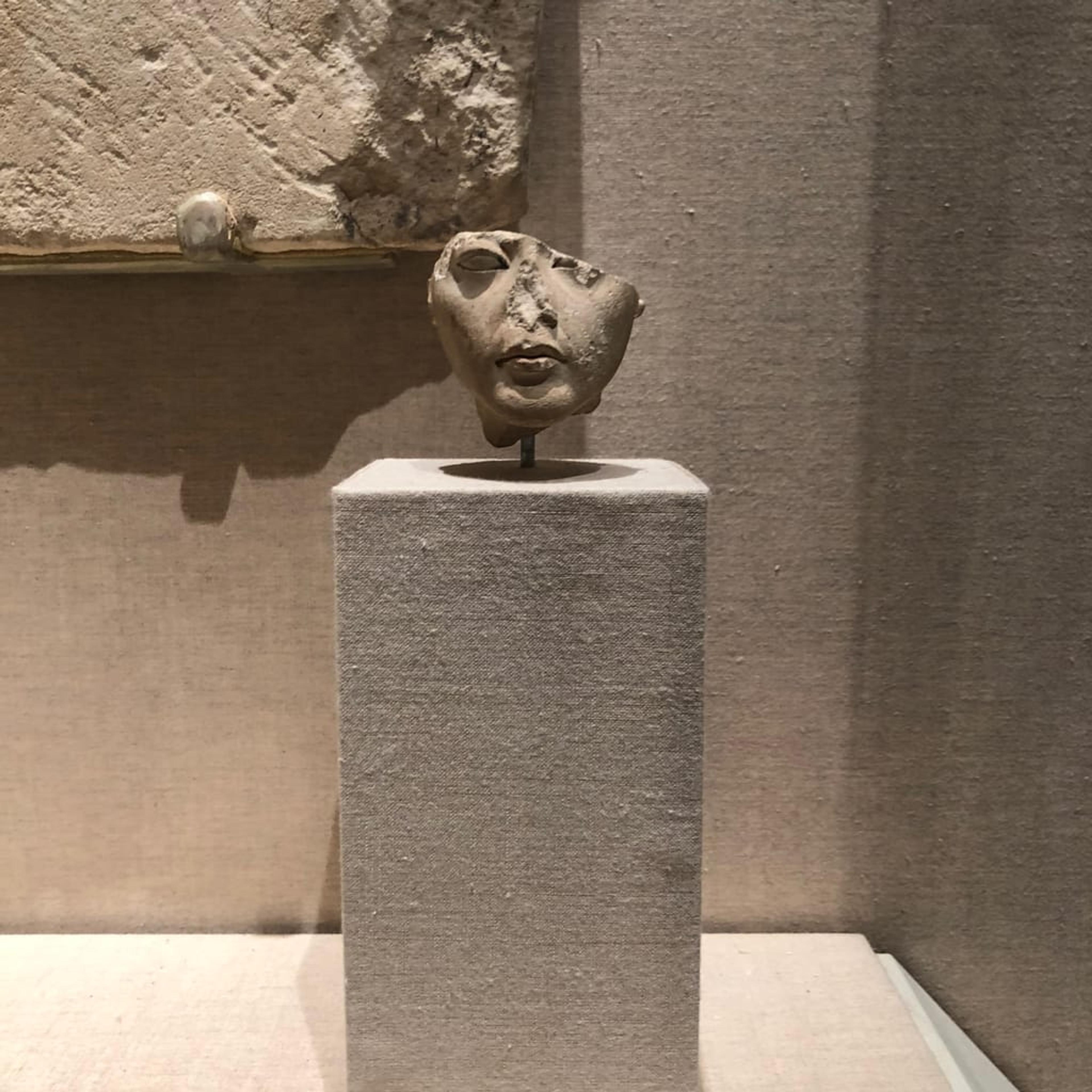 As far at the head: the similarities are because they are from the same time period. This head may even also show Nefertiti like the figure to the right in the Wilbour Plaque. You'll also want to think about what parts of the face look similar on this sculpture when compared to the Plaque.
Have information?
Have information about an artwork? Contact us at