Double Chicken-Headed Ewer
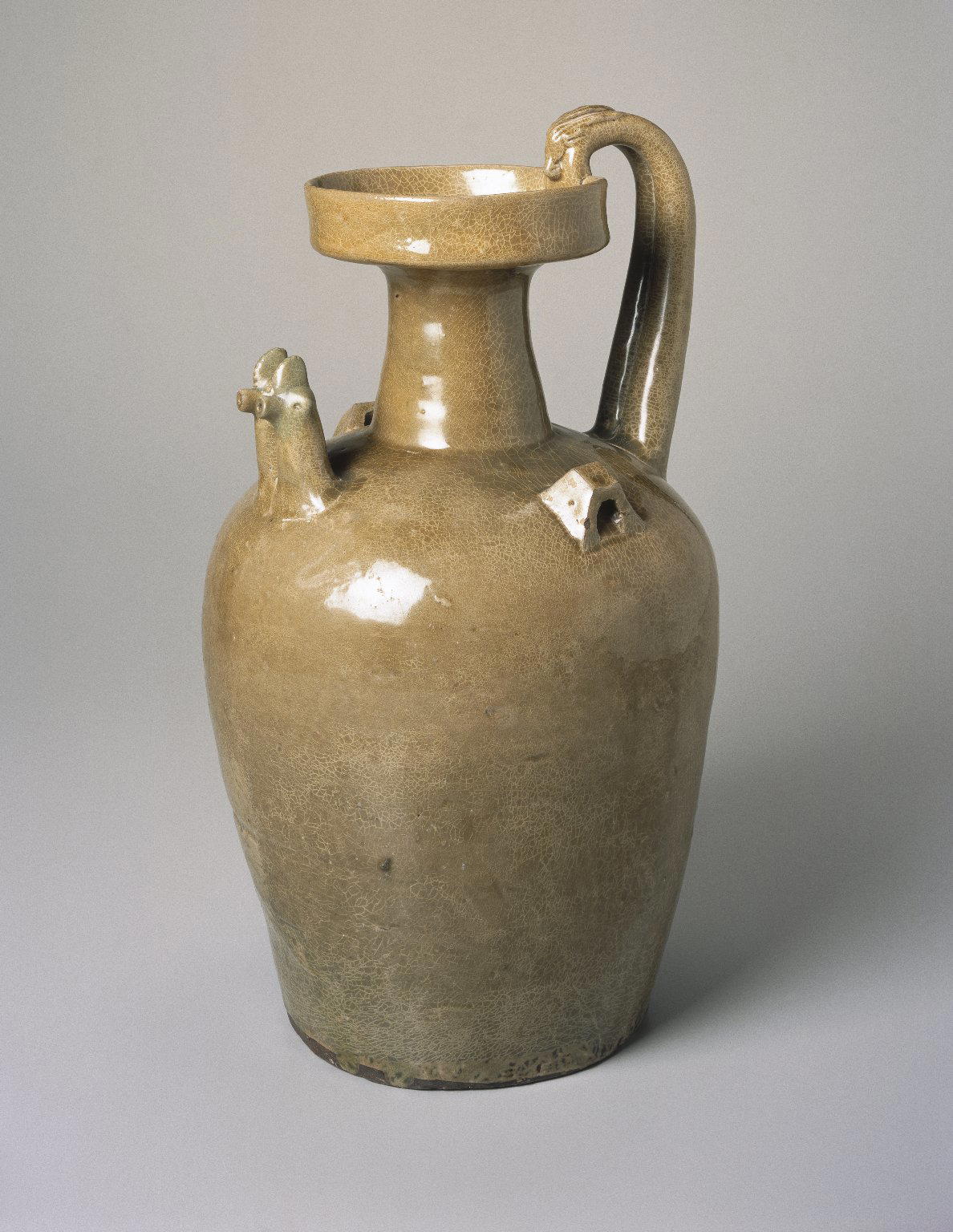
Brooklyn Museum photograph
Object Label
Especially during the ninth to eleventh centuries, Chinese connoisseurs prized high-fired green-glazed ceramics and compared their exquisite gray-green glazes to precious jade. Green-glazed ware, know generally as Yue ware but often called "celadon" in the West, was manufactured both for daily use and for burial. The Chicken-Headed Ewer was most likely produced as a burial good, and excavations have revealed comparable early examples in tombs from the fourth century to the seventh. The two spouts on the remarkable, tall Chicken-Headed Ewer are not functional, further identifying it as a burial object.
Caption
Double Chicken-Headed Ewer, 581–618 C.E.. Yue ware, stoneware, glaze, 14 3/8 x 8 in. (36.5 x 20.3 cm) Diameter of mouth: 4 7/8 in. (12.4 cm). Brooklyn Museum, Gift of Dr. and Mrs. George J. Fan, 1996.26.2. (Photo: Brooklyn Museum)
Gallery
Not on view
Collection
Gallery
Not on view
Collection
Title
Double Chicken-Headed Ewer
Date
581–618 C.E.
Dynasty
Sui Dynasty
Period
Southern Dynasties
Geography
Place made: China
Medium
Yue ware, stoneware, glaze
Classification
Dimensions
14 3/8 x 8 in. (36.5 x 20.3 cm) Diameter of mouth: 4 7/8 in. (12.4 cm)
Credit Line
Gift of Dr. and Mrs. George J. Fan
Accession Number
1996.26.2
Have information?
Have information about an artwork? Contact us at