Mold for Amulet of Seated Goddess Holding Papyrus Scepter
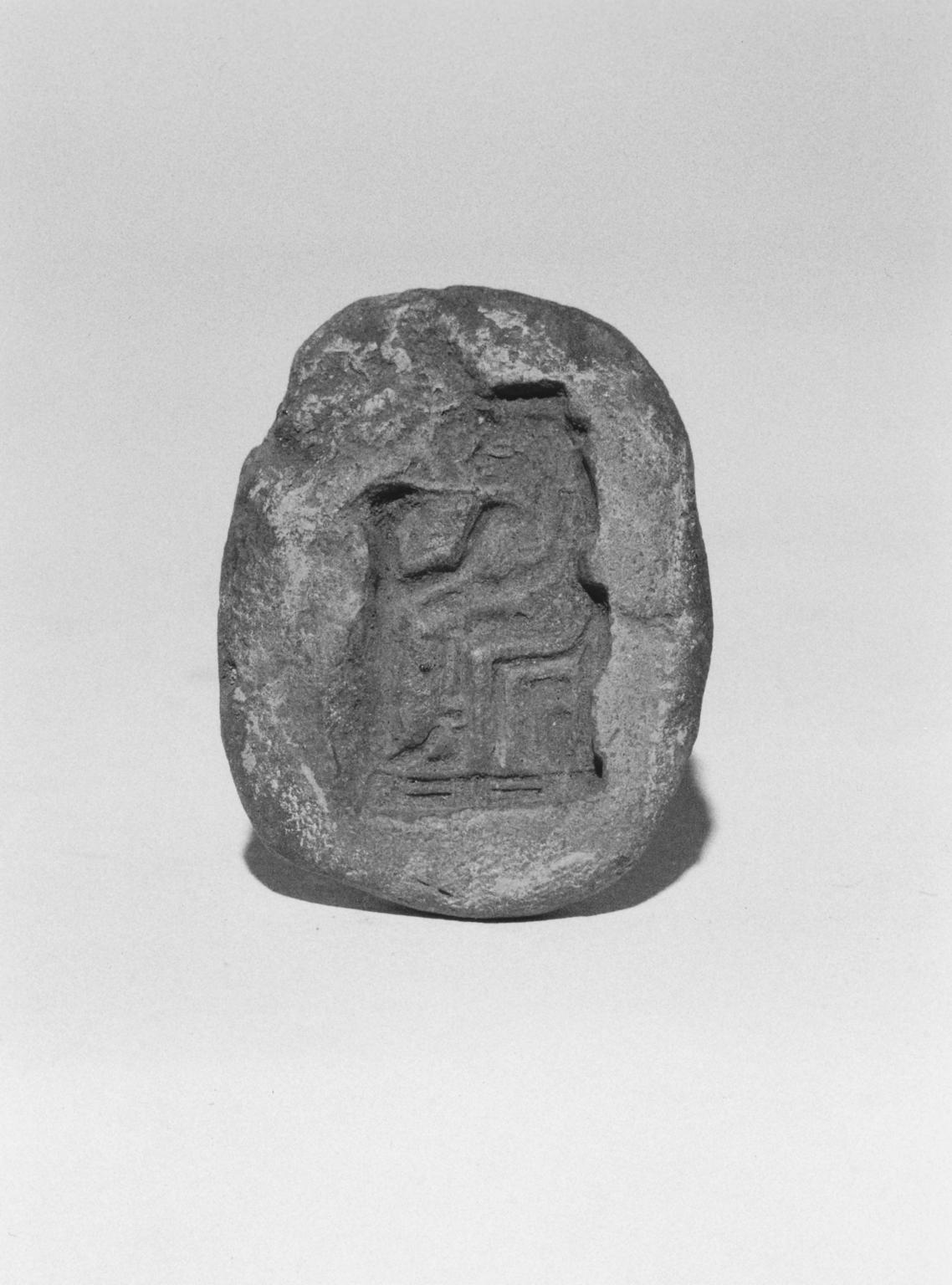
Brooklyn Museum photograph
Object Label
Ancient craftsmen used fired clay (terracotta) molds to manufacture small faience objects.
After fashioning a stone model of the object to be molded, a craftsman pressed it into damp clay to create an impression. The clay mold was then dried and fired.Damp faience paste was pushed into the moistened mold, and the resulting form, such as a bead or amulet, was removed immediately so it would not stick. The faience was then hardened by baking.
Caption
Mold for Amulet of Seated Goddess Holding Papyrus Scepter, ca. 1539–1075 B.C.E.. Terracotta, 1 7/16 x 5/8 x 1 7/8 in. (3.6 x 1.6 x 4.7 cm). Brooklyn Museum, Gift of Evangeline Wilbour Blashfield, Theodora Wilbour, and Victor Wilbour honoring the wishes of their mother, Charlotte Beebe Wilbour, as a memorial to their father, Charles Edwin Wilbour, 16.748.8. (Photo: Brooklyn Museum)
Title
Mold for Amulet of Seated Goddess Holding Papyrus Scepter
Date
ca. 1539–1075 B.C.E.
Dynasty
Dynasty 18 to Dynasty 19
Period
New Kingdom
Geography
Place made: Egypt
Medium
Terracotta
Classification
Dimensions
1 7/16 x 5/8 x 1 7/8 in. (3.6 x 1.6 x 4.7 cm)
Credit Line
Gift of Evangeline Wilbour Blashfield, Theodora Wilbour, and Victor Wilbour honoring the wishes of their mother, Charlotte Beebe Wilbour, as a memorial to their father, Charles Edwin Wilbour
Accession Number
16.748.8
Have information?
Have information about an artwork? Contact us at