Pendant in Form Anthropomorphic Avian Figure
Diquís


1 of 3
Object Label
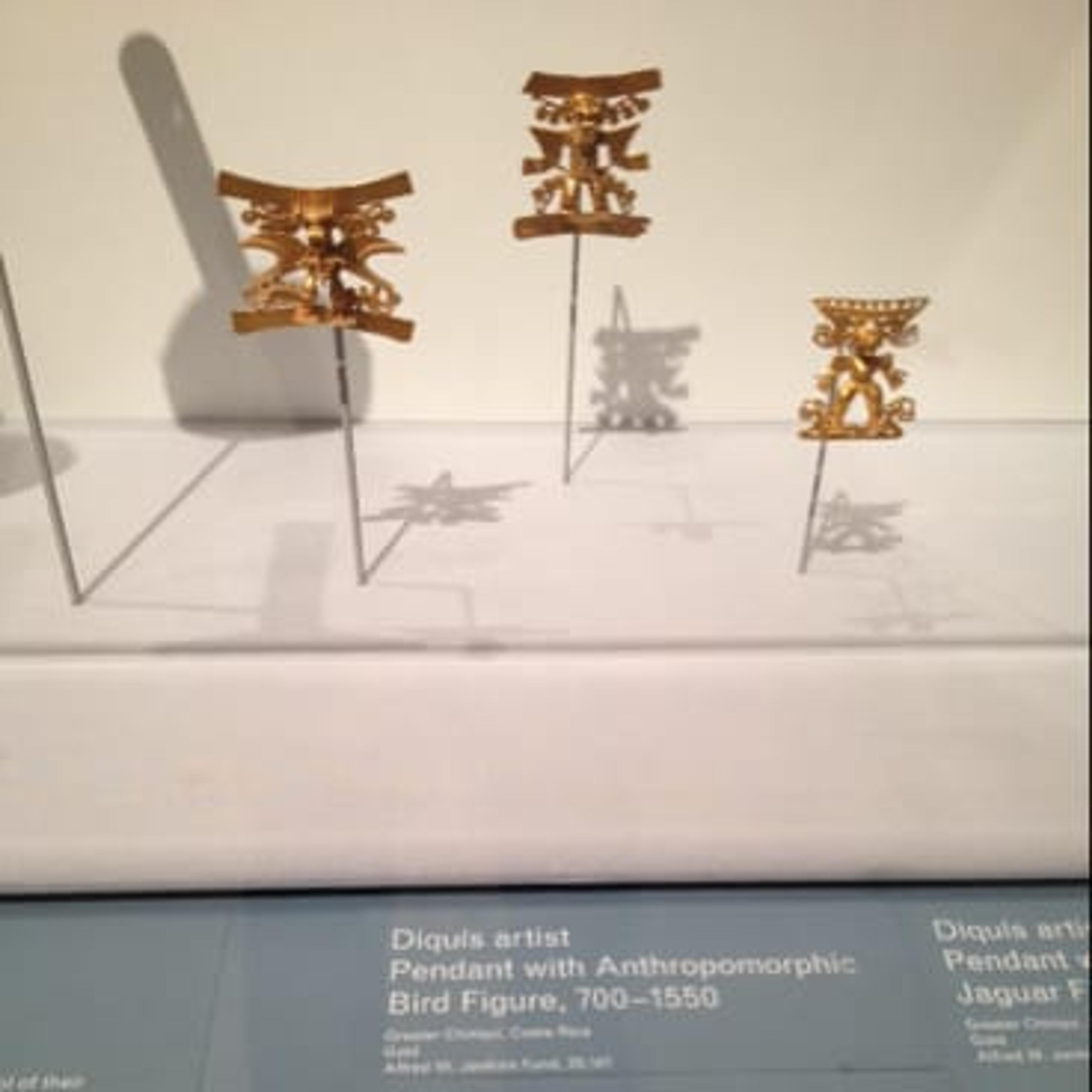
While we do not know the significance of the figures on these gold pendants, the mixture of human and animal attributes suggests a mythical and supernatural universe. The ornaments were worn on necklaces, perhaps by political and religious leaders who recognized and valued their symbolism. The representations of anthropomorphic animals may allude to the transformative powers of shamans or their spirit helpers as they journey to supernatural realms.
Caption
Diquís. Pendant in Form Anthropomorphic Avian Figure, 700–1550 CE. Cast gold, 3 1/4 x 3 7/16in. (8.3 x 8.7cm). Brooklyn Museum, Alfred W. Jenkins Fund, 35.147. (Photo: Brooklyn Museum)
Gallery
Not on view
Collection
Gallery
Not on view
Collection
Frequent Art Questions
Why can't we precisely date those gold pendants? 700-1550 is a huge time range!
 We don't know the precise dates because gold tends be difficult to date. Gold can be melted down and recreated into something else so it's especially hard to know. Also, the imagery in this culture didn't change too often.Even with carbon-14 technology?Carbon-14 can only be used to date organic materials. It doesn't work for objects made of metal or stone.
Have information?
Have information about an artwork? Contact us at