Quipu
Inca




1 of 8
Object Label
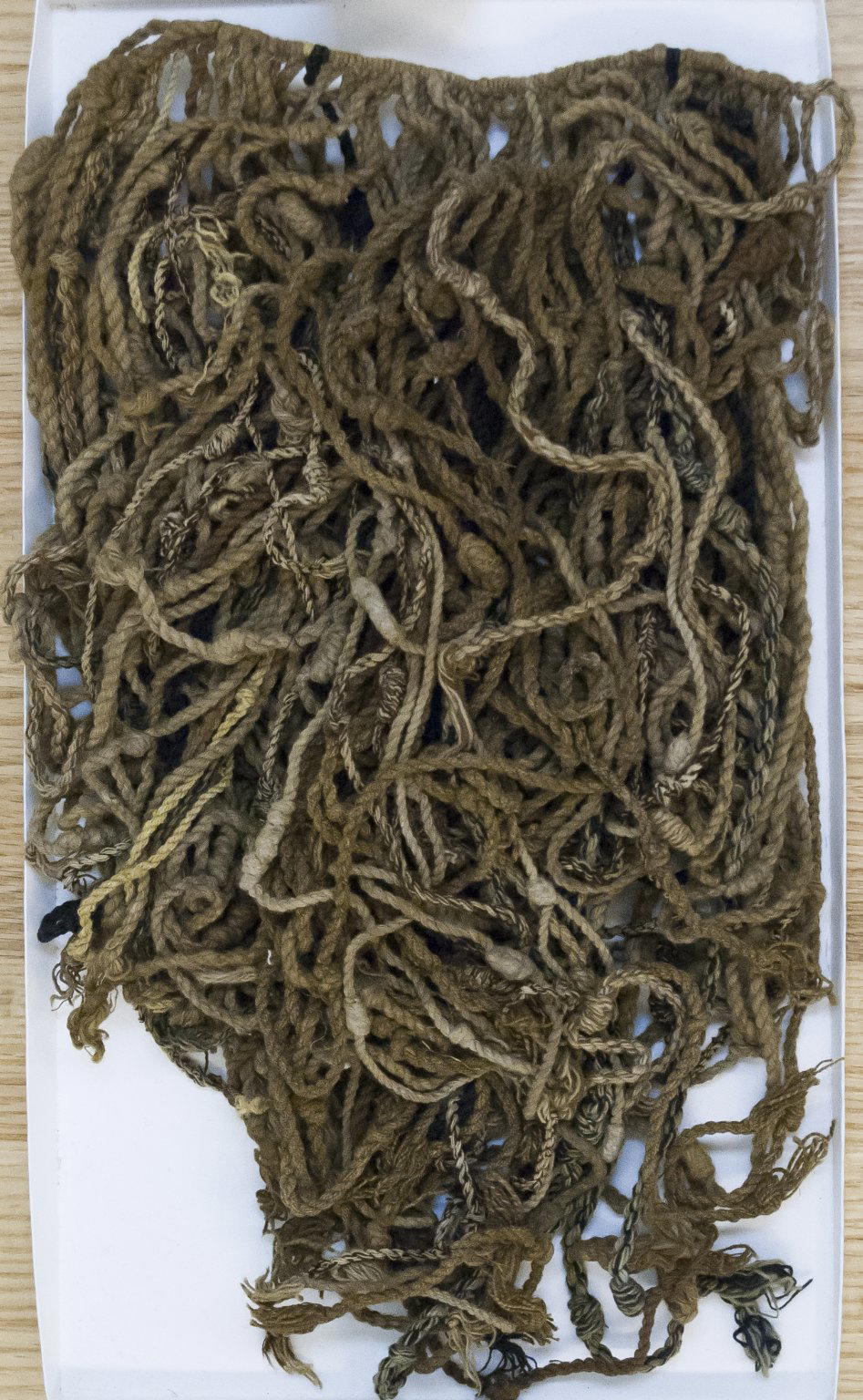
This large, impressive quipu is purported to have been discovered in a burial at the coastal site of Ancon, near Lima, Peru. The random appearance of the cords and knots indicates that it is a narrative quipu, a less common type than the administrative ones. Both quipu forms were in contemporaneous use because they conveyed different kinds of information.
Caption
Inca. Quipu, 1400–1532. Cotton, camelid fiber, 13 × 37 in. (33 × 94 cm). Brooklyn Museum, Gift of Dr. John H. Finney, 36.718.
Gallery
Not on view
Collection
Gallery
Not on view
Collection
Frequent Art Questions
What do these quipu say? What did they kept track of?
Well the historical quipu, used by the Inca and other ancient Andean cultures could be used to record information. They are separated into two broad categories, Administrative and Narrative.Administrative quipus kept track of things like census or tax information whereas Narrative quipus are thought to record information like stories, genealogies, even poetry!Although a lot of information regarding how to read quipus is lost, Scholars are closest to understanding administrative quipus. The different kinds of knots and the location where they are tied on the strings are representative of numbers!Excellent. Thank you!You're welcome!Does the quipu convey principally numbers (dates, ages, distances, quantities, etc.) or also narrative information regarding history within the Andean corpus of knowledge?
Both, actually. Early scholars thought that the knots could only record numbers, but further analysis makes it very clear that some quipu include much more information including stories, genealogies, and even poetry.
Have information?
Have information about an artwork? Contact us at