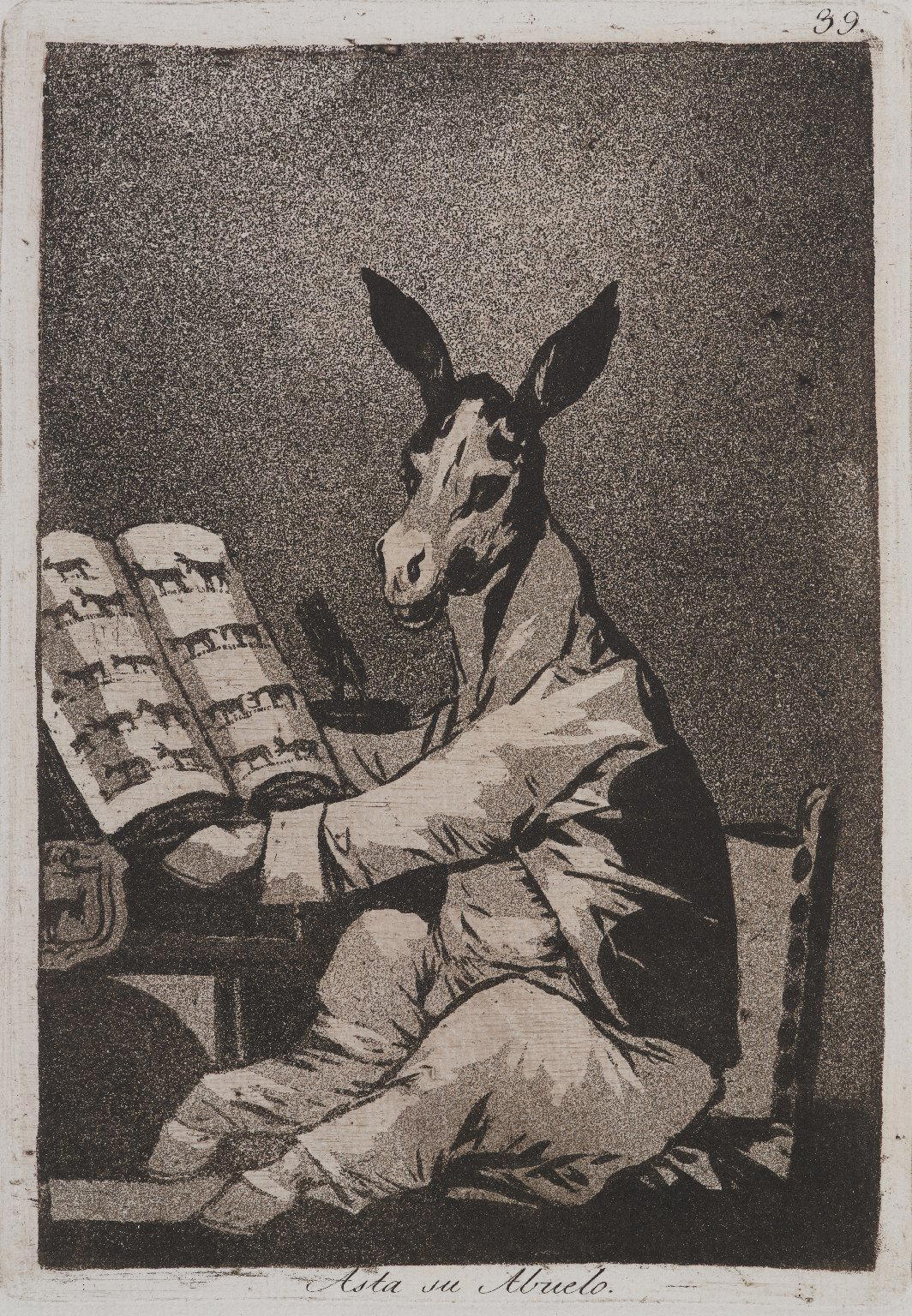
And So Was His Grandfather (Asta su abuelo)
Object Label
The most famous image, The Sleep of Reason Produces Monsters (El sueño de la razon produce monstruos), conveys a purposeful ambiguity regarding the conflict between Spanish religiosity and Enlightenment thought: sueño may refer both to the sleep or absence of reason, and to the dream of reason (reason unchecked) that produces monsters. This idea reappears later in the exhibition in Robert Longo’s work.
Caption
Francisco de Goya y Lucientes (Spanish, 1746–1828). And So Was His Grandfather (Asta su abuelo), 1797–1798. Aquatint on laid paper, Sheet: 11 7/8 x 7 15/16 in. (30.2 x 20.2 cm) Image: 7 15/16 x 5 1/2 in. (20.2 x 14 cm). Brooklyn Museum, A. Augustus Healy Fund, Frank L. Babbott Fund, and Carll H. de Silver Fund, 37.33.39.
Gallery
Not on view
Gallery
Not on view
Title
And So Was His Grandfather (Asta su abuelo)
Portfolio
Date
1797–1798
Geography
Place made: Spain
Medium
Aquatint on laid paper
Classification
Dimensions
Sheet: 11 7/8 x 7 15/16 in. (30.2 x 20.2 cm) Image: 7 15/16 x 5 1/2 in. (20.2 x 14 cm)
Inscriptions
Upper right in plate: "39."; lower center in plate: "Asta su Abuelo."
Credit Line
A. Augustus Healy Fund, Frank L. Babbott Fund, and Carll H. de Silver Fund
Accession Number
37.33.39
Frequent Art Questions
This looks interesting.
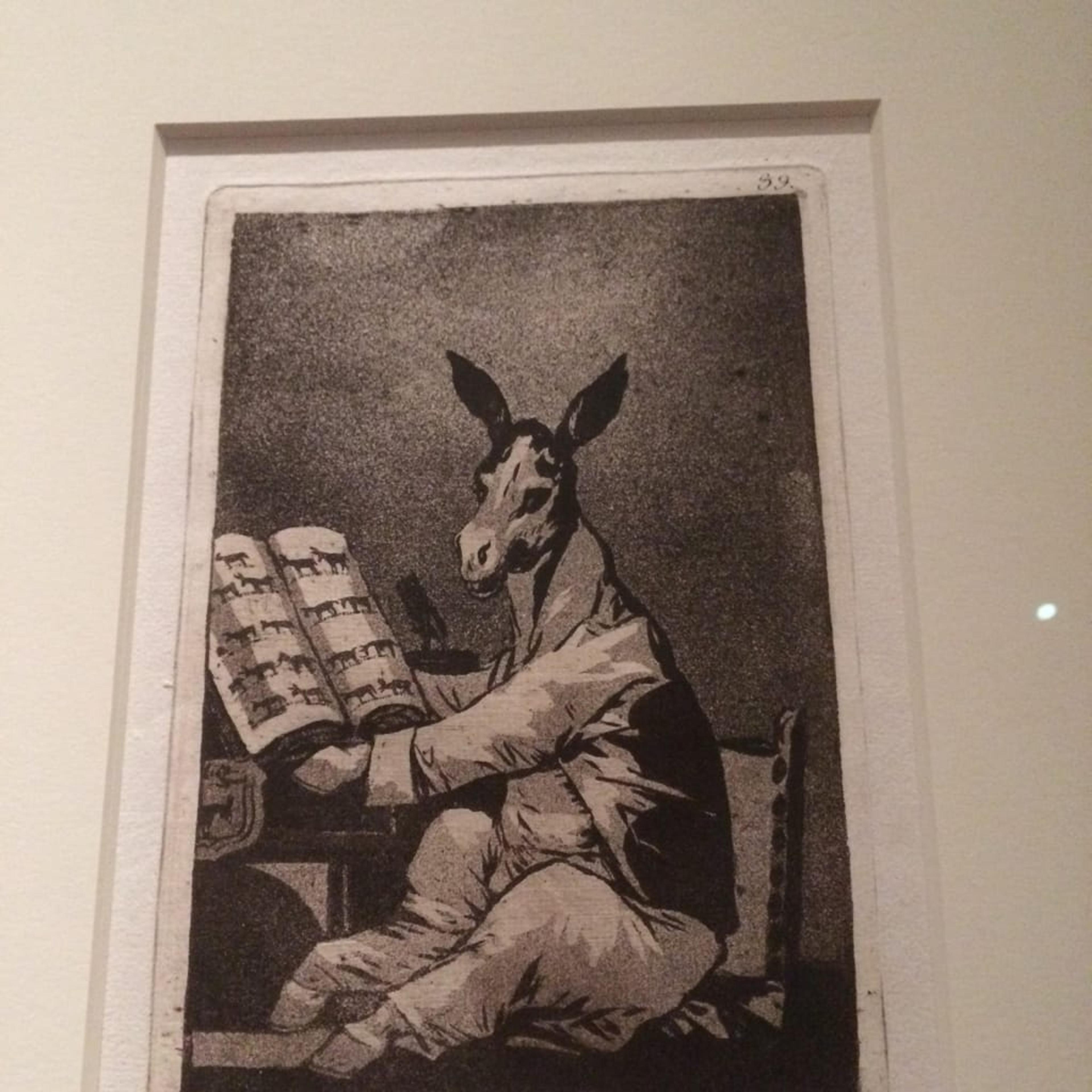 This is one of my favorite of Los Caprichos. Do you have any guesses as to what it might be trying to say?It's hard to say!In this scene, a donkey is represented in his bedclothes, studying his lineage of past donkeys. The donkey is supposed to represent the aristocracy and the contradiction that as the "enlightened ones," they are nothing more than jackasses.It also comments on the idea of lineage and, specifically, the ridiculousness of one Prime Minister who was said to have hired genealogists to uncover his venerable origins. The family tree they prepared was so large and absurd that it claimed he was the descendant of the Gothic Kings of Spain.I think it is one of his most searing and visually effective of Goya's critiques.Yes, I've seen it for a long time now but didn't know what it meant. Thank you so much.You're welcome!
Have information?
Have information about an artwork? Contact us at