Artist Designing After Nature
Abraham Pietersz. van Calraet


1 of 3
Object Label
Abraham Pietersz. van Calraet here painted two figures on a low rise overlooking a panoramic view of a hill village and the surrounding flatlands. One, an artist, perches on a portable stool with a sketchbook on his knees, while his companion attends to their horses and steals a look at the scene as it develops on paper. The viewer is drawn into the space of the painting through two devices—the engaging eye of the brown horse and the empty patch of terrain in the right foreground.
The composition offers a glimpse of the working process of a seventeenth-century landscape painter, who might make outdoor sketches that would later serve as studies for larger, finished compositions executed in the studio.
The composition offers a glimpse of the working process of a seventeenth-century landscape painter, who might make outdoor sketches that would later serve as studies for larger, finished compositions executed in the studio.
Caption
Abraham Pietersz. van Calraet (Dutch, 1642–1722). Artist Designing After Nature, after 1651. Oil on cradled panel, 11 × 17 7/8 in. (27.9 × 45.4 cm) frame: 16 3/4 × 23 1/2 × 3 1/4 in. (42.5 × 59.7 × 8.3 cm). Brooklyn Museum, Gift of Horace O. Havemeyer, 56.191. (Photo: Brooklyn Museum)
Gallery
Not on view
Gallery
Not on view
Title
Artist Designing After Nature
Date
after 1651
Geography
Place made: Netherlands
Medium
Oil on cradled panel
Classification
Dimensions
11 × 17 7/8 in. (27.9 × 45.4 cm) frame: 16 3/4 × 23 1/2 × 3 1/4 in. (42.5 × 59.7 × 8.3 cm)
Signatures
Signed lower left: "AC"
Credit Line
Gift of Horace O. Havemeyer
Accession Number
56.191
Frequent Art Questions
What is happening in this painting?
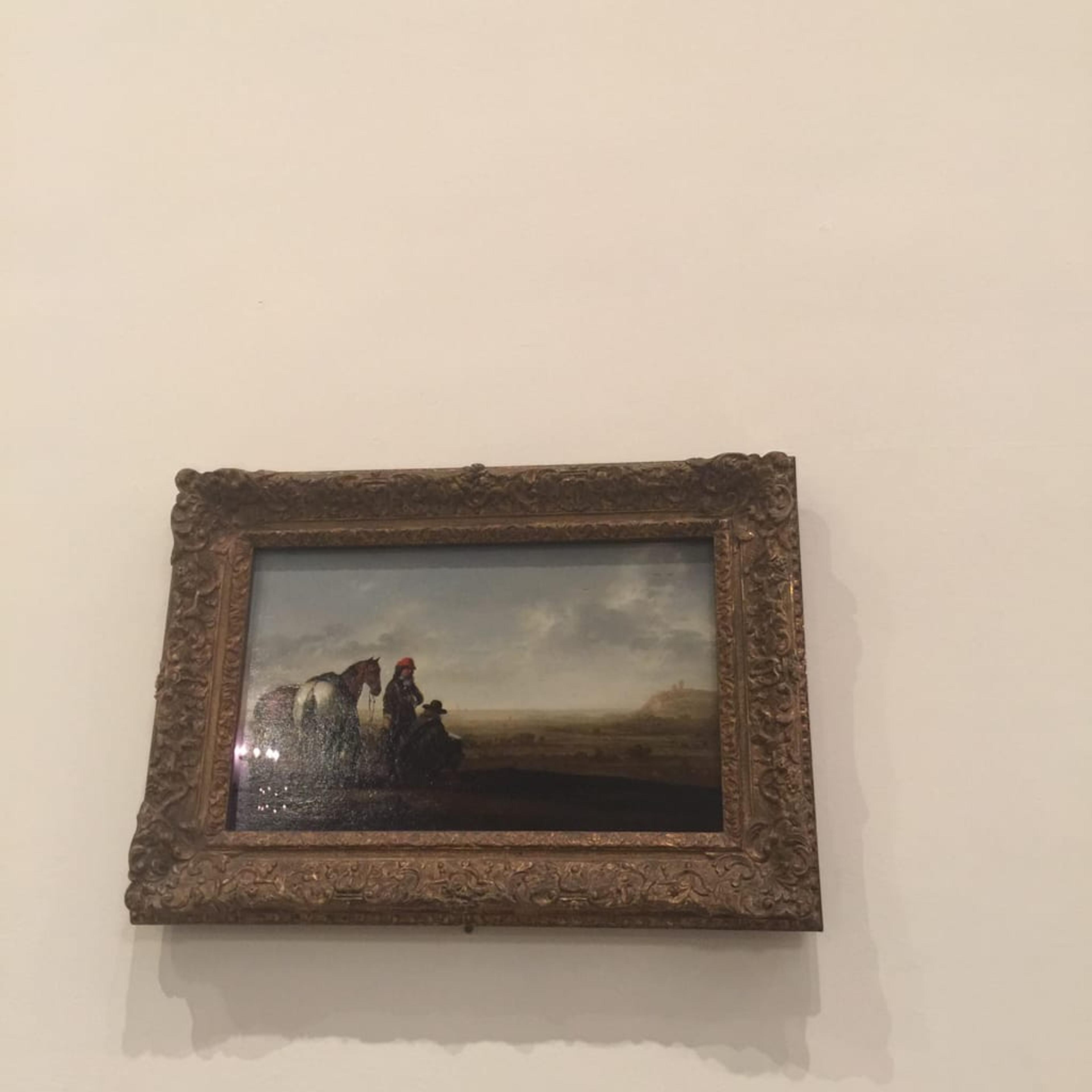 These two men were riding their horses through the countryside and they have stopped so the man on the right could draw the landscape.In the 17th century, when this was painted, artists only would have painted indoors, in their studios. But they would have made sketches outdoors, like this, to have images to work from.
Tell me more.
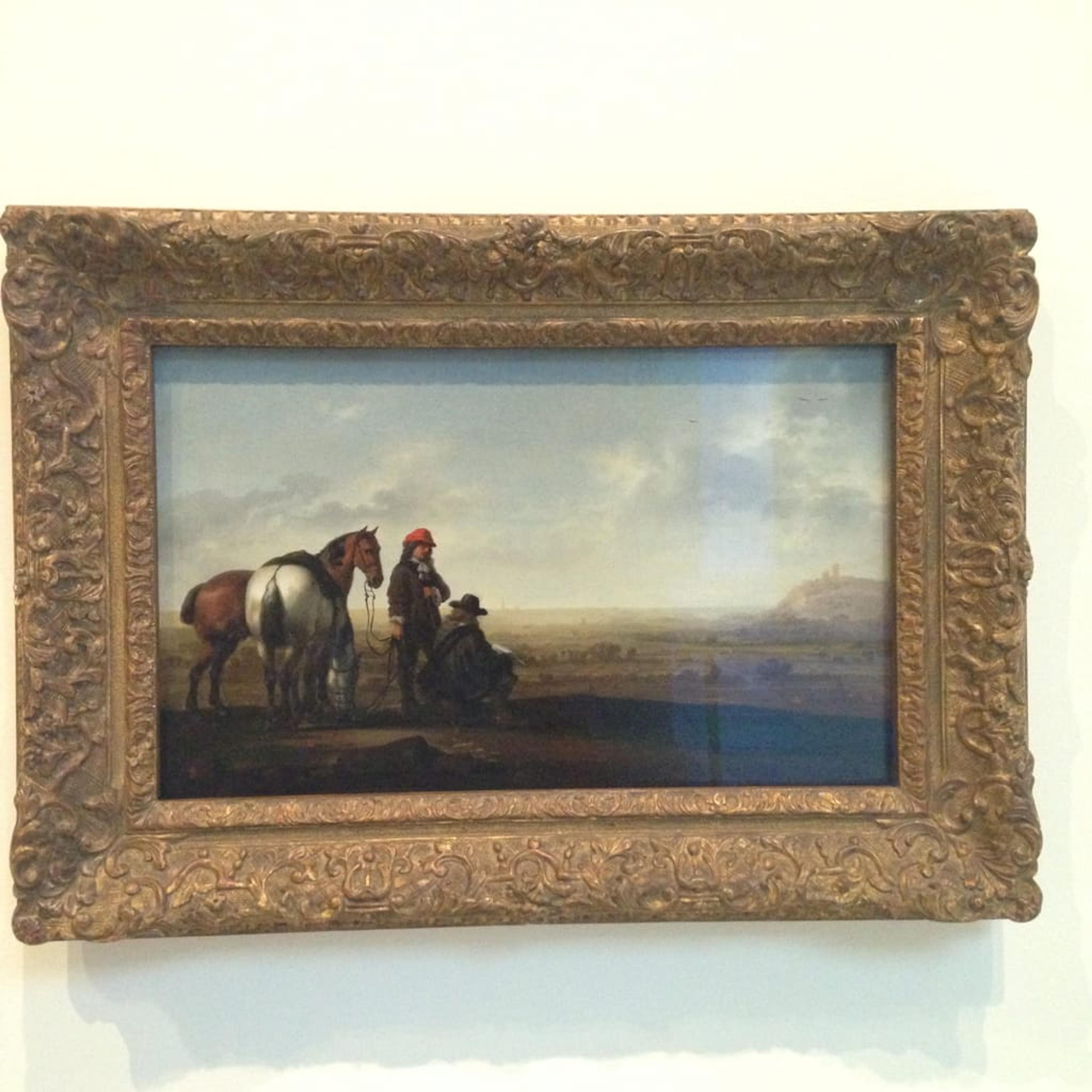 Van Calraet came from a family of artists, his father was a sculptor from Utrecht, and his brother, Barent, also painted.This work is a great example of Dutch landscape painting, a significant form of art production in the area in the 1600s. Secular subjects like landscapes became more popular at the time in part due to the urbanization of Europe. People living in cities were more interested in seeing paintings of farms and fields!Wow.
Is this, in any way, related to the work of Rembrandt?
Rembrandt was also a Dutch painter working during the same century (though slightly earlier than van Calraet), so there are definite similarities.Rembrandt, is better known for his portraits, rather than landscapes but he did depict both subjects.The two worked a bit differently, Rembrandt was known for his tendency to paint from life, whereas Van Calraet would more often sketch outside and then return to his studio and paint from his sketches.Nice
Have information?
Have information about an artwork? Contact us at