Necklace
Dogon
1 of 2
Object Label
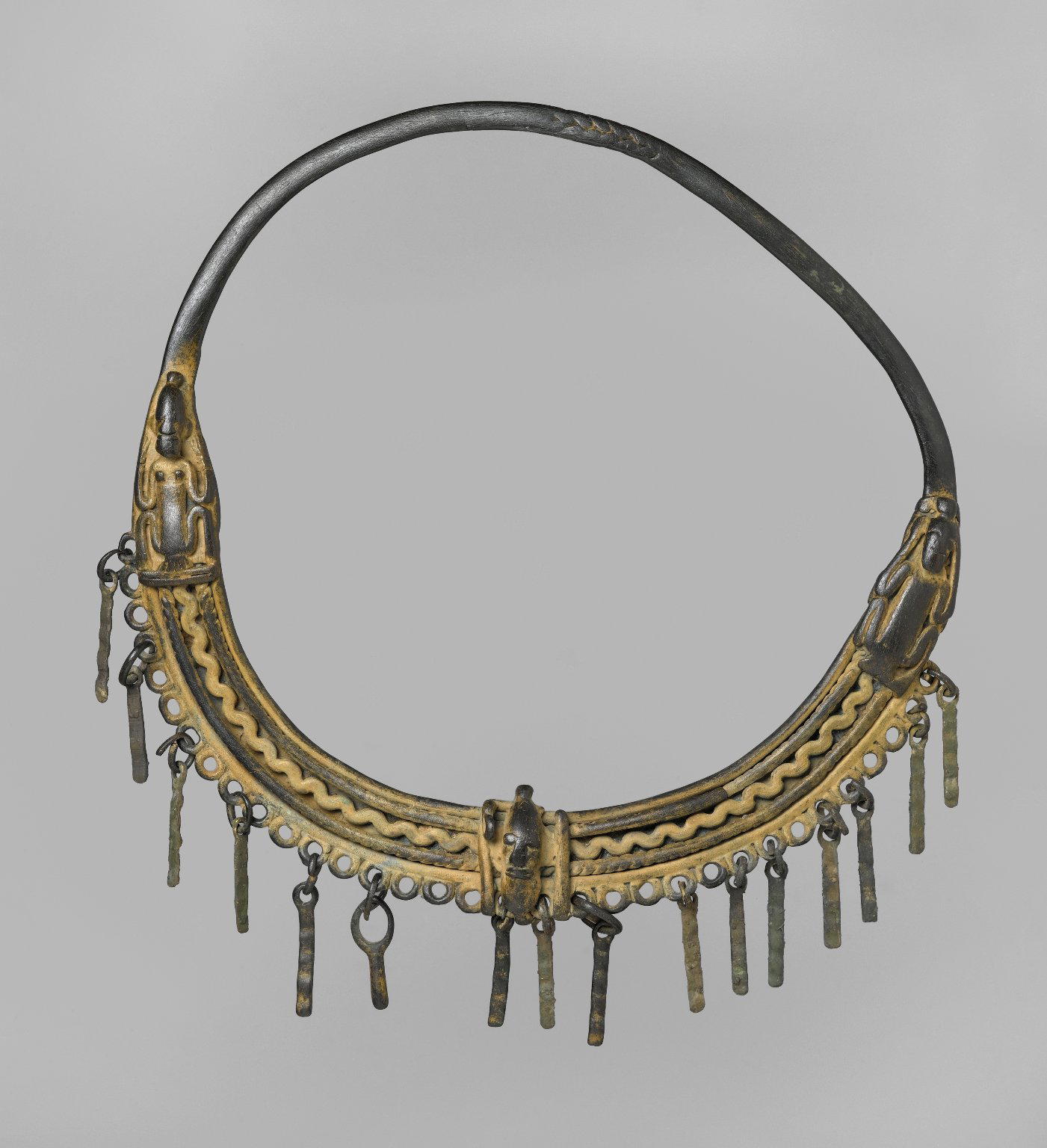
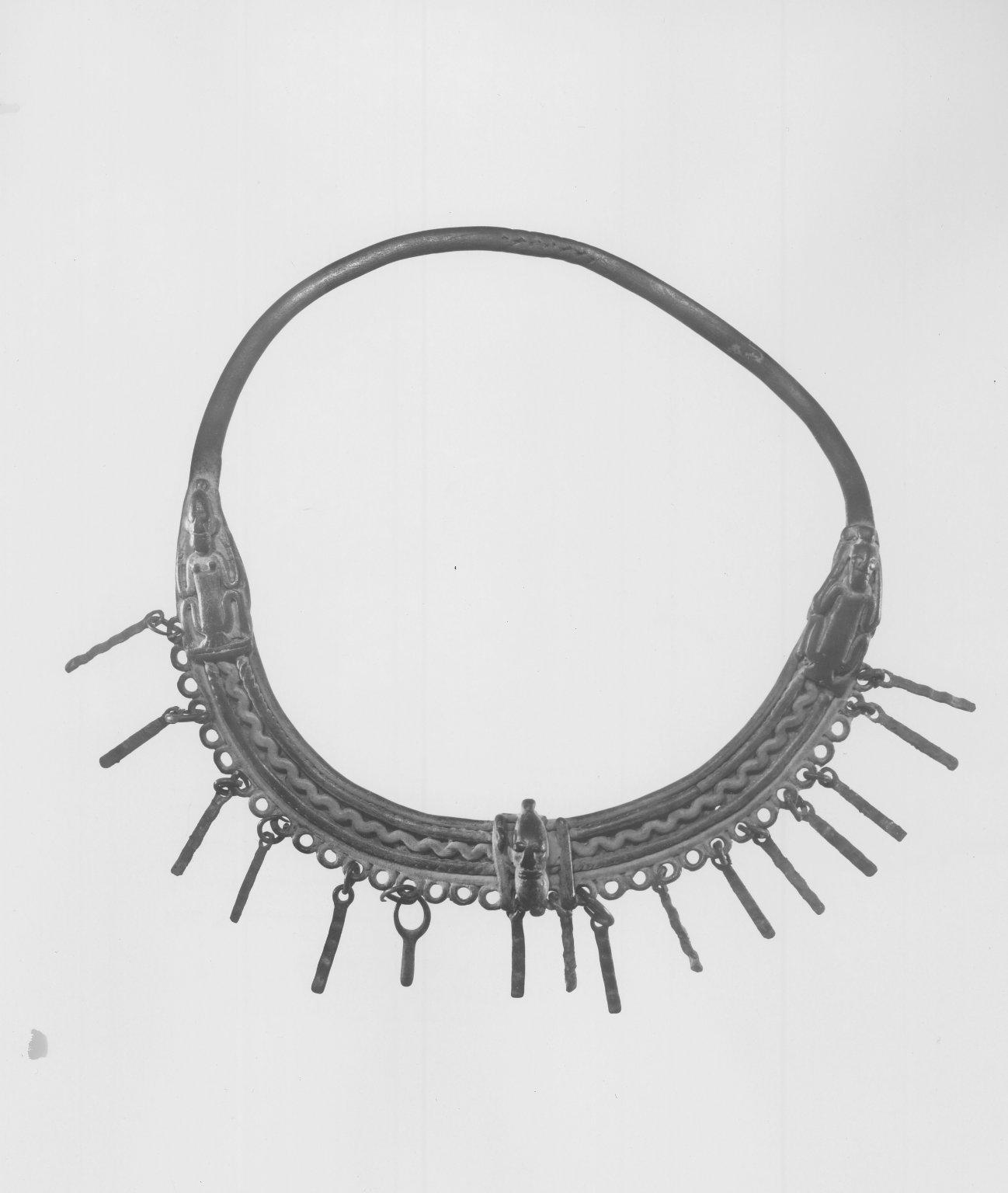
Among the Dogon, jewelry often serves as much more than personal adornment. For example, bracelets, rings, and necklaces might signify that the owner is linked to ancestors or spiritual leaders, or identify the wearer as a priest or a caretaker of a particular altar. The two seated figures on this necklace or collar most likely represent Nommo, the original beings created by the god Amma, who may be represented by the central face. The necklace was probably worn by a hogon, an important priest.
Caption
Dogon. Necklace, 11th–15th century (?). Copper alloy, 9 x 9 x 1 in. (22.9 x 22.9 x 2.5 cm) Diameter: 9in. (22.9cm). Brooklyn Museum, Gift of Mrs. Jacob M. Kaplan, 74.67. (Photo: Brooklyn Museum)
Gallery
Not on view
Collection
Gallery
Not on view
Collection
Culture
Title
Necklace
Date
11th–15th century (?)
Geography
Place made: Mopti Region, Mali
Medium
Copper alloy
Classification
Dimensions
9 x 9 x 1 in. (22.9 x 22.9 x 2.5 cm) Diameter: 9in. (22.9cm)
Credit Line
Gift of Mrs. Jacob M. Kaplan
Accession Number
74.67
Frequent Art Questions
Who are the Dogon?
The Dogon are a West African people living primarily in Mali. The Dogon are perhaps best known for their complex cosmology and retaining their traditional spirituality in a region that was largely converted to Islam.
Have information?
Have information about an artwork? Contact us at