Clock
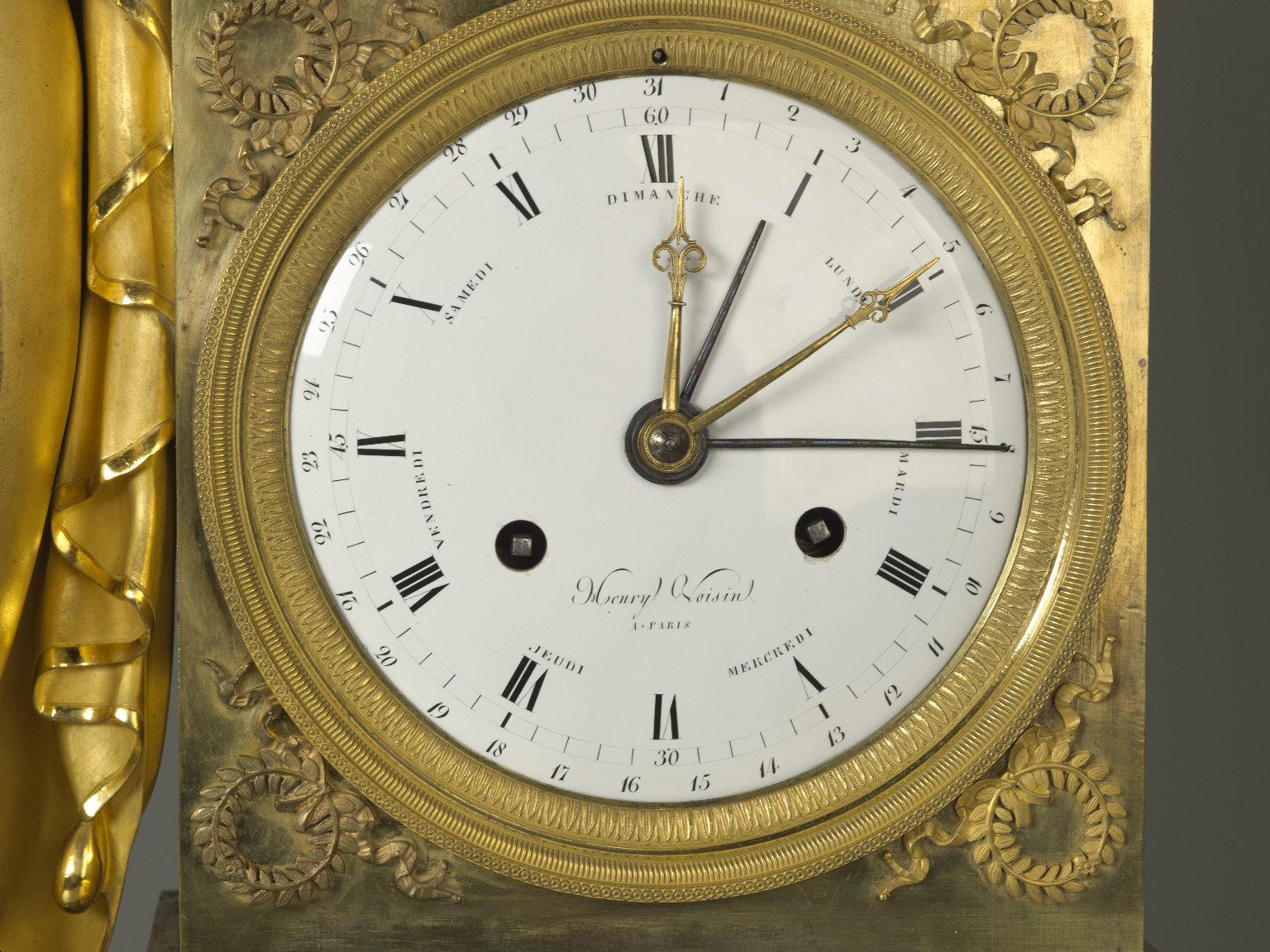
(internal clockworks) Henry Voisin; (clock case) Unknown Maker



1 of 4
Object Label
This monumental clock was a diplomatic gift presented by Napoleon to Robert Livingston, the American minister to France from 1801 to 1804. The classically inspired decoration on the clock includes a figure and relief of Apollo, the Greek sun god; a laurel wreath; and a smaller plaque representing Ganymede, the Greek wine bearer of the gods. These elements were part of the design vocabulary of the Neoclassical style, called Empire in France.
Caption
(internal clockworks) Henry Voisin (French, active early 19th century); (clock case) Unknown Maker. Clock, ca. 1800. Gilded bronze, marble, enamel, 33 1/2 × 26 × 9 1/4 in. (85.1 × 66 × 23.5 cm). Brooklyn Museum, Gift of Mrs. Frederick A. Yenni, 39.438a. (Photo: Brooklyn Museum)
Gallery
Not on view
Collection
Gallery
Not on view
Collection
Title
Clock
Date
ca. 1800
Geography
Place made: France
Medium
Gilded bronze, marble, enamel
Classification
Dimensions
33 1/2 × 26 × 9 1/4 in. (85.1 × 66 × 23.5 cm)
Inscriptions
Inscribed on clock face: "Henry Voisin A - Paris"
Credit Line
Gift of Mrs. Frederick A. Yenni
Accession Number
39.438a
Frequent Art Questions
Is this a specific style?
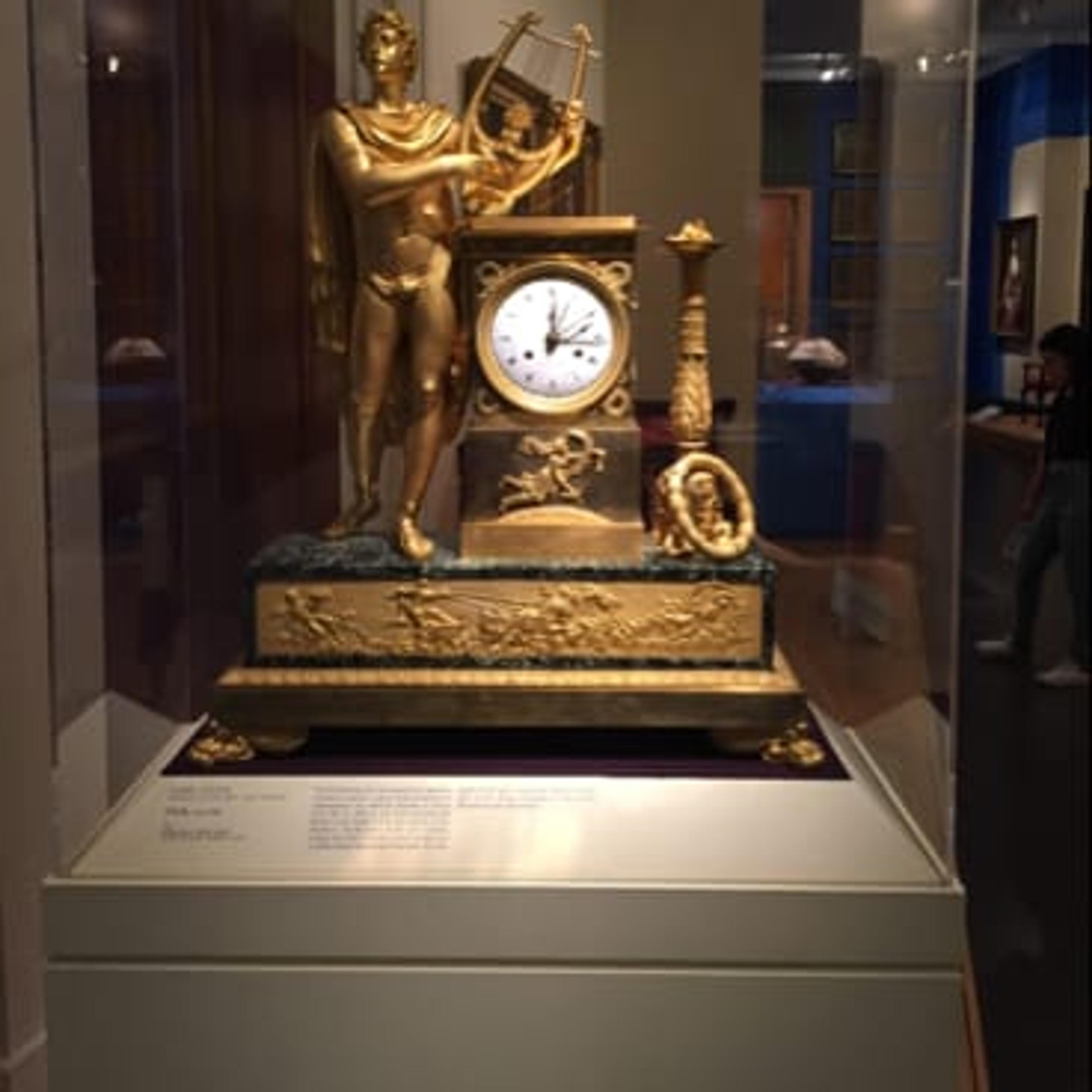 The Henri Voison clock is a good example of the "Empire Style" which idealized Napoleon's leadership and the French state. We could also refer to this style as "Neoclassical," which in the United States is more based on the designs of Classical Greece and Rome. It makes references to Greek and Roman mythology, including the god Apollo here.
Does this clock still work?
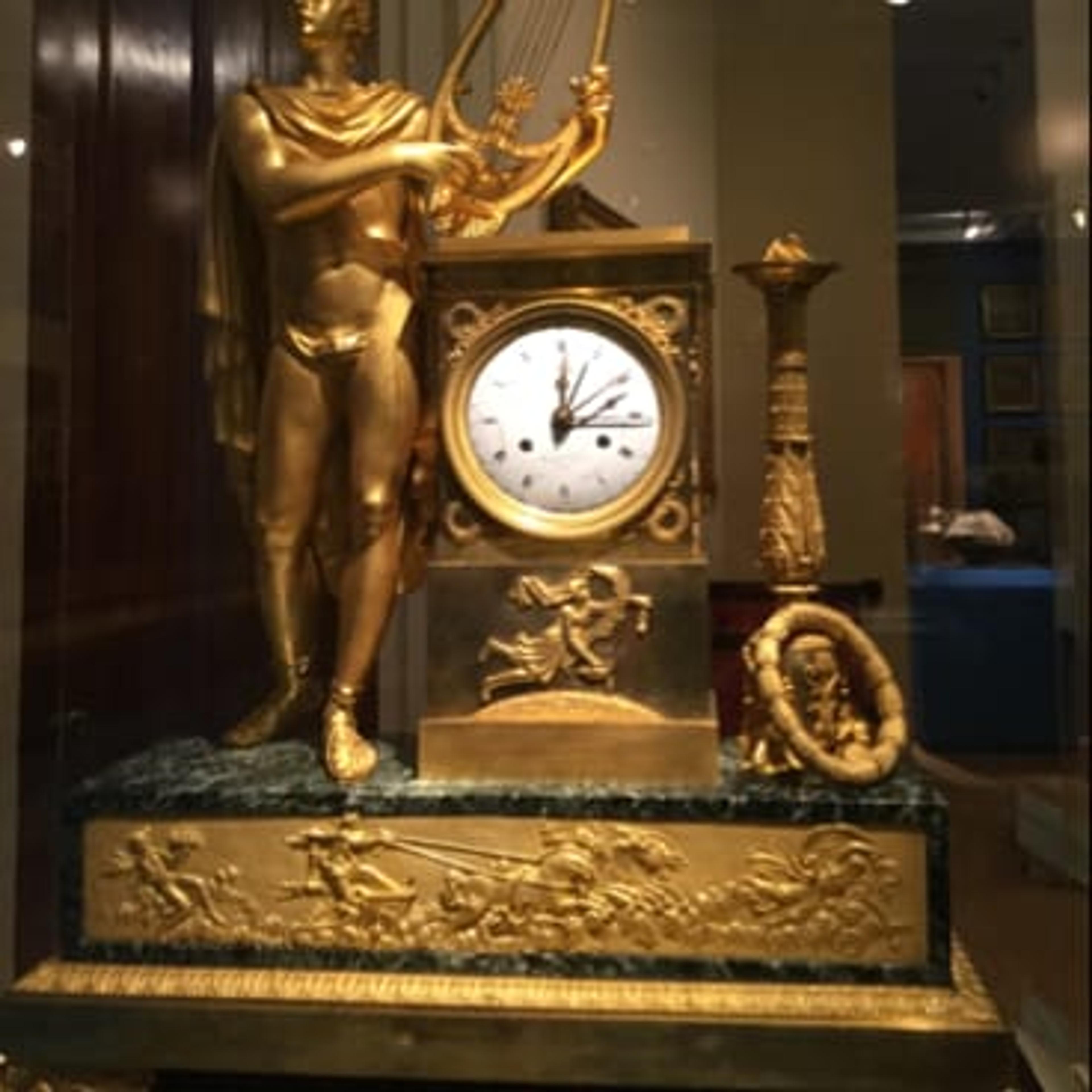 Hm, I don't think so. The hands in the photo you sent are in the same position as the photo we have on file so it looks like it hasn't tick-tocked in a while!
Please tell me more.
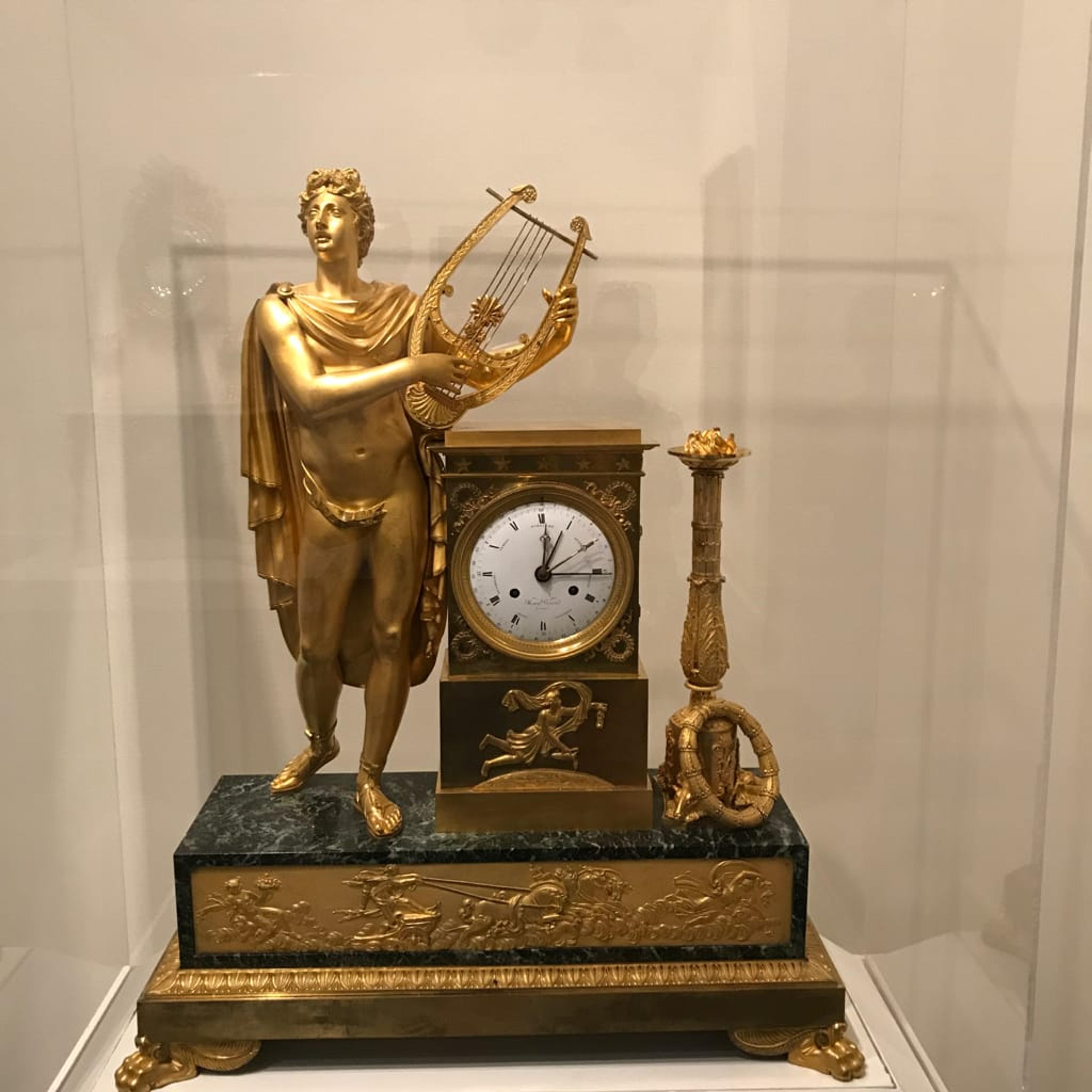 This clock, designed by Henri Voisin, is an example of "Empire Style" which idealized Napoleon's leadership and the French state. It was a gift from Napoleon to Robert Livingston, American minister to France between 1801 and 1805. Notice Apollo's posture, with all the weight on one leg. This pose is known as "contrapposto". Ancient Greek sculptors arranged figures in this way to create a sense of subtle dynamism and naturalism. Designers of the Empire Style were looking to Classical Art for inspiration.
Have information?
Have information about an artwork? Contact us at