Dresser with Mirror
John Henry Belter


1 of 2
Object Label
These two dressers were produced in New York about a generation apart for style-conscious, upper-middle-class consumers. The Belter dresser, with its undulating contours and profusion of naturalistic decoration, is a masterpiece of the Rococo Revival style, while the later, ebonized dresser is in the more geometric Aesthetic Movement style. The Aesthetic Movement represented a conscious rejection of the perceived excesses of the overwrought revival style that preceded it. Its proponents urged design reforms based on Augustus Pugin’s principles (see the gaming table nearby), as well as new lessons learned from the art of Japan. Although both dressers were considered stylish when made, it is the simple rectilinear form and flattened, abstract decoration of the later piece that appear “modern” to us today.
Caption
John Henry Belter (American, born Germany, 1804–1863). Dresser with Mirror, ca. 1855. Laminated rosewood, marble, mirrored glass, 95 x 49 1/2 x 25 in. (241.3 x 125.7 x 63.5 cm) base height: 34 1/2 in. (87.6 cm). Brooklyn Museum, Gift of Mrs. Ernest Vietor, 39.31a-c. (Photo: Brooklyn Museum)
Gallery
Not on view
Collection
Gallery
Not on view
Collection
Maker
Title
Dresser with Mirror
Date
ca. 1855
Medium
Laminated rosewood, marble, mirrored glass
Classification
Dimensions
95 x 49 1/2 x 25 in. (241.3 x 125.7 x 63.5 cm) base height: 34 1/2 in. (87.6 cm)
Credit Line
Gift of Mrs. Ernest Vietor
Accession Number
39.31a-c
Frequent Art Questions
Is this for work or pleasure? Is it a dresser?
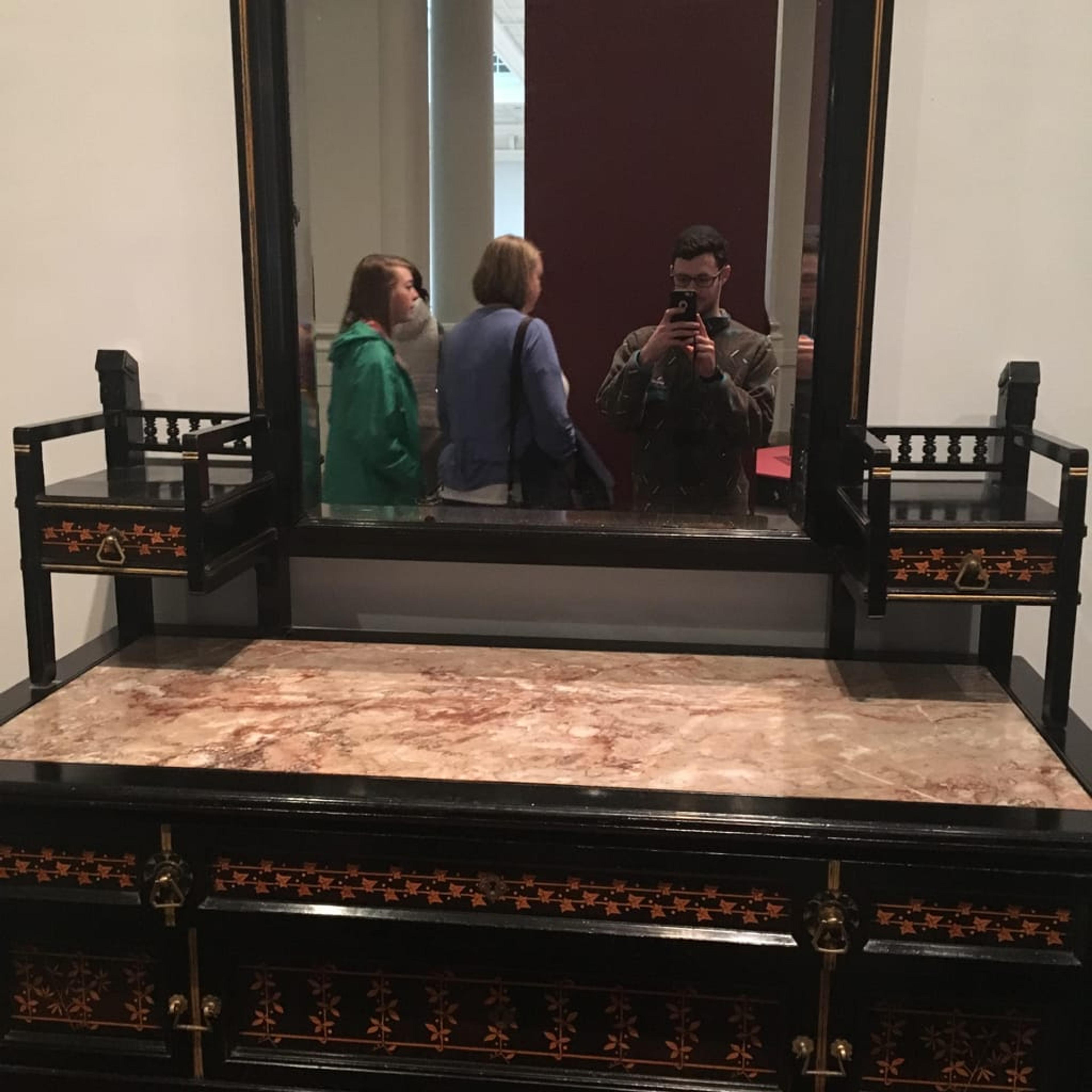 That is indeed a dresser used for storing both clothing and other items such as cosmetics. It is typical of the style of the Rococo Revival, popular during the 1850s, which looked to French 18th-century design and organic ornament for inspiration.
Have information?
Have information about an artwork? Contact us at