Karanga Mask
Mossi
1 of 3
Object Label
Becoming Another
The play associated with masquerade can lead to the invention of new types of identities and new hybrid, not-quite-human masked beings. Moments of passage—into or out of this world, through birth or death, or from childhood to adulthood—bring with them the potential for disorder. Masquerade can offer a vision of transcendence, suggesting that such concerns belong to a world beyond limited human understanding. By transforming its participants into nonhuman beings, masquerade performance transcends everyday human reality and reminds all involved that their immediate concerns are governed by forces larger than themselves.
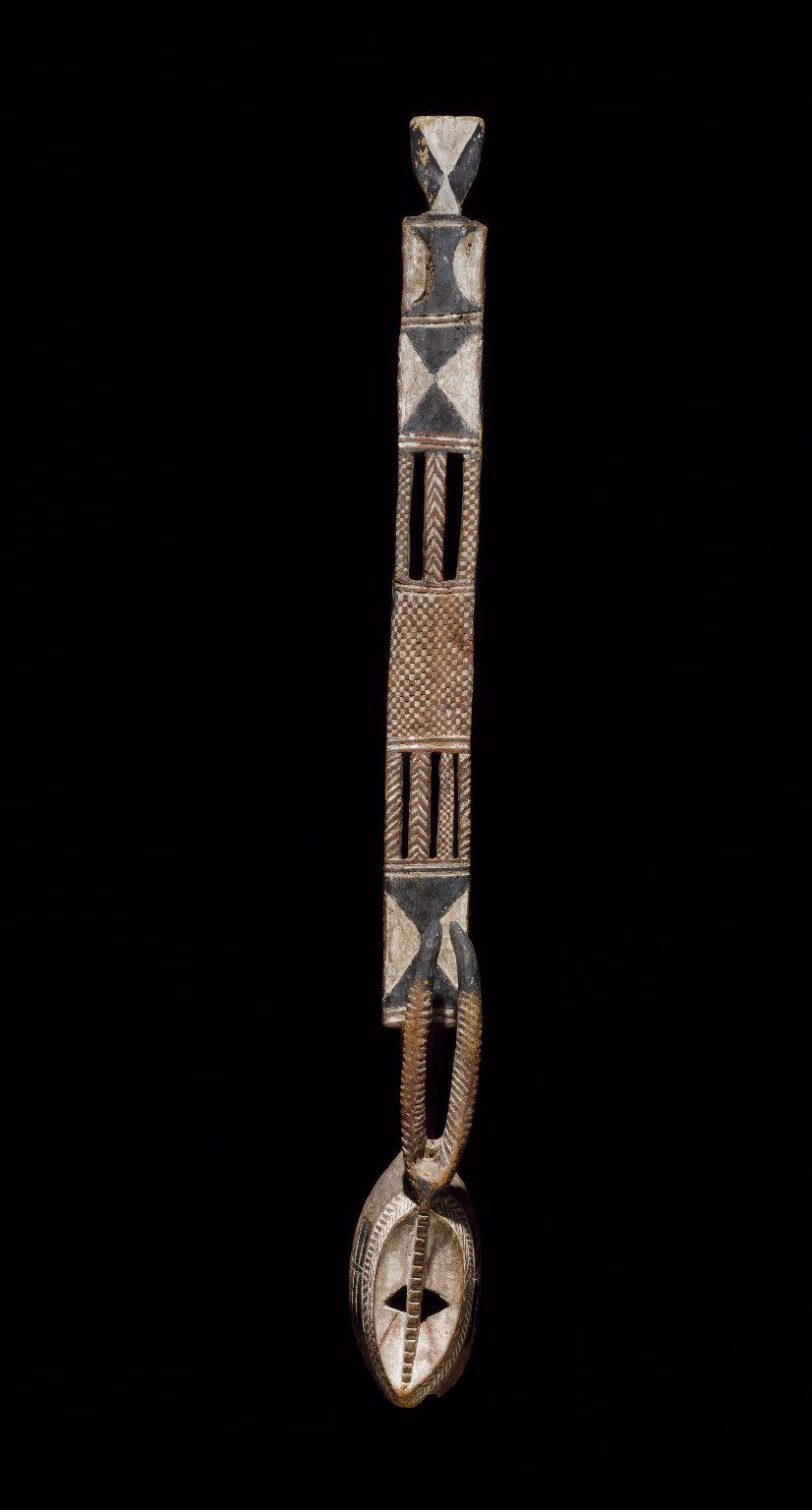
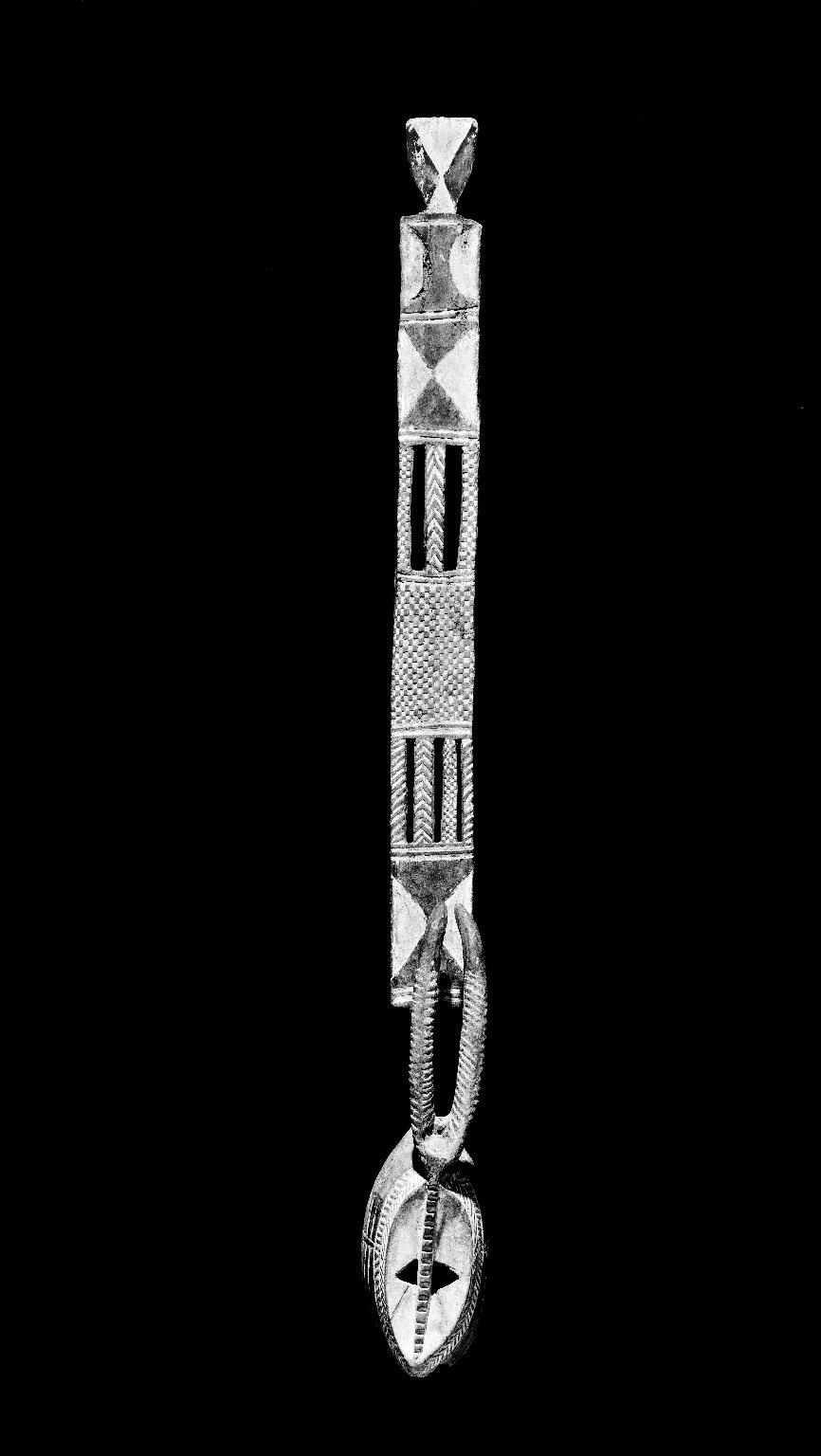
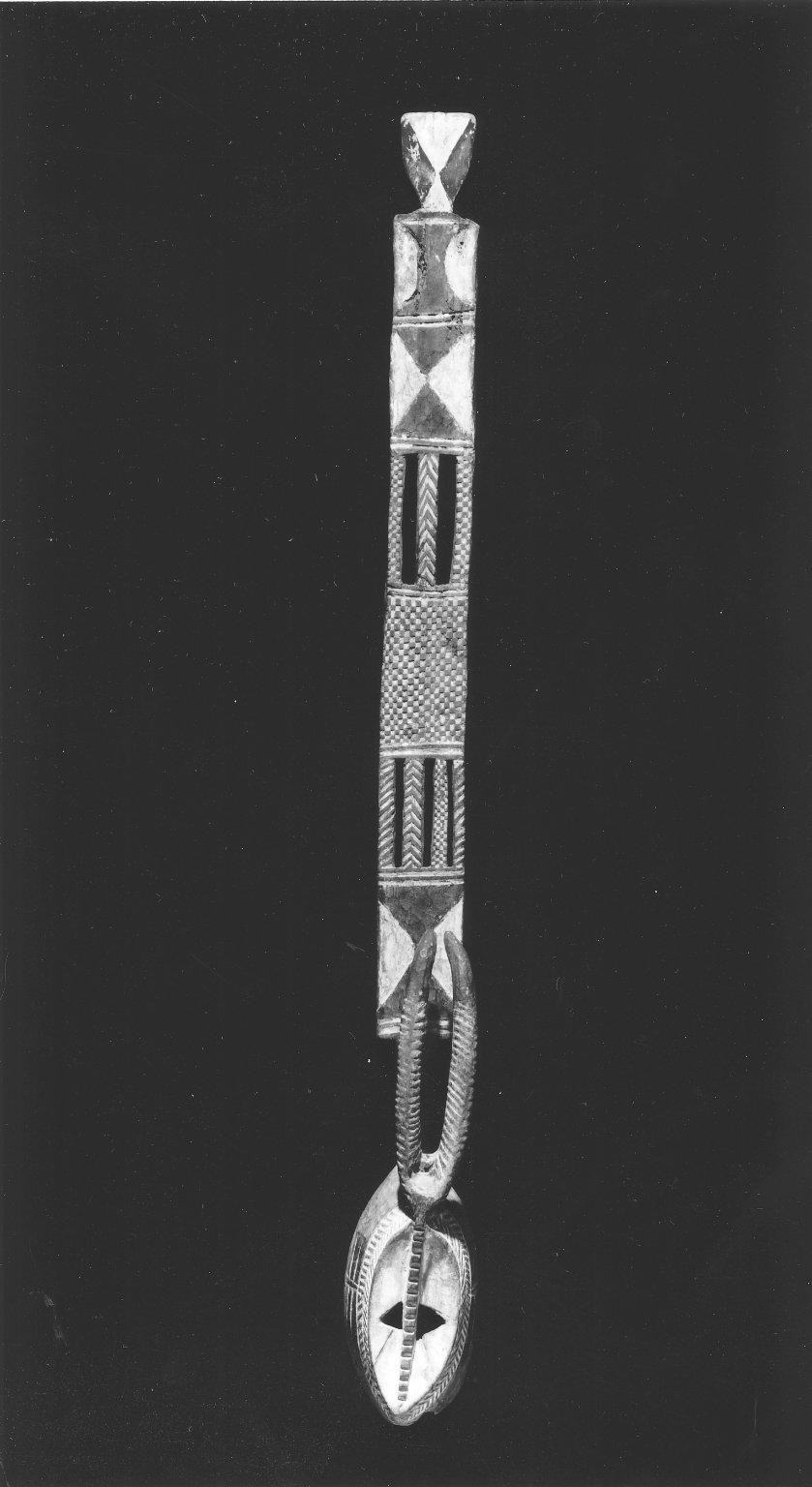
Both of these masks by Mossi artists portray a being that combines human and animal characteristics. The tall, plank-like mask suggests a human-antelope hybrid, while the horizontal mask has both antelope and birdlike features.
Most Mossi masks symbolically depict totemic animals associated with particular clans. Each family has an animal with which it has mythological connections and which protects it from harm. Such masks would appear at the funerals of important family members, a moment loaded with personal, community, and spiritual significance. At the end of their own active lives, masks might go on to second lives as altars, providing connection to the spirits of commemorated ancestors.
The play associated with masquerade can lead to the invention of new types of identities and new hybrid, not-quite-human masked beings. Moments of passage—into or out of this world, through birth or death, or from childhood to adulthood—bring with them the potential for disorder. Masquerade can offer a vision of transcendence, suggesting that such concerns belong to a world beyond limited human understanding. By transforming its participants into nonhuman beings, masquerade performance transcends everyday human reality and reminds all involved that their immediate concerns are governed by forces larger than themselves.
Both of these masks by Mossi artists portray a being that combines human and animal characteristics. The tall, plank-like mask suggests a human-antelope hybrid, while the horizontal mask has both antelope and birdlike features.
Most Mossi masks symbolically depict totemic animals associated with particular clans. Each family has an animal with which it has mythological connections and which protects it from harm. Such masks would appear at the funerals of important family members, a moment loaded with personal, community, and spiritual significance. At the end of their own active lives, masks might go on to second lives as altars, providing connection to the spirits of commemorated ancestors.
Caption
Mossi. Karanga Mask, early 20th century. Wood, pigment, 63 x 6 1/4 x 5 in. (160 x 15.9 x 12.7 cm). Brooklyn Museum, Gift of Mr. and Mrs. Milton F. Rosenthal in memory of Julia Forchheimer, 1992.74.1. (Photo: Brooklyn Museum)
Gallery
Not on view
Collection
Gallery
Not on view
Collection
Culture
Title
Karanga Mask
Date
early 20th century
Geography
Place made: Nord Region, Burkina Faso
Medium
Wood, pigment
Classification
Dimensions
63 x 6 1/4 x 5 in. (160 x 15.9 x 12.7 cm)
Credit Line
Gift of Mr. and Mrs. Milton F. Rosenthal in memory of Julia Forchheimer
Accession Number
1992.74.1
Have information?
Have information about an artwork? Contact us at