Panel of Tiles


1 of 3
Caption
Panel of Tiles, late 16th–17th century. Ceramic; fritware, painted in black, cobalt blue, green, and turquoise on a white slip ground under a transparent glaze, 6 x 4 3/6 feet (184 x 138 cm) Each of the 49 tiles: 9 1/16 in. (23 cm). Brooklyn Museum, Gift of Alvin Devereux, 39.407.1-.54. (Photo: Brooklyn Museum)
Collection
Collection
Title
Panel of Tiles
Date
late 16th–17th century
Dynasty
Ottoman
Period
Ottoman Period
Geography
Place made: Damascus, Middle East, Syria
Medium
Ceramic; fritware, painted in black, cobalt blue, green, and turquoise on a white slip ground under a transparent glaze
Classification
Dimensions
6 x 4 3/6 feet (184 x 138 cm) Each of the 49 tiles: 9 1/16 in. (23 cm)
Credit Line
Gift of Alvin Devereux
Accession Number
39.407.1-.54
Frequent Art Questions
Yes, this is correct those tiles were made in Damascus, Syria, during the late 16th-17th century.
It is made from a type of ceramic called 'fritware,' which involved painting the tiles and applying a transparent gaze before firing to give the tiles a bit of shine.Where were these tiles displayed?
We don't know what kind of interior space these tiles were originally placed in, but a similar building of that period would have been the Darwish Pasha Mosque, built by an Ottoman governor in Syria in the 16th century.It's beautiful and so well preserved! Where would it have been displayed?
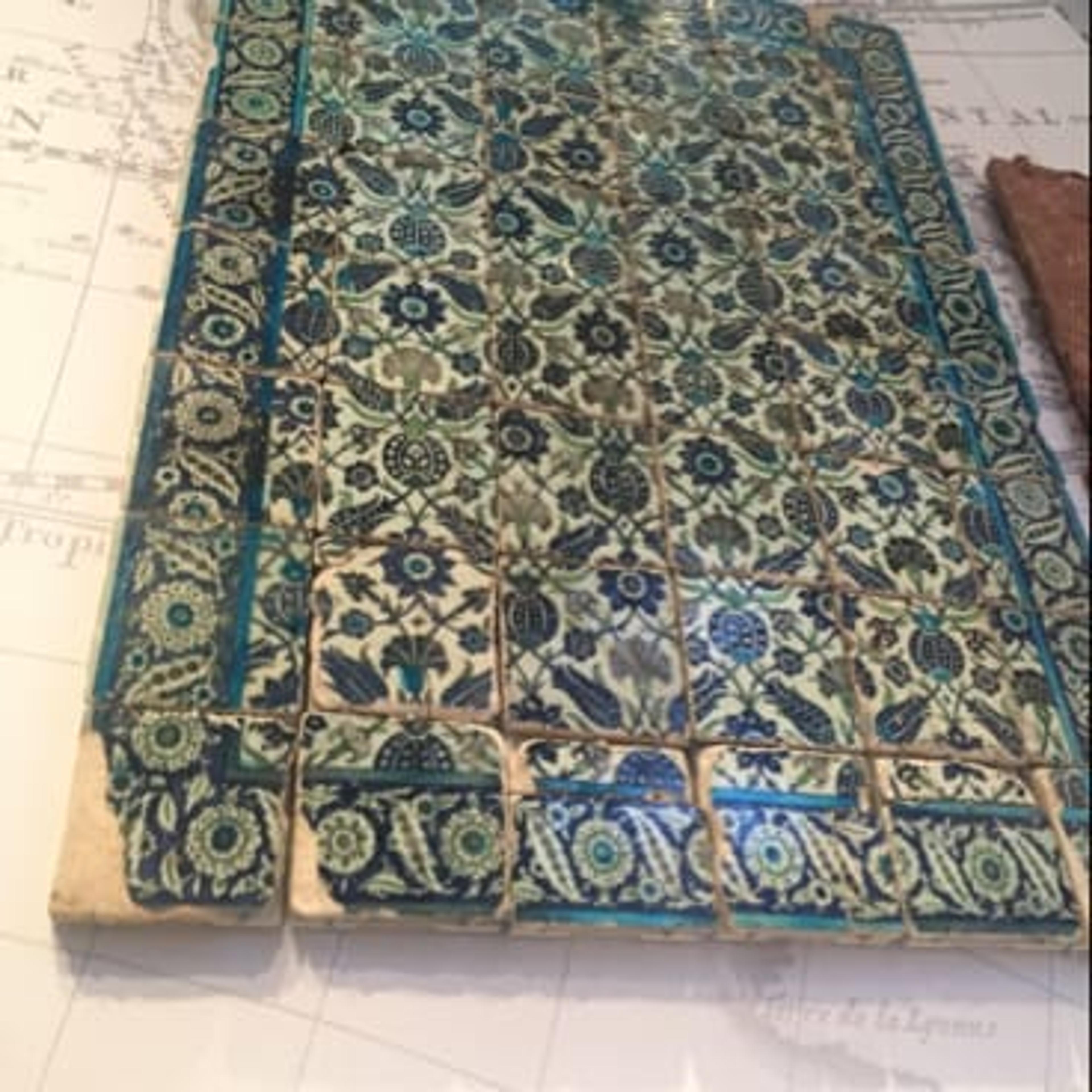 We actually don't know what building these tiles were originally placed in, but many buildings from the same period include similar tiles. One example with particularly similar tiling is the Darwish Pasha Mosque, built by an Ottoman governor in Damascus, Syria, in the 16th century.These tiles would have originally been part of a much larger decorative scheme. It would have been amazing to experience such rooms in the 16th century!
Have information?
Have information about an artwork? Contact us at