Incised Strombus-Shell Trumpet
1 of 9
Object Label
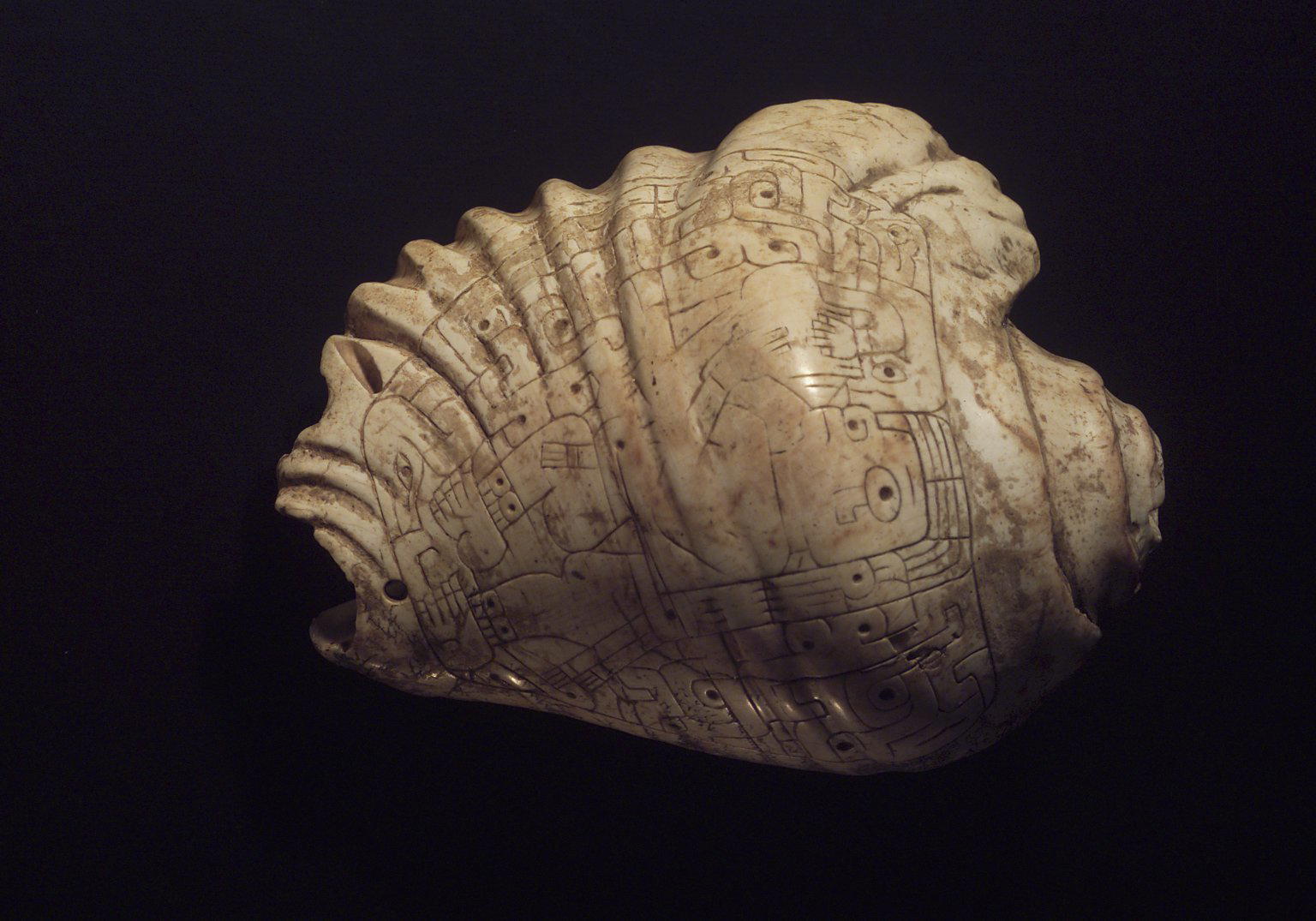
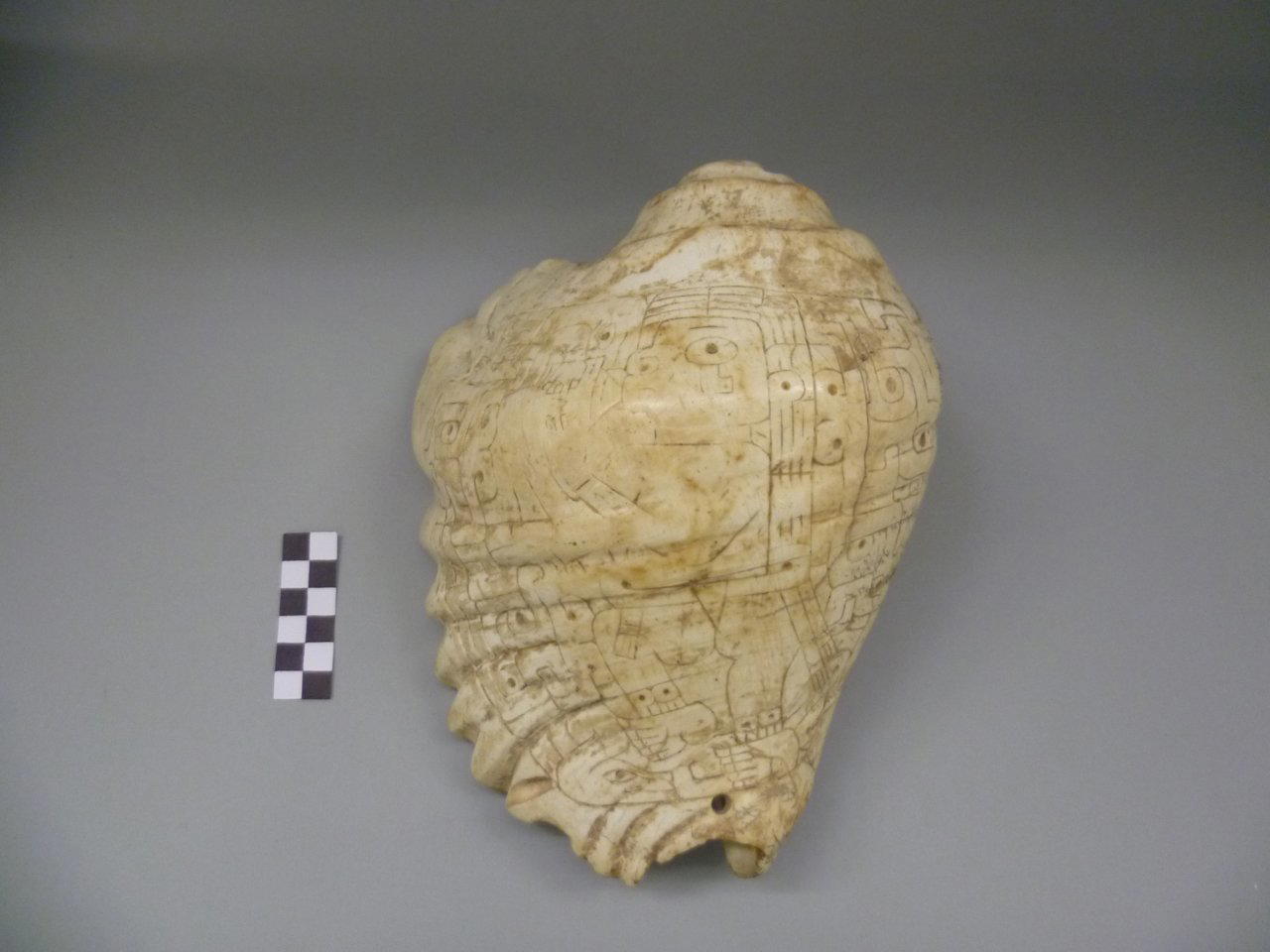
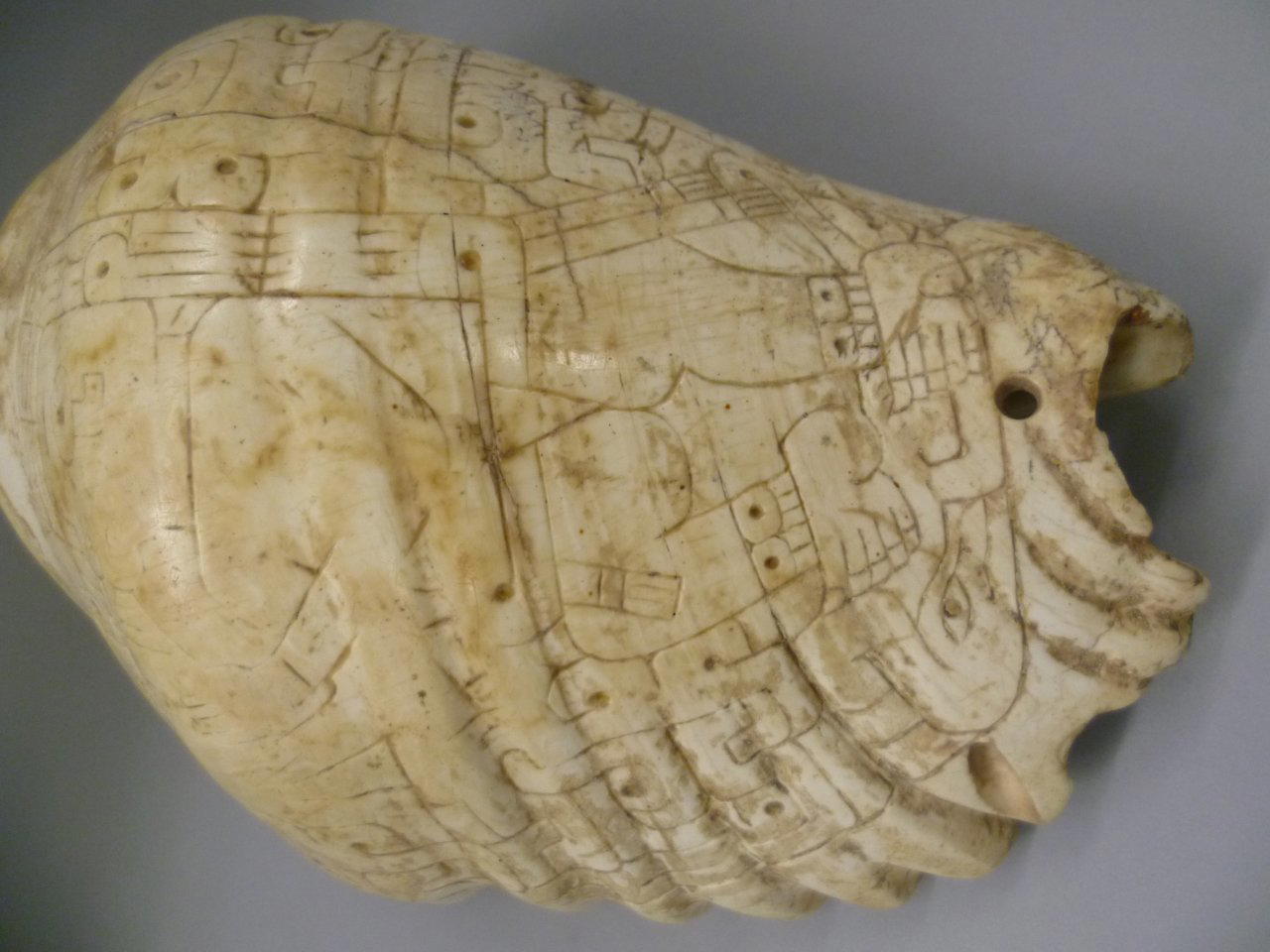
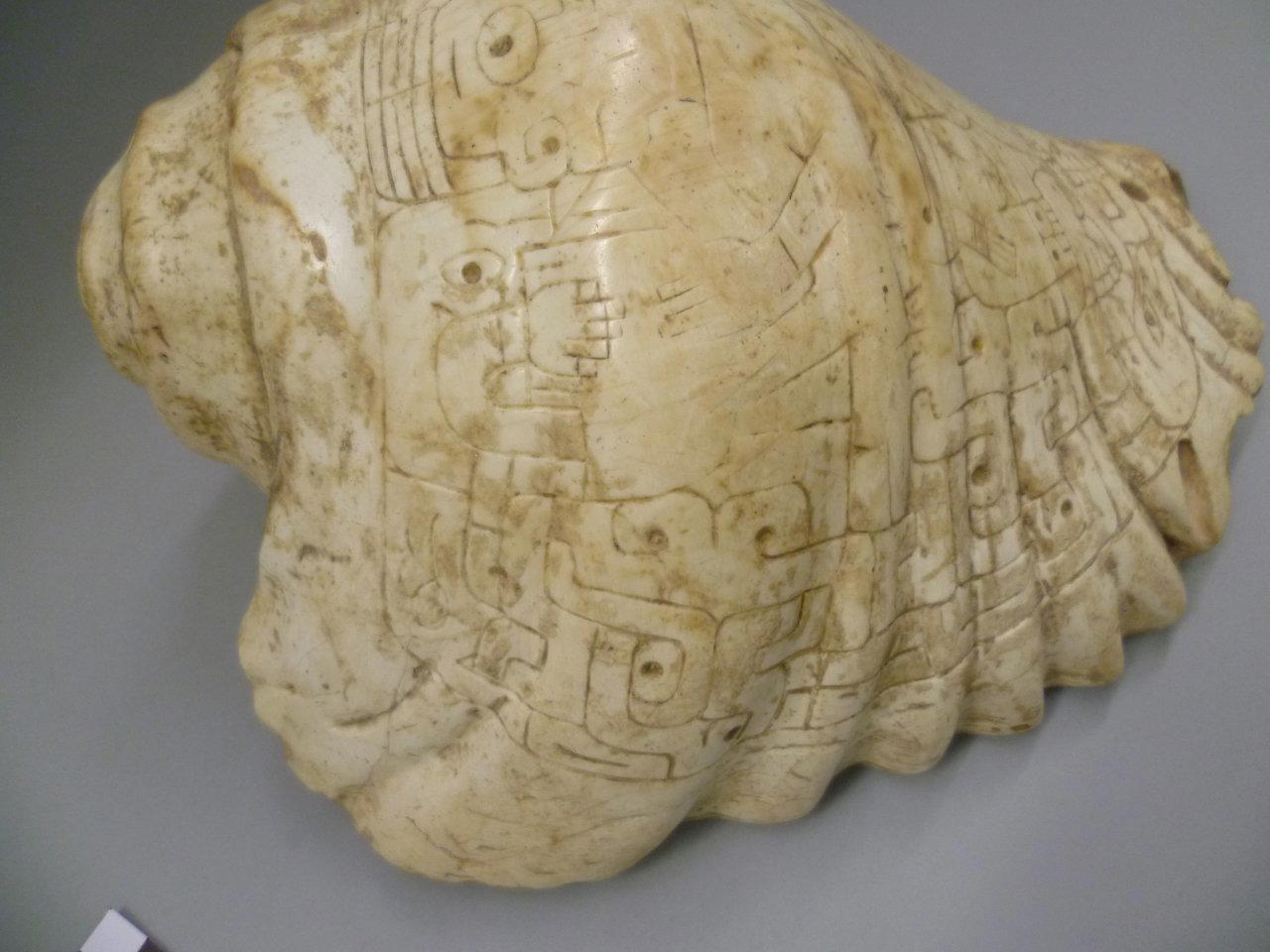
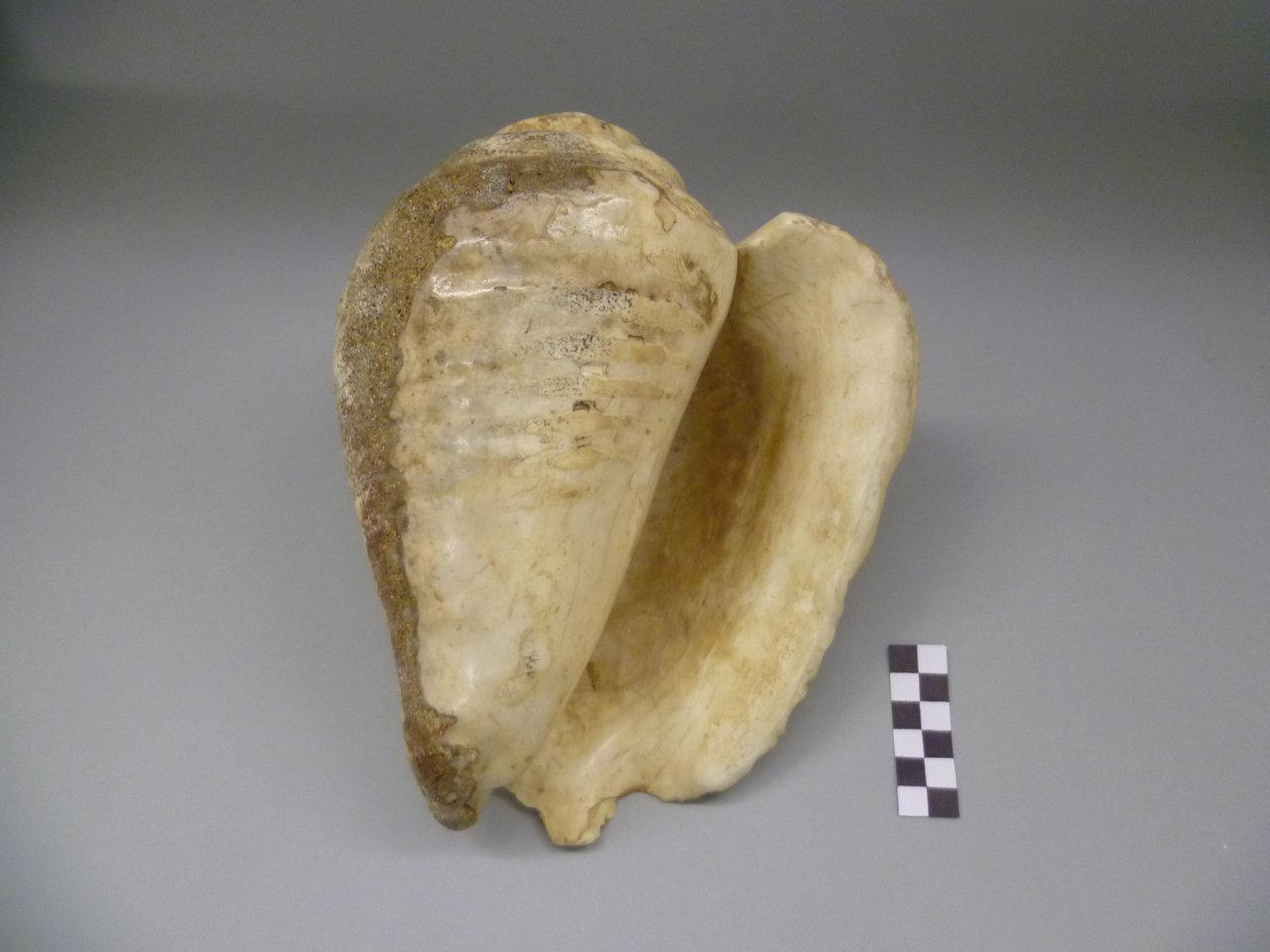
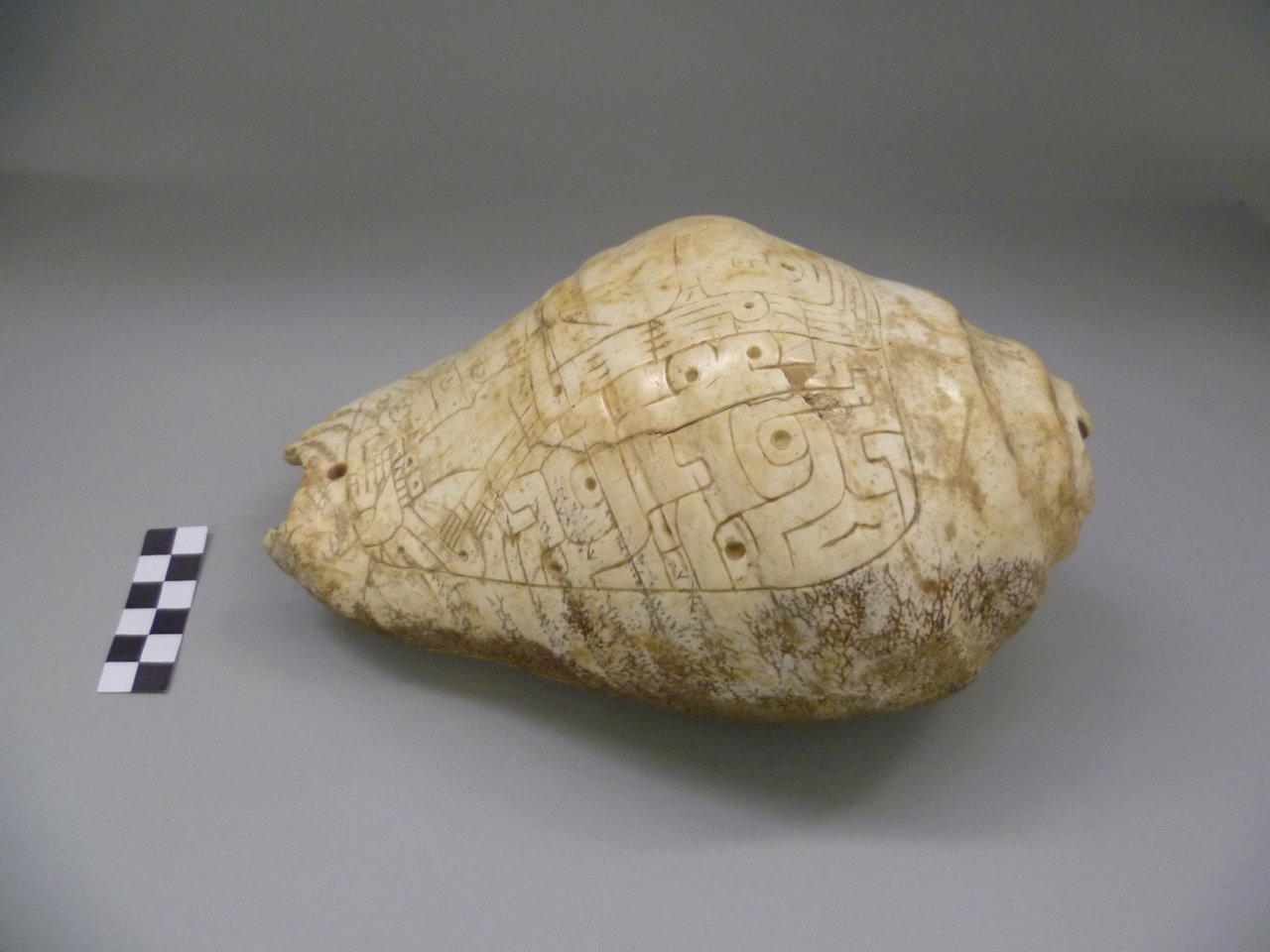
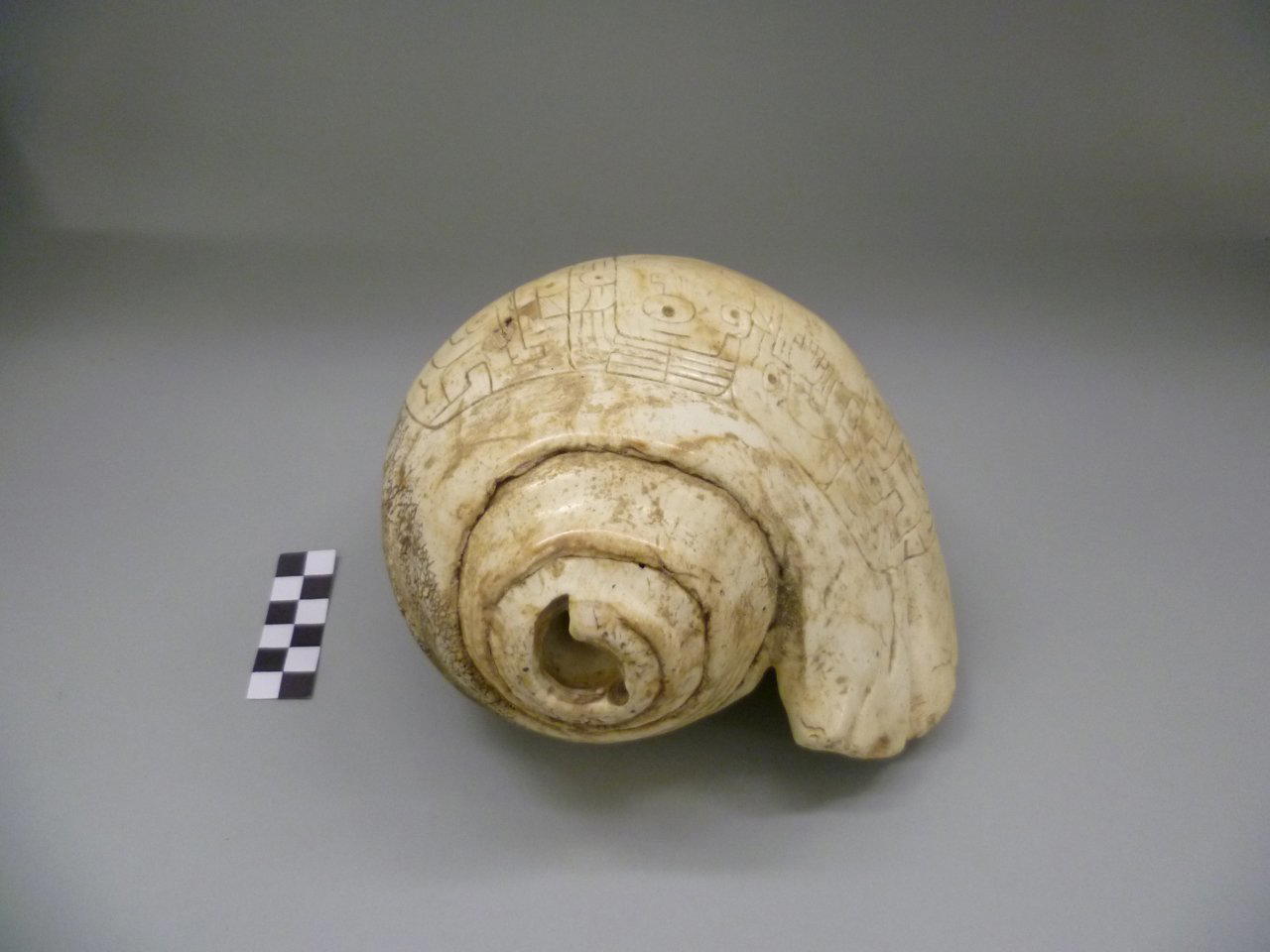
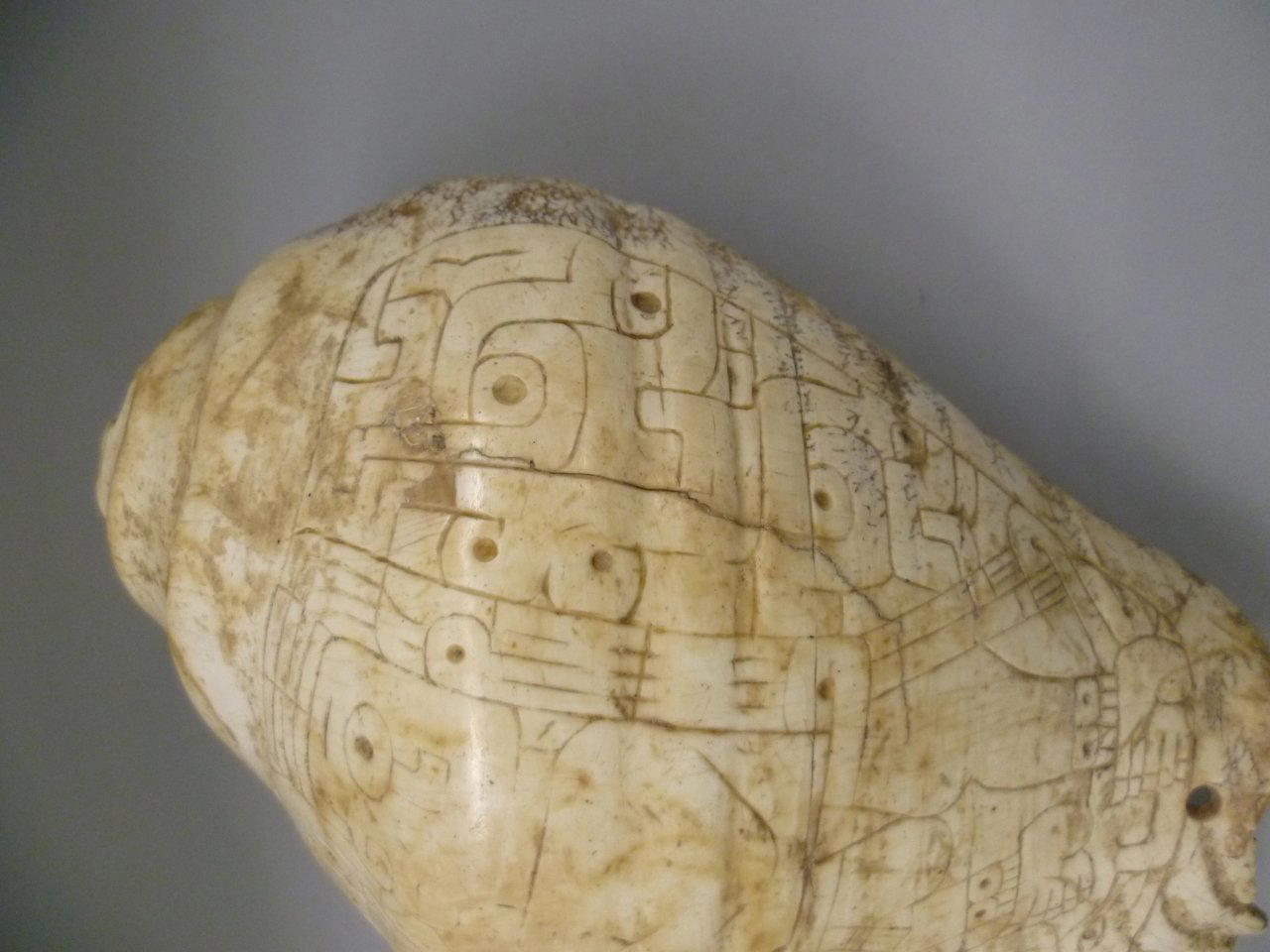
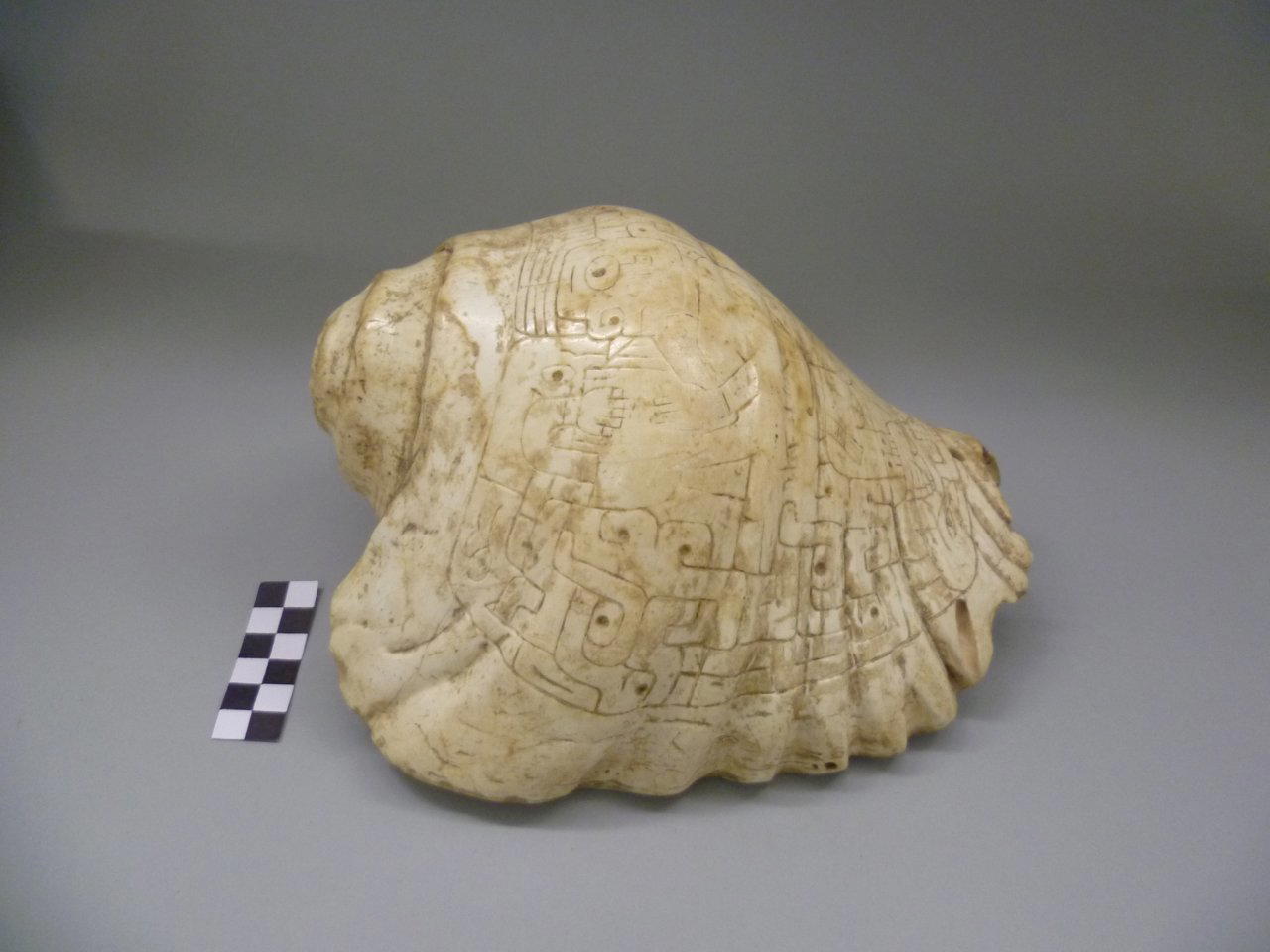
The blowing of conch-shell trumpets was an integral part of rituals at the ancient site of Chavín de Huántar. Stone slabs in certain underground spaces are carved with scenes of figures blowing shell trumpets, probably during public ceremonies. This example is decorated with the incised figure of a trumpet player from whose instrument a snake emerges, perhaps as a representation of its sacred sound and its connection with the spirit world. Today, local Indigenous people continue to blow conch shells to mark the beginning and end of public ceremonies.
Caption
Chavin. Incised Strombus-Shell Trumpet, 400–200 B.C.E.. Strombus shell, 11 1/4 x 7 1/8 x 11 1/4 in. (28.6 x 18.1 x 28.6 cm). Anonymous Loan, L52.1. (Photo: Brooklyn Museum)
Gallery
Not on view
Collection
Gallery
Not on view
Collection
Culture
Title
Incised Strombus-Shell Trumpet
Date
400–200 B.C.E.
Period
Formative Period
Geography
Place found: Northern Highlands, Peru
Medium
Strombus shell
Classification
Dimensions
11 1/4 x 7 1/8 x 11 1/4 in. (28.6 x 18.1 x 28.6 cm)
Credit Line
Anonymous Loan
Accession Number
L52.1
Frequent Art Questions
Is this made from a sea shell?
 It is a seashell! Specifically, a strombus shell. If you press the button on the case that corresponds with that object, you can hear it being played. Definitely try out some of those buttons, it makes the instruments so much more interesting being able to hear them!
Was this shell really an instrument?
 Yes! Conch shells have a natural form that allows them to be played as a horn. It is even decoration with an incised drawing of a human figure blowing a shell trumpet. Shells were an important trade item for the Chavin, a major pre-Incan culture in Peru. Shells brought in from the coast were also worn as ornaments, or ground to make a powder chewed with coca leaves.
What is this and what is it used for?
 It is a trumpet made from a Strombus shell that has been elaborately decorated. Shells were important trade items and a trumpet like this would have been played in public ceremonies.
How would something like this have been made?
 The conch shell would have been selected for its natural properties like its shape, size, and color and then the intricate designs you see would have likely been carved with a stone blade!
What’s the design carved onto this shell? It looks like a man standing on something?
Yes, it's a man with facial tattoos and ankle ornaments playing a shell trumpet like this very object. He is surrounded by twisting and intertwined snakes which were considered representations of deities.A snake is even coming out of the trumpet the man is blowing, perhaps indicating the power of the trumpet to communicate with supernatural beings.Would snakes represent a specific deity, or just a symbol of deities in general?It could be either! We're not exactly sure. We know that they were associated with the supernatural, but because the Chavin had no form of writing, our only knowledge of them and their culture come from objects like these and other remains.That’s really interesting, thanks!
Have information?
Have information about an artwork? Contact us at