Small Standing Figurine
Nasca


1 of 2
Object Label
These ivory figurines may be high-status versions of the miniature clay examples that have been found in burial contexts throughout the Andean region of South America. The small and delicate male and female carvings are decorated with stone and shell inlays that suggest that they possibly functioned as treasured talismans or ritual offerings.
Caption
Nasca. Small Standing Figurine, 300–700. Ivory, shell, resin, 1 3/4 x 3/4 x 11/16 in. (4.4 x 1.9 x 1.7 cm). Brooklyn Museum, A. Augustus Healy Fund, 41.231. (Photo: Brooklyn Museum)
Gallery
Not on view
Collection
Gallery
Not on view
Collection
Frequent Art Questions
Where did the ivory come from? Because I think of ivory coming from elephants but I don't think there are elephants in South America.
 Ivory can refer to the tusks and teeth of a number of different animals, not just elephants. In this case, the ivory probably came from a whale tooth.Cool, thanks!No problem!
Where did the ivory come from to make these figurines? Thanks!
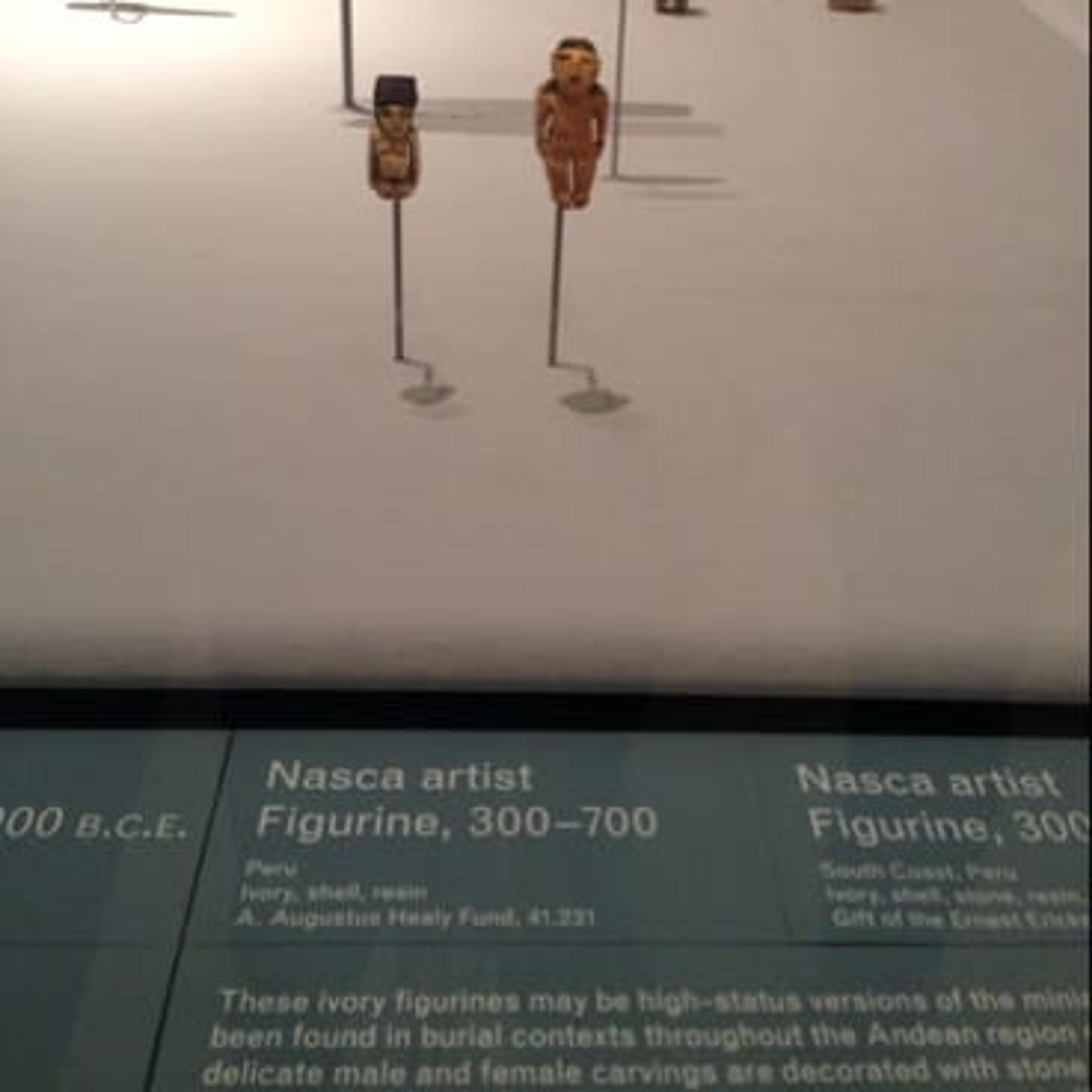 These figurines are made of whale teeth, which can also be referred to as ivory. Whale teeth, and other materials found in the ocean, were often seen as special in coastal, Andean South America.So the coastal Peruvians were whalers/hunters or just waited for dead whales to wash up onshore? Or they traded with other groups that hunted them?It depends. They had extensive trade networks along the Pacific coast. For example, they imported a lot of shells from warmer waters. Their boats were often quite small so I'm not sure how much hunting of large sea creatures they did.Cool, thanks so much!
Have information?
Have information about an artwork? Contact us at