Bottle
18th–19th century
Brooklyn Museum photograph
Object Label
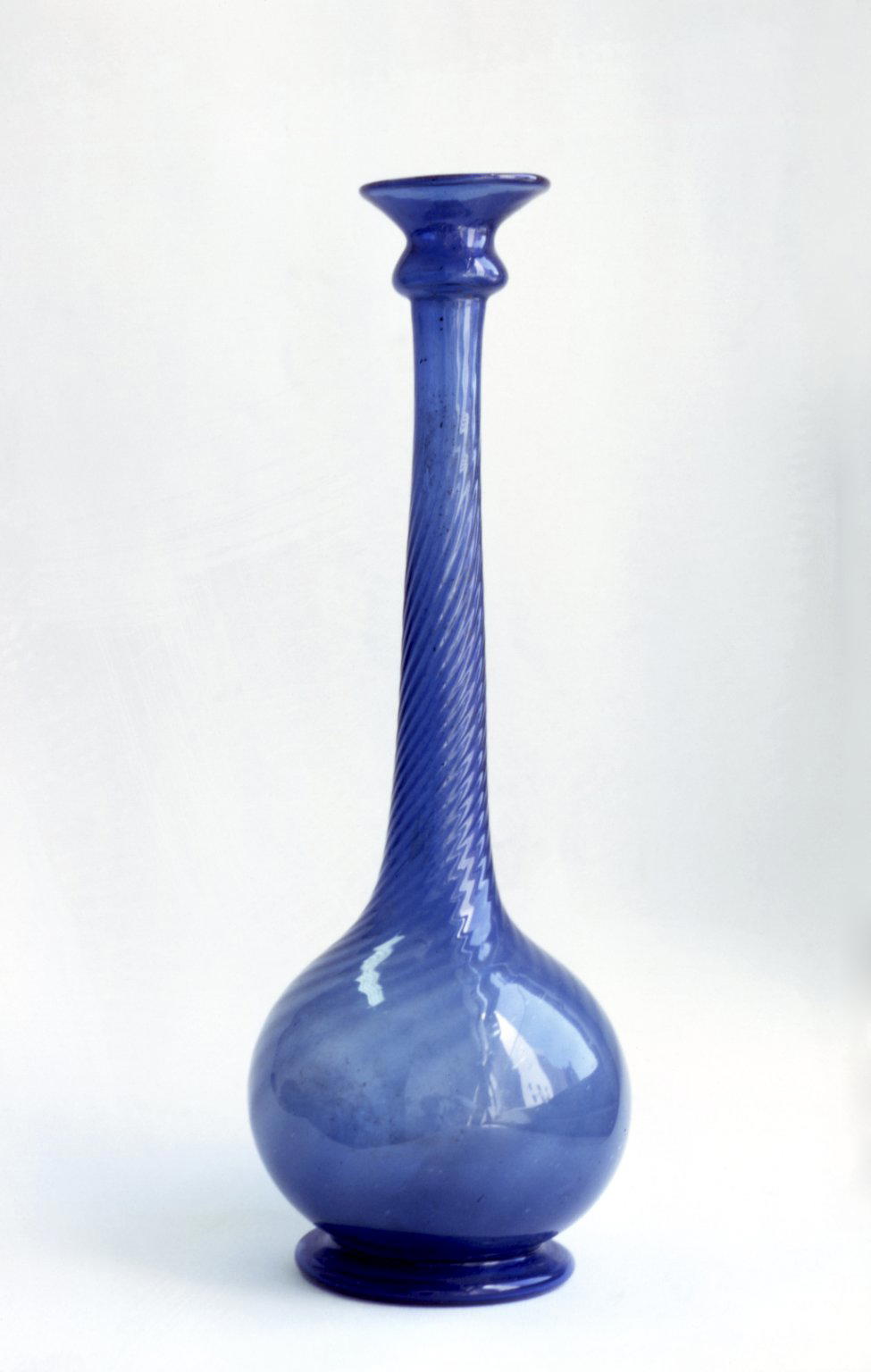
Glass production in Iran was limited to the period between the seventeenth and nineteenth centuries as imported glass vessels from Europe came increasingly into vogue. Such European glasswares are depicted in a number of large-scale oil paintings of the period. Nonetheless, glass water-pipe bases, bottles, and decanters continued to be produced natively and in a variety of colors. Most commonly, glass vessels were mold blown and included decorative devices such as the parallel spiraling ribs that animate the body and neck of this bottle. Other examples, highly distinctive of the period, are bottles with curving, asymmetrical "swans' necks" and a mouth similar in shape to a floral bud. Appreciated for their elegant shapes and clarity, such objects were used for the storing and serving of wine. Sometimes they would be filled with colored water and arranged within the niches of homes and public buildings as decoration.
Caption
Bottle, 18th–19th century. Translucent deep blue glass; blown in dip mold, 13 3/4 x 4 5/16 in. (35 x 11 cm). Brooklyn Museum, Henry L. Batterman Fund, 47.203.16. (Photo: Brooklyn Museum)
Gallery
Not on view
Collection
Gallery
Not on view
Collection
Title
Bottle
Date
18th–19th century
Dynasty
Qajar
Period
Qajar Period
Geography
Place made: Isfahan, Iran
Medium
Translucent deep blue glass; blown in dip mold
Classification
Dimensions
13 3/4 x 4 5/16 in. (35 x 11 cm)
Credit Line
Henry L. Batterman Fund
Accession Number
47.203.16
Have information?
Have information about an artwork? Contact us at