Receipt for a Grain Loan


1 of 17
Object Label
Caption
Aramaic. Receipt for a Grain Loan, December, 402 B.C.E.. Papyrus, ink, mud, a: Object: 11 13/16 × 13 3/4 in. (30 × 35 cm) a: Frame: 14 15/16 × 16 1/4 in. (38 × 41.2 cm). Brooklyn Museum, Bequest of Theodora Wilbour from the collection of her father, Charles Edwin Wilbour, 47.218.93a-b. (Photo: Brooklyn Museum)
Gallery
Not on view
Gallery
Not on view
Culture
Title
Receipt for a Grain Loan
Date
December, 402 B.C.E.
Dynasty
Dynasty 28
Period
Late Period
Geography
Place found: Elephantine, Egypt
Medium
Papyrus, ink, mud
Classification
Dimensions
a: Object: 11 13/16 × 13 3/4 in. (30 × 35 cm) a: Frame: 14 15/16 × 16 1/4 in. (38 × 41.2 cm)
Credit Line
Bequest of Theodora Wilbour from the collection of her father, Charles Edwin Wilbour
Accession Number
47.218.93a-b
Frequent Art Questions
Is there a way to see the transcripts of the other papri in the archive of the Jewish colony?
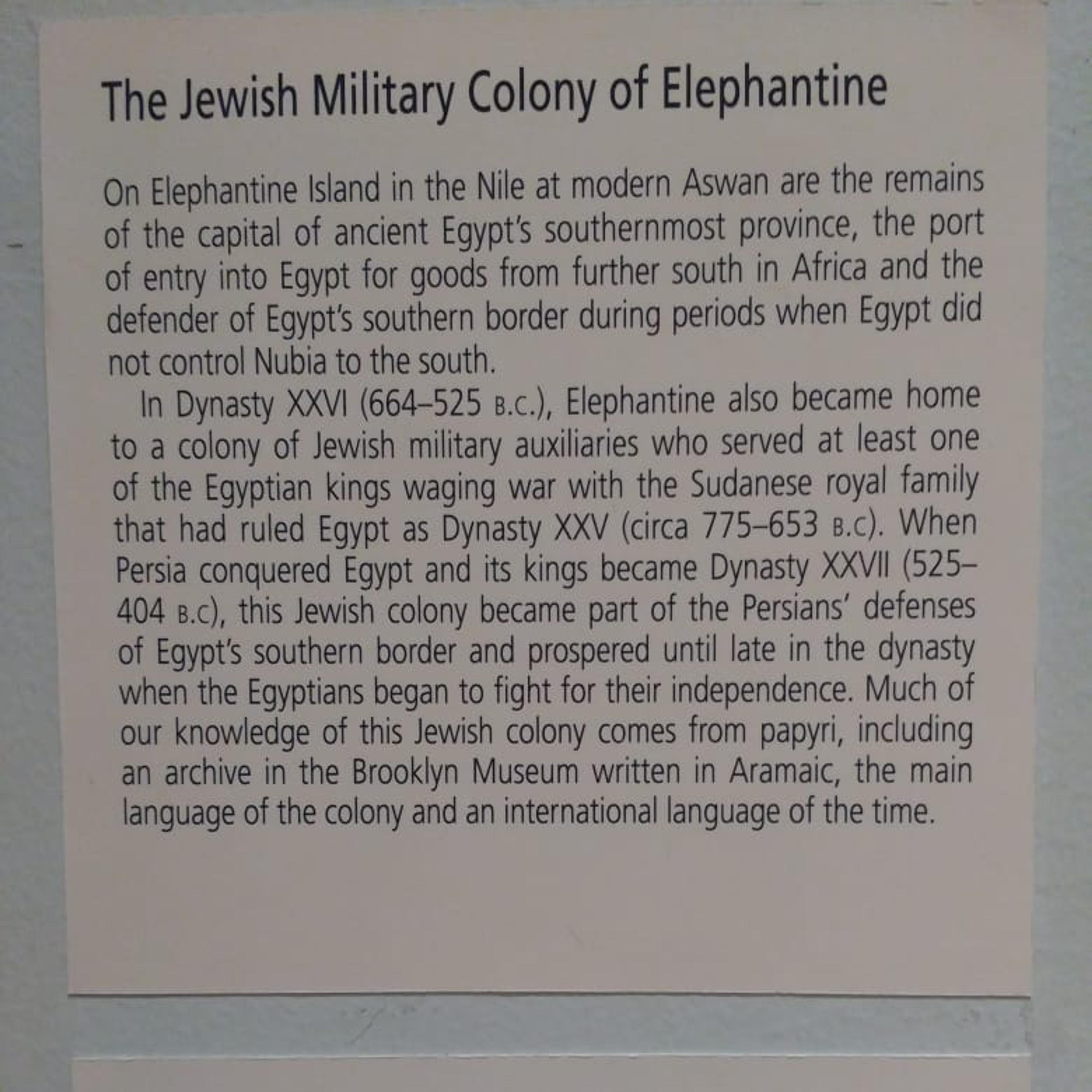 There are images of 8 of the papyri in our collection online, if you can read Aramaic! You might also want to check out "Jewish Life in Ancient Egypt" by Edward Bleiberg which was published in conjunction with an exhibition of the same name and is available in our shop. You may also be interested in "The Elephantine Papyri in English: Three Millennia of Cross-Cultural Continuity and Change" by Bezalel Porten with J. Joel Farber et al.
Have information?
Have information about an artwork? Contact us at