Porcelain Vase in the Form of an Archaic Bronze
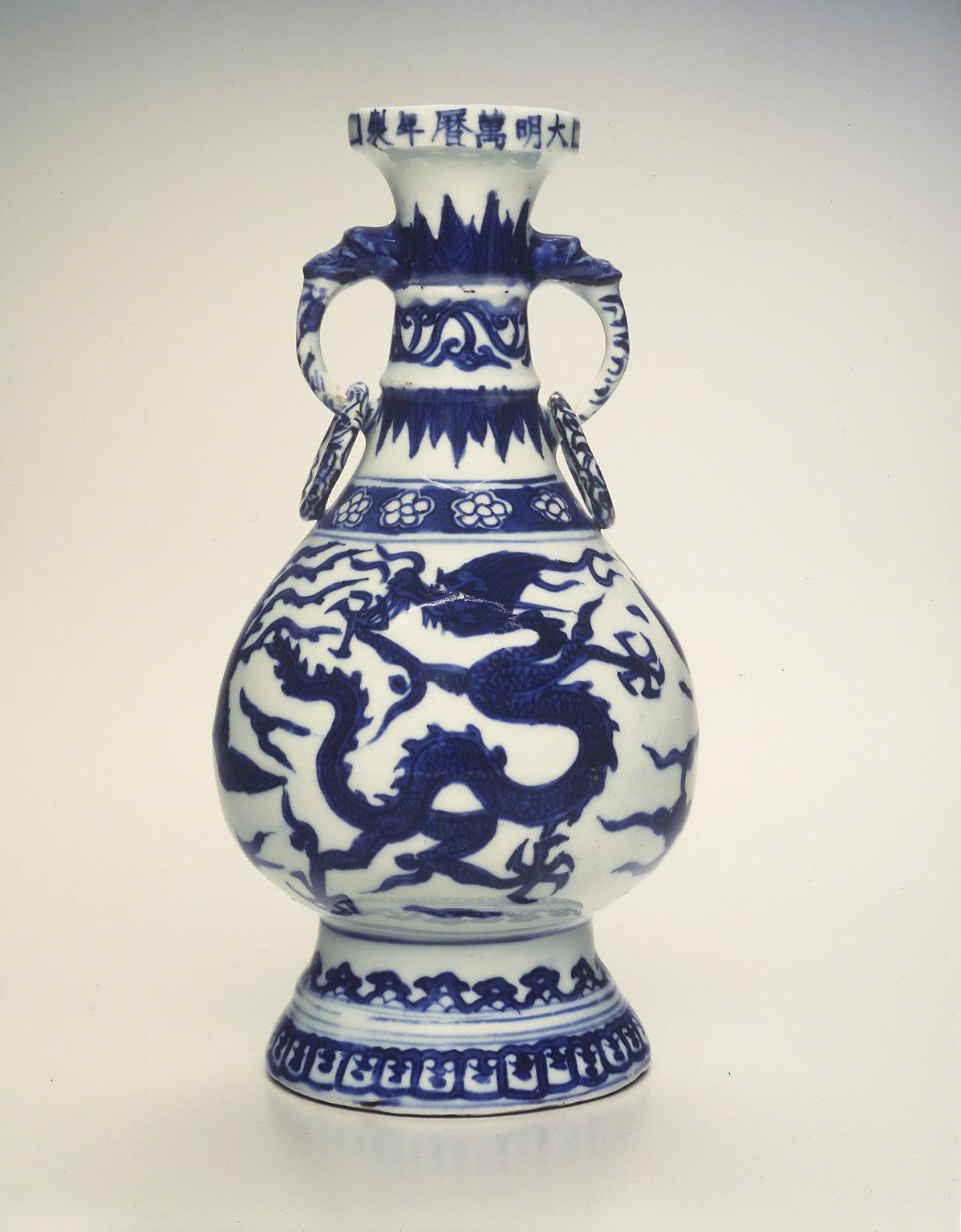
Brooklyn Museum photograph
Object Label
Caption
Porcelain Vase in the Form of an Archaic Bronze, 1573–1619. Porcelain with cobalt-blue underglaze decoration, 8 1/16 × 4 1/16 in. (20.5 × 10.3 cm). Brooklyn Museum, The William E. Hutchins Collection, Bequest of Augustus S. Hutchins, 52.49.20. (Photo: Brooklyn Museum)
Gallery
Not on view
Collection
Gallery
Not on view
Collection
Title
Porcelain Vase in the Form of an Archaic Bronze
Date
1573–1619
Dynasty
Ming Dynasty
Period
Wanli Period
Geography
Place made: China
Medium
Porcelain with cobalt-blue underglaze decoration
Classification
Dimensions
8 1/16 × 4 1/16 in. (20.5 × 10.3 cm)
Credit Line
The William E. Hutchins Collection, Bequest of Augustus S. Hutchins
Accession Number
52.49.20
Frequent Art Questions
Can you tell me how this piece was made?
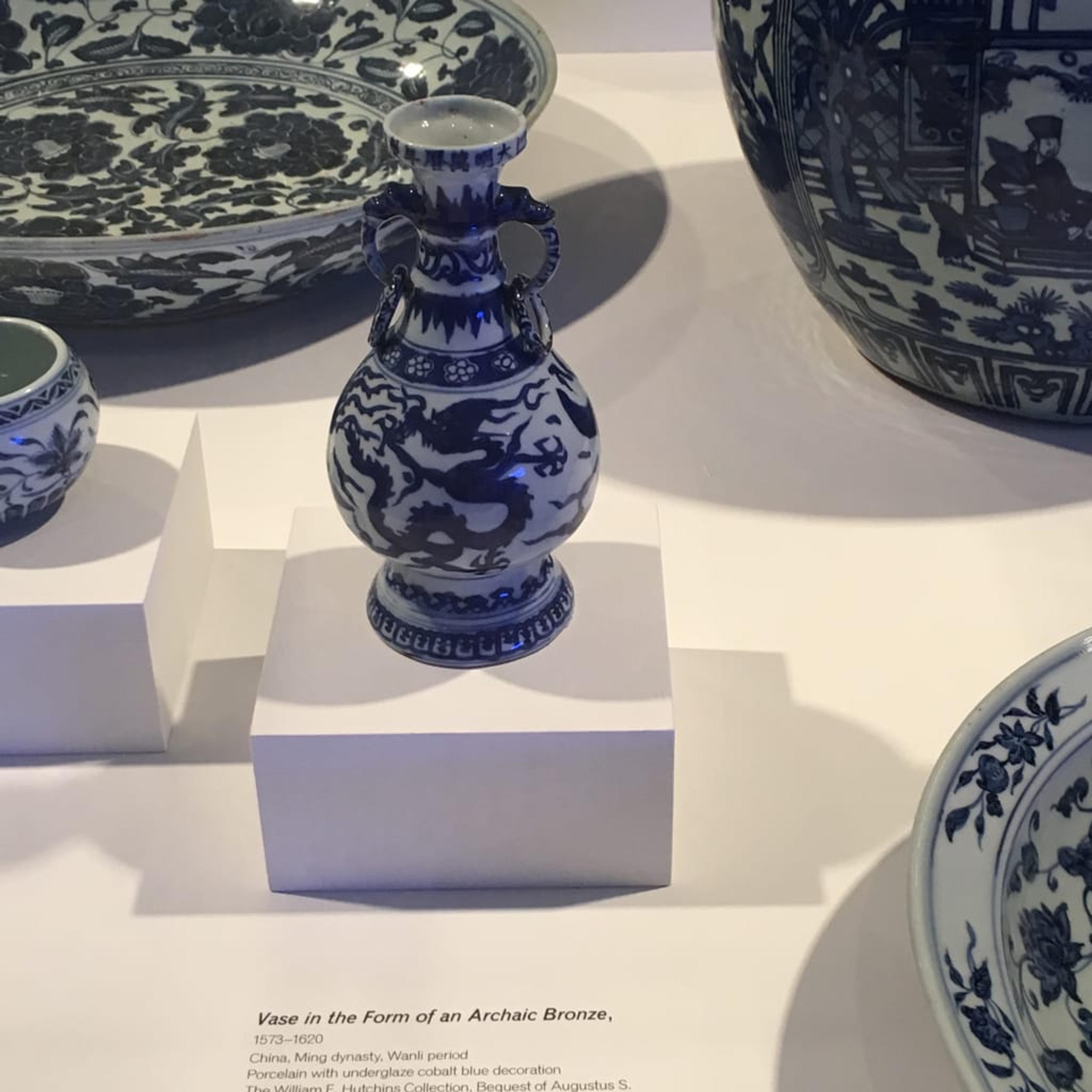 Chinese blue-and-white porcelain begins with the clay, often a combination of kaolin and petuntse. When the clay is leather-hard, cobalt blue pigment is painted onto the surface. The vessel is then glazed and fired.
The blue is so vibrant!
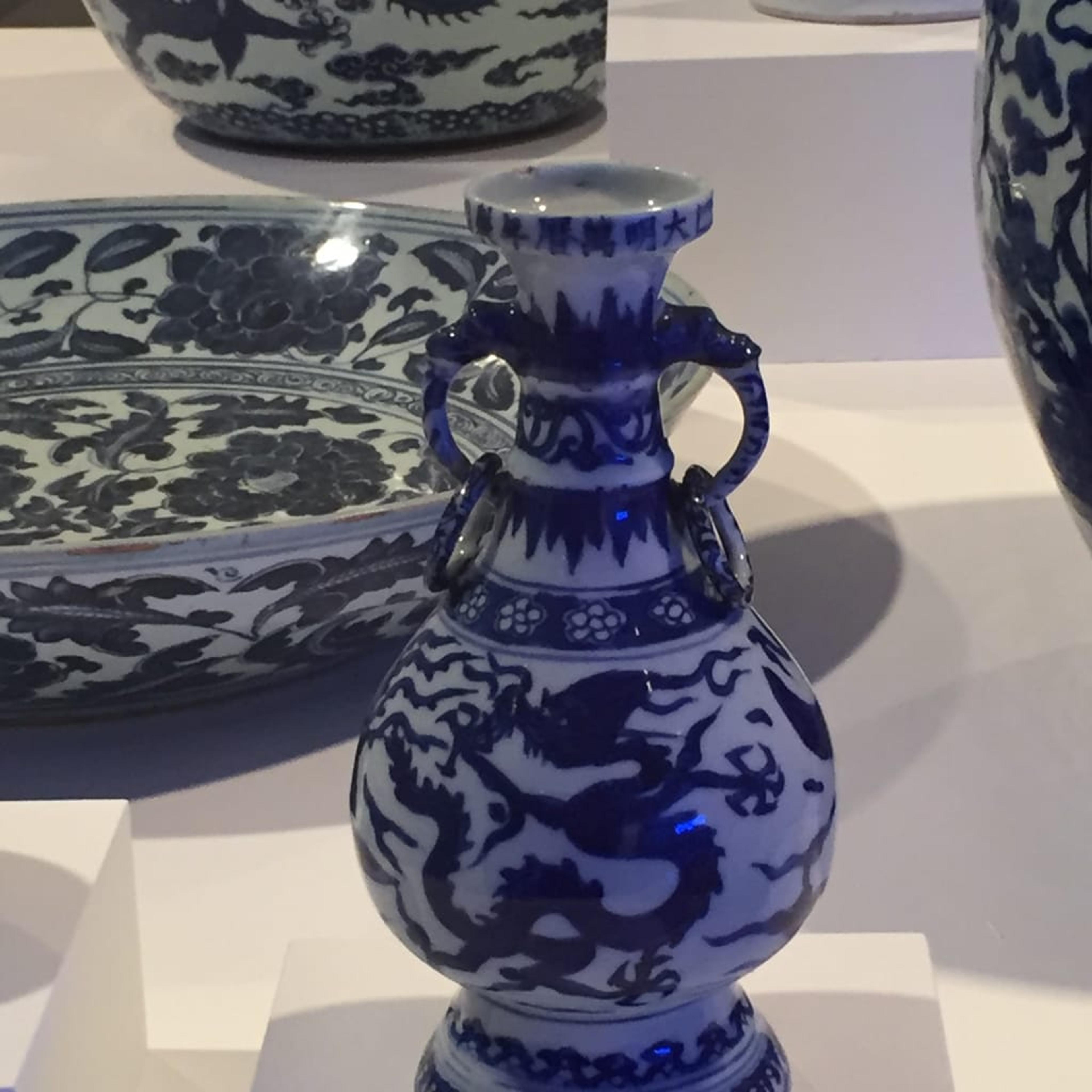 Cobalt is one of the most popular metals for decorating porcelain because it is one of the few substances that stays stable under the very high temperatures used to fire porcelain.Notice how the dragon has five claws. This was an Imperial symbol, and represented the power of the emperor.
Have information?
Have information about an artwork? Contact us at