Vessel Handle in Form of Ibex
Achaemenid


1 of 7
Object Label
The Persian conquest of Egypt in 525 B.C.E. led to a vogue for metalwork in the Persian style, such as these animal-shaped handles and fluted bowls with floral decorations on the base. All of these objects were discovered in Egypt; the silver pieces were discovered together with a large number of objects as an offering at a temple of a foreign goddess.
Caption
Achaemenid. Vessel Handle in Form of Ibex, ca. 410 B.C.E.. Silver, Height 6 9/16in. (16.7cm). Brooklyn Museum, Charles Edwin Wilbour Fund, 54.50.41. (Photo: Brooklyn Museum)
Culture
Title
Vessel Handle in Form of Ibex
Date
ca. 410 B.C.E.
Dynasty
late Dynasty 27
Period
Achaemenid Period
Geography
Reportedly from: Iran, Place found: Tell el-Maskhuta, Egypt
Medium
Silver
Classification
Dimensions
Height 6 9/16in. (16.7cm)
Credit Line
Charles Edwin Wilbour Fund
Accession Number
54.50.41
Frequent Art Questions
Are these tools?
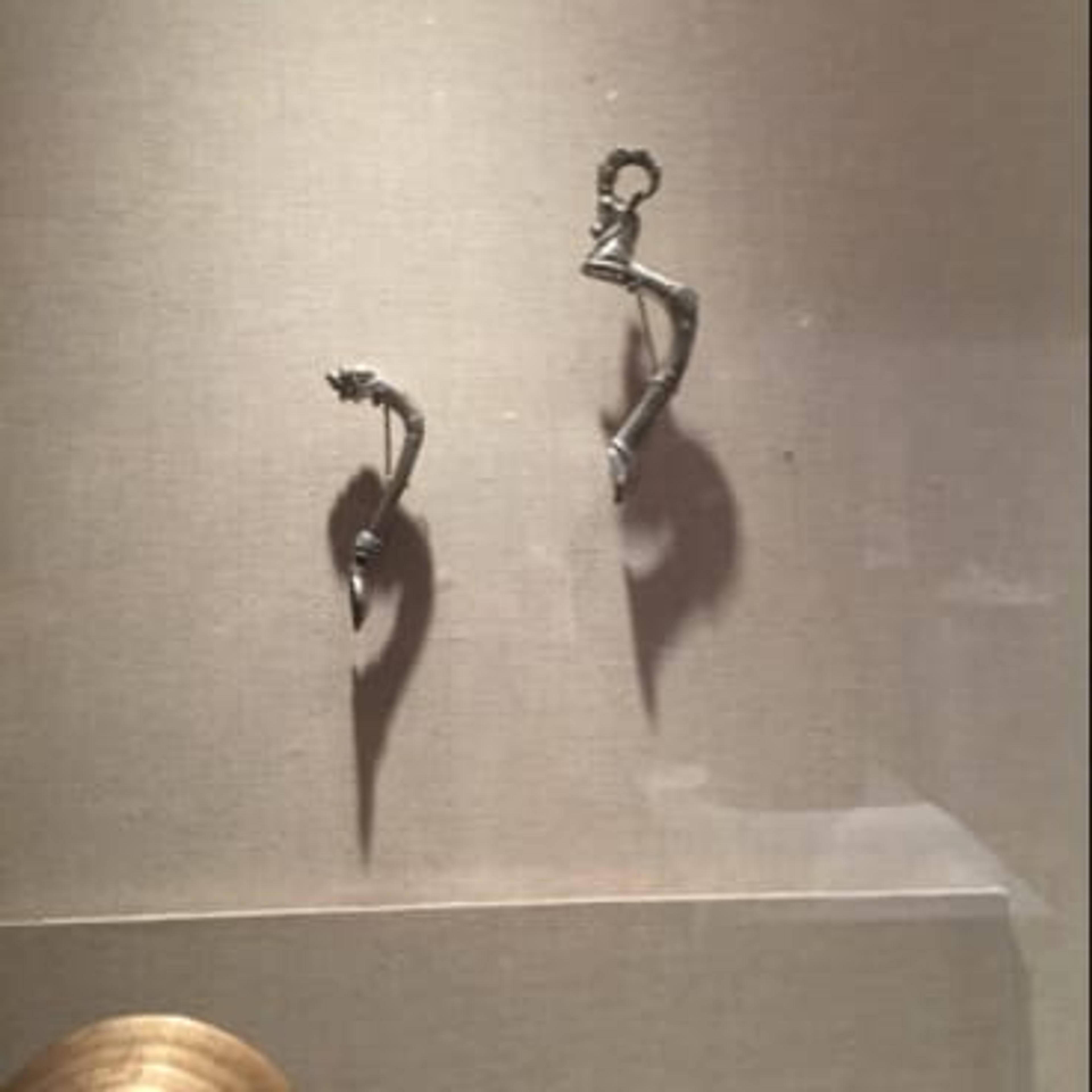 They are actually handles from a vessel. They're in the form of an Ibex with legs folded under the body, and horns attached at the ears.One thing I find especially interesting is that they represent a the popularity of Persian styles at this time. This was a result of the Persian conquest of Egypt in 525 CE.
Have information?
Have information about an artwork? Contact us at