The Outlier
Frederic Sackrider Remington


1 of 2
Object Label
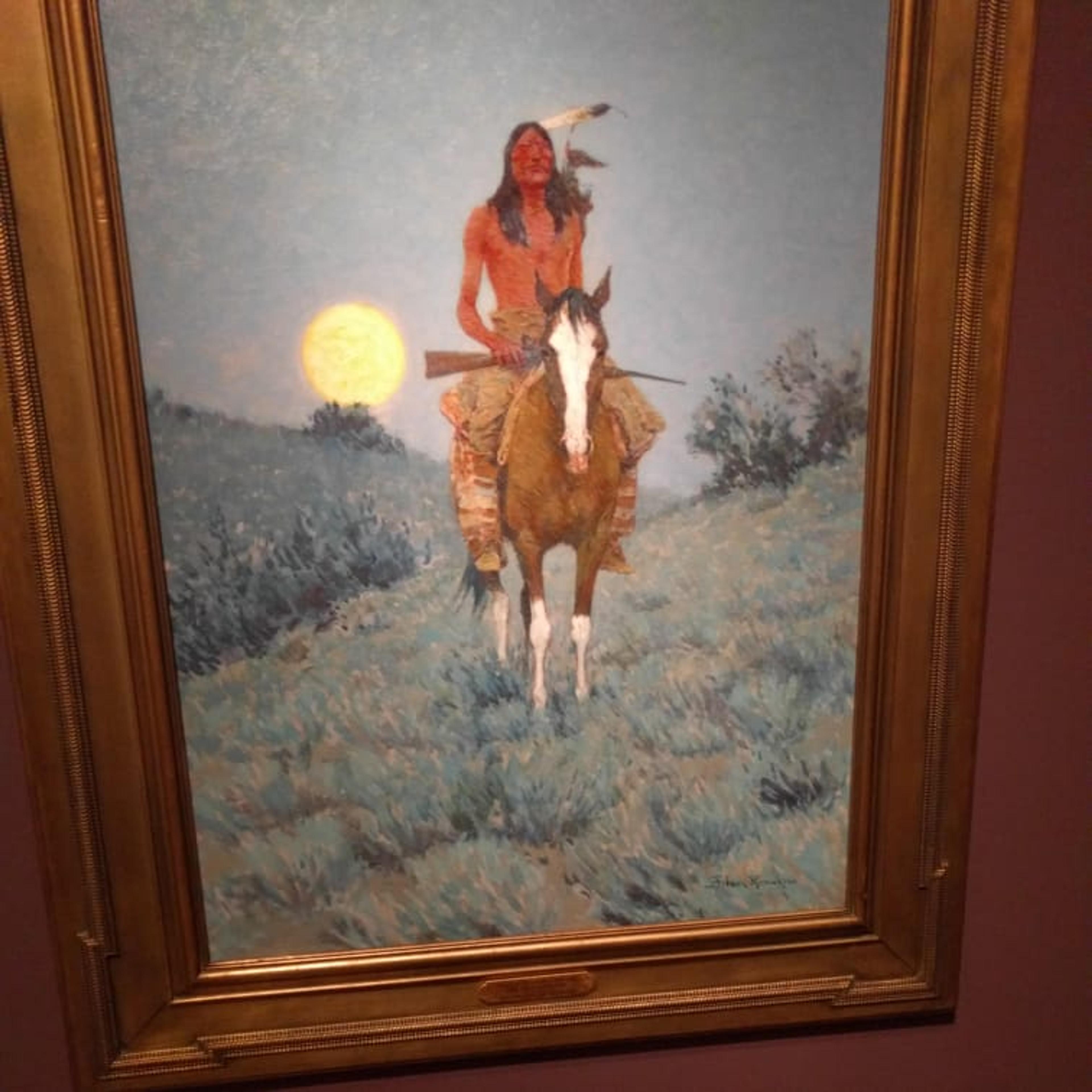
In this nocturnal scene, the Native American appears as something of a lone relic, disconnected from his culture and ambiguously detached from a specific historical moment. Depicted in isolation, the figure simultaneously suggests former glory and inevitable demise, a fate that most European Americans at this time considered to be certain for Native Americans.
Frederic Sackrider Remington painted many versions of the solitary Native American—a motif inspired by the lingering psychological impact of his harrowing experience in wartime Cuba as a war correspondent. However, it is the American Impressionist–inspired style, featuring broken brushwork and lightened palette, that dominates the painting’s narrative content.
Frederic Sackrider Remington painted many versions of the solitary Native American—a motif inspired by the lingering psychological impact of his harrowing experience in wartime Cuba as a war correspondent. However, it is the American Impressionist–inspired style, featuring broken brushwork and lightened palette, that dominates the painting’s narrative content.
Caption
Frederic Sackrider Remington (American, 1861–1909). The Outlier, 1909. Oil on canvas, frame: 51 1/2 x 38 1/2 x 2 in. (130.8 x 97.8 x 5.1 cm) 40 x 27 1/16 in. (101.6 x 68.8 cm). Brooklyn Museum, Bequest of Charlotte R. Stillman, 55.43. (Photo: Brooklyn Museum)
Gallery
Not on view
Collection
Gallery
Not on view
Collection
Title
The Outlier
Date
1909
Medium
Oil on canvas
Classification
Dimensions
frame: 51 1/2 x 38 1/2 x 2 in. (130.8 x 97.8 x 5.1 cm) 40 x 27 1/16 in. (101.6 x 68.8 cm)
Signatures
Signed lower right "Frederic Remington / 1909"
Credit Line
Bequest of Charlotte R. Stillman
Accession Number
55.43
Frequent Art Questions
What is this painting about?
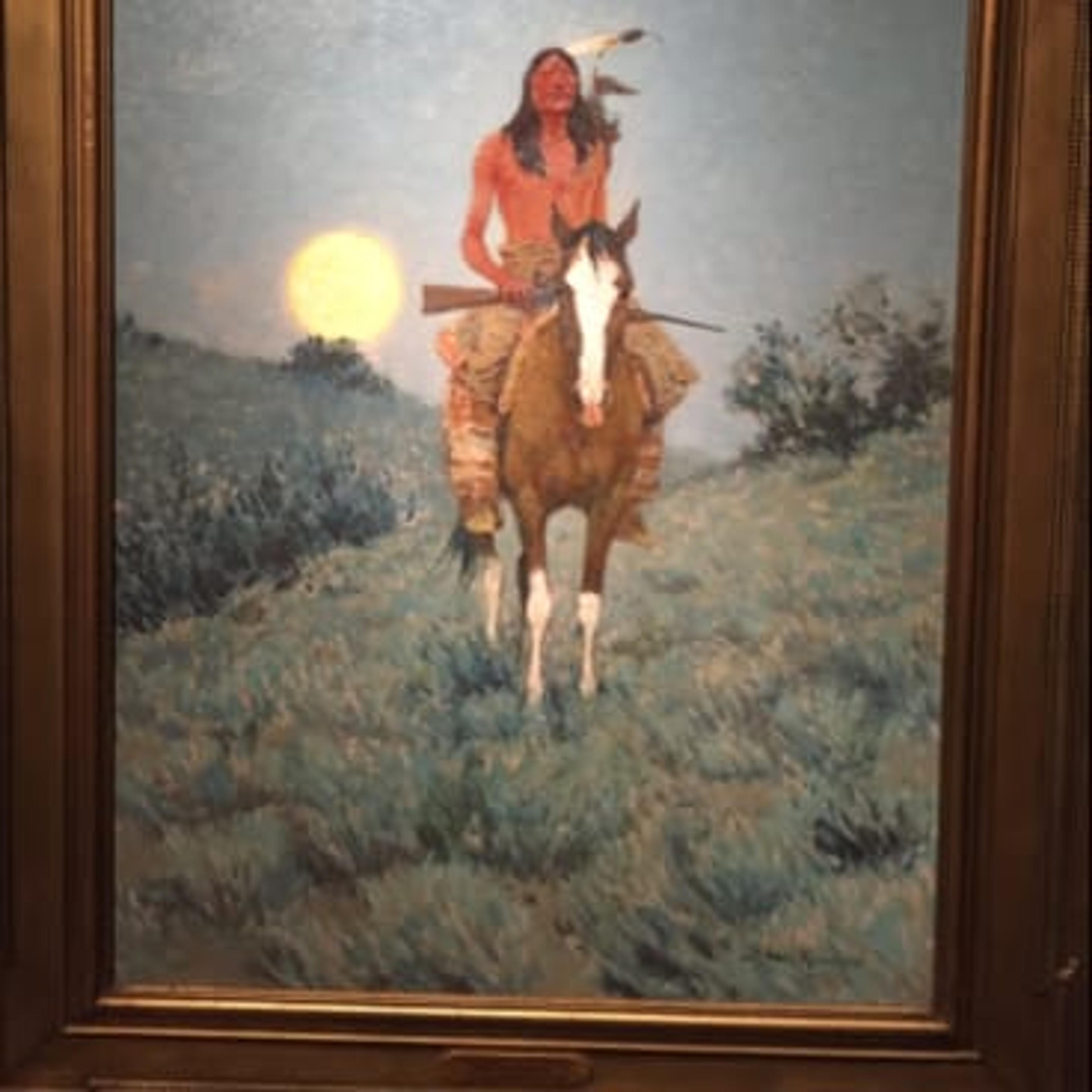 Frederic Sackrider Remington's "The Outlier" depicts a Native American man alone in the wilderness on his horse. The rifle in his hand is a sign of his contact with European settlers, who brought firearms to the American West.The United States Government had previously been in conflict with the Native peoples during the Plains Indians Wars, which ended in 1890, so this was something of a nostalgic subject in 1909. The sunset behind him may symbolize the demise of this man's culture.This can also be seen as a very American take on the Impressionist style that was established in Paris in the late 19th century.
This work intrigues me, here's a picture!
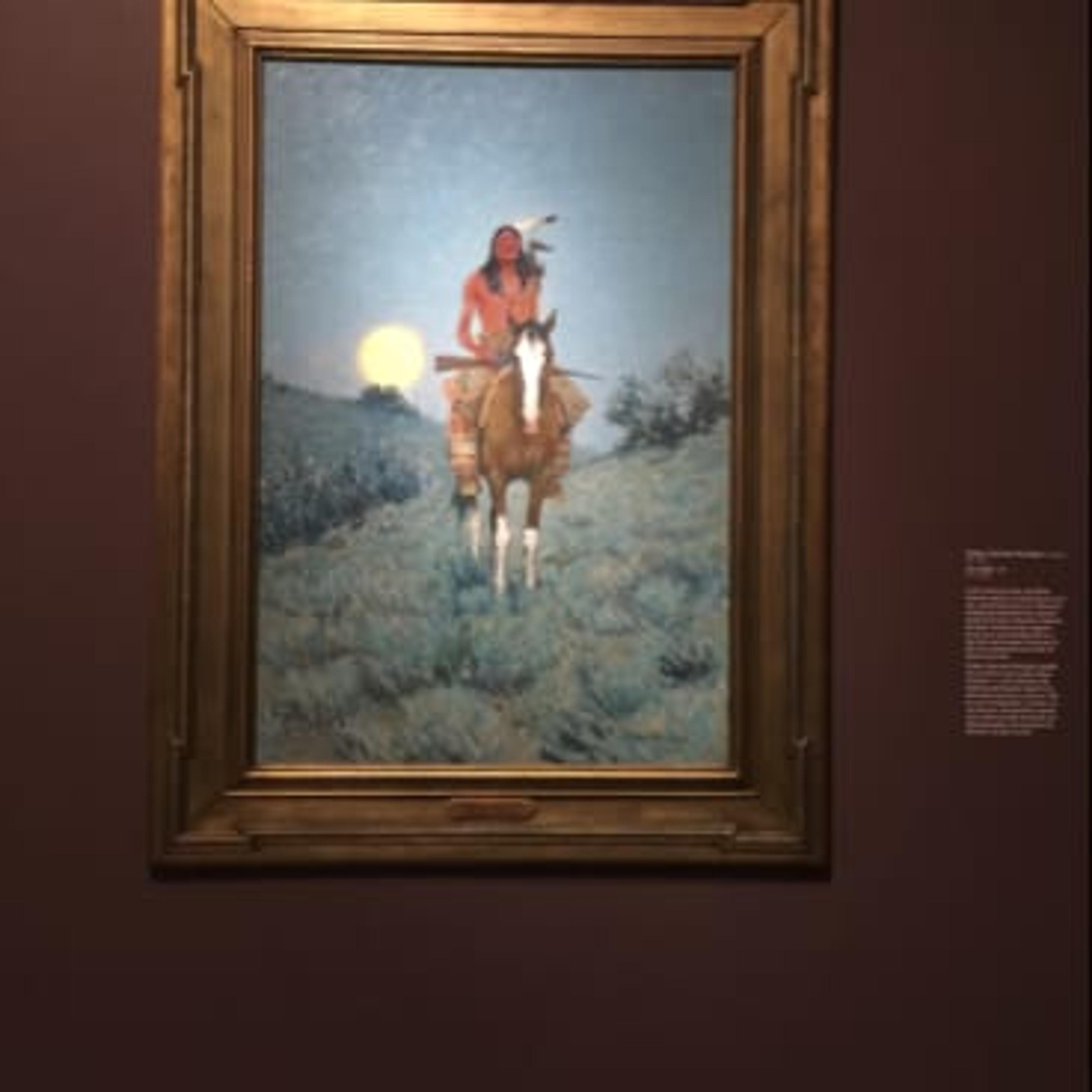 Interesting choice! "The Outlier" by Frederic Remington belongs to a similar tradition of superficial interest in the "exotic" -- the supposedly more authentic Native American way of life out West. Unlike many artists of the time however, Remington actually traveled widely in the areas whose inhabitants he was depicting, especially in the Dakotas, Arizona, and Texas. This painting of a Native American man on horseback was one of the last works Remington completed before passing away in 1909.
Is this painter from the same family as the Remington rifle makers?
 Whoa! You know your history! Yes, Frederic Sackrider Remington was a cousin to Eliphalet Remington, the founder of the Remington Arms Company.
Have information?
Have information about an artwork? Contact us at