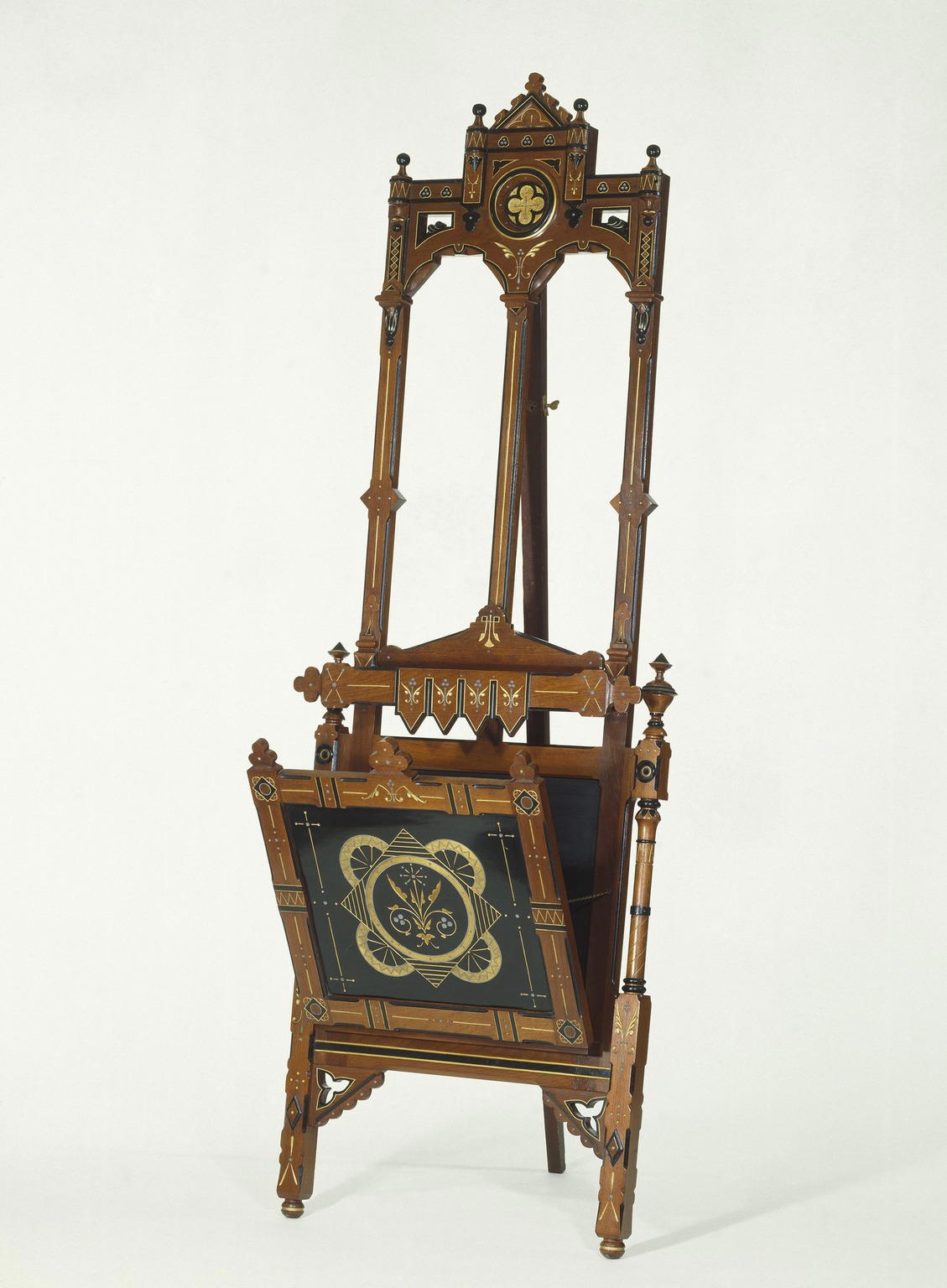
Easel for Showing Prints or Drawings
Brooklyn Museum photograph
Object Label
The étagëre and easel represent the two phases of the Gothic Revival in the United States. The design of the earlier piece, the étagëre, is inspired by delicate details from Gothic architecture, such as cathedral spires and the tracery of stained-glass windows. The more geometric design of the later easel with eloborate, but shallow carving is infused with reform-minded ideas of rational construction and honesty to materials. This later phase was termed Modern Gothic to differentiate it from the earlier style.
Caption
American. Easel for Showing Prints or Drawings, Walnut. Brooklyn Museum, Gift of the Estate of Mrs. William H. Good, 56.155.1. (Photo: Brooklyn Museum)
Gallery
Not on view
Collection
Gallery
Not on view
Collection
Frequent Art Questions
What's that wooden stand?
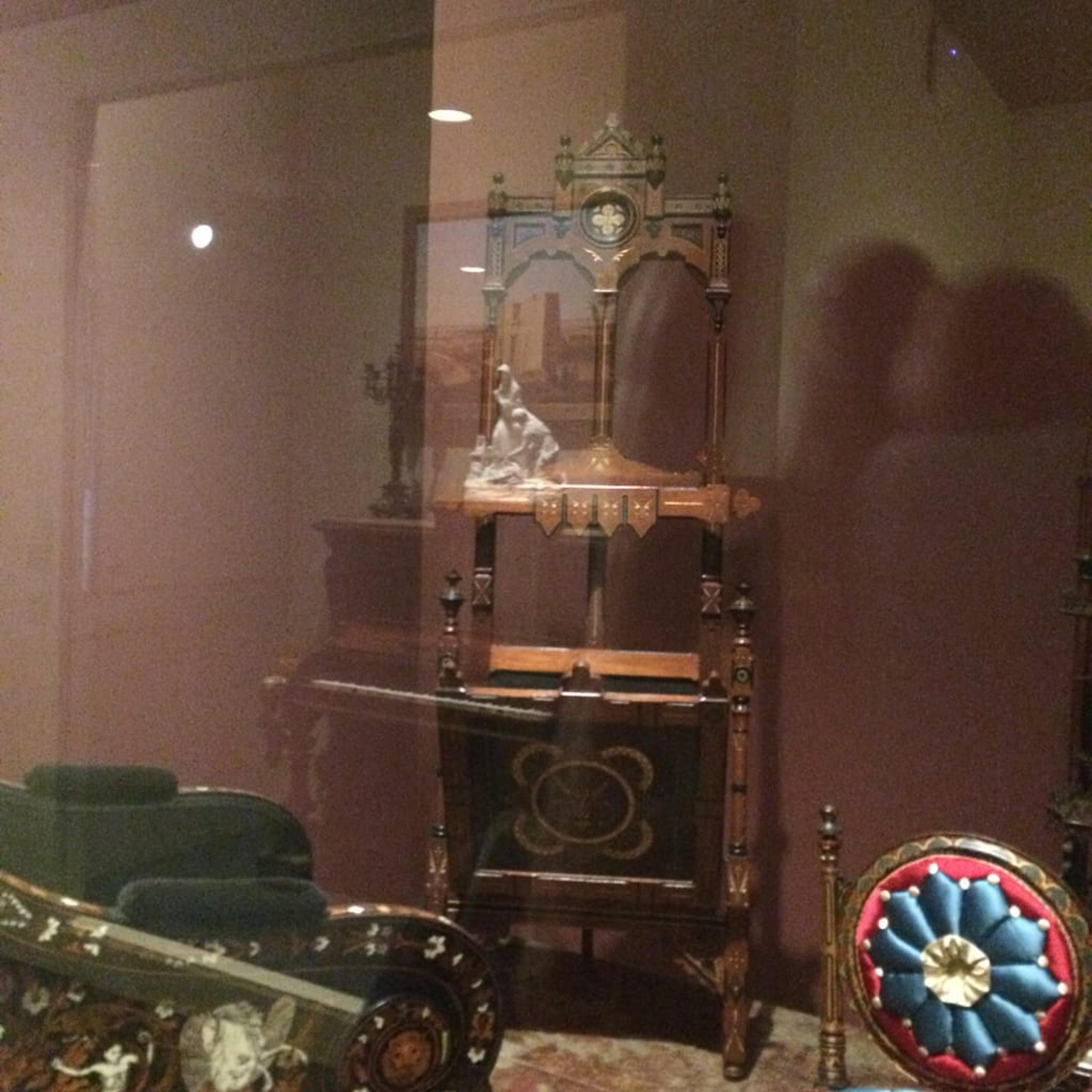 This item in the center is actually an easel for showing prints and drawings. I recommend looking at it in comparison with the étagère nearby (the dark three-tiered table). The two represent different phases in gothic revival style.19th century American design was heavily influenced by European tastes, which was at the time characterized by a parade of different styles that looked towards the past. This was in part a reaction to rapid industrialization, and an increased interest in the "simplicity" of the past.Thanks.
Have information?
Have information about an artwork? Contact us at