Hamlet in the Wood

Brooklyn Museum photograph
Object Label
The Amsterdam painter Meindert Hobbema depicted the calm, flat landscape of the Dutch Republic—newly independent from Spain—at a time when global trade and colonial exploitation had made the country extremely prosperous. Executed on an ambitious scale with a fluid touch, this painting features eight figures peacefully inhabiting a hamlet, or small settlement, in a wooded landscape under an expansive, clouded sky.
Caption
Meindert Hobbema (Dutch, 1638–1709). Hamlet in the Wood, 1660–1665. Oil on canvas, 38 1/4 × 51 5/8 in. (97.2 × 131.1 cm) frame: 49 1/2 × 62 1/2 × 5 1/2 in., 94 lb. (125.7 × 158.8 × 14 cm, 42.64kg). Brooklyn Museum, Gift of Horace O. Havemeyer, 56.159. (Photo: Brooklyn Museum)
Gallery
Not on view
Gallery
Not on view
Artist
Title
Hamlet in the Wood
Date
1660–1665
Geography
Place made: Netherlands
Medium
Oil on canvas
Classification
Dimensions
38 1/4 × 51 5/8 in. (97.2 × 131.1 cm) frame: 49 1/2 × 62 1/2 × 5 1/2 in., 94 lb. (125.7 × 158.8 × 14 cm, 42.64kg)
Signatures
Signed lower left: "M. Hobbema"
Credit Line
Gift of Horace O. Havemeyer
Accession Number
56.159
Frequent Art Questions
Tell me more.
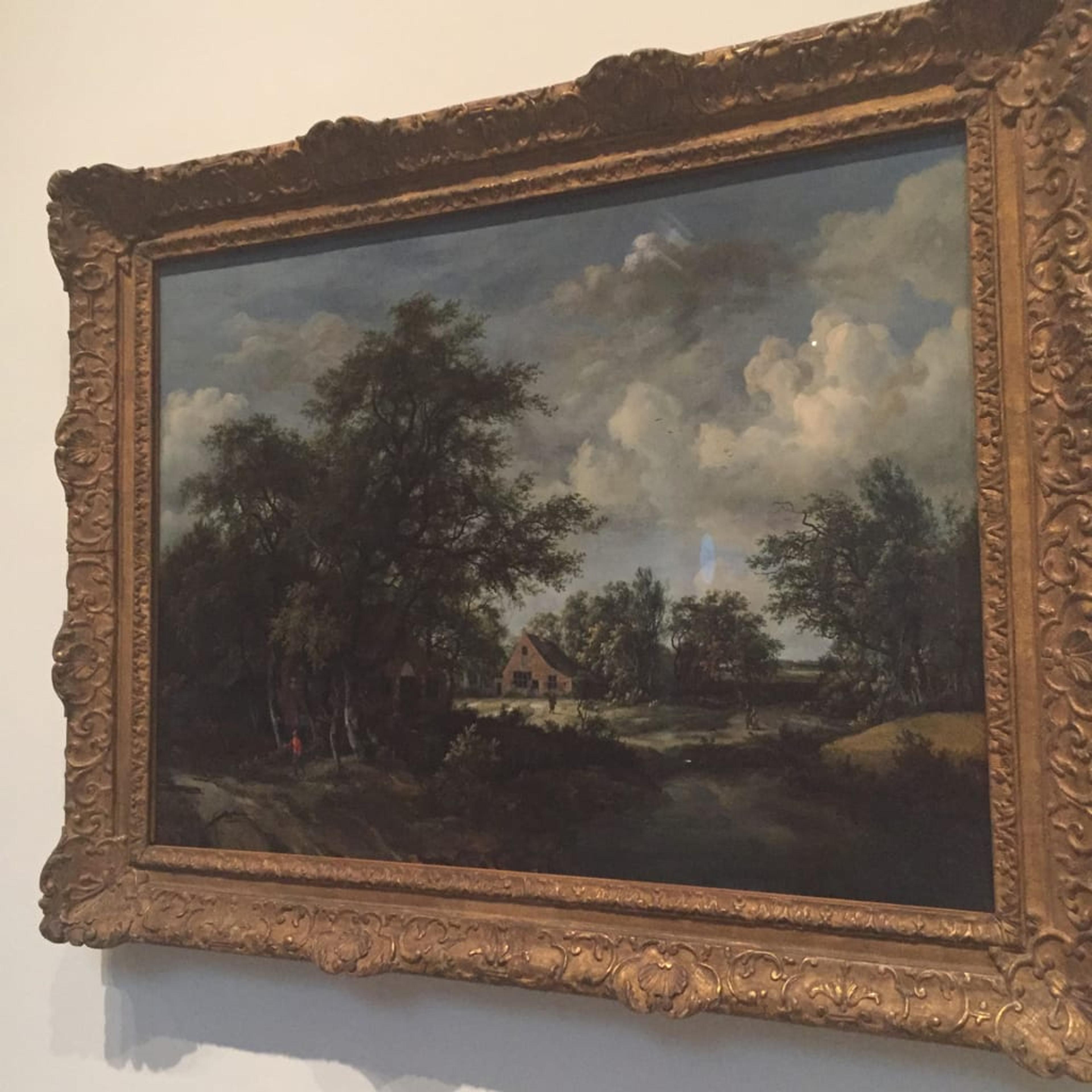 The artist Meyndert Hobbema was known for landscapes like this. Notice the large area devoted to the sky and the shadowy figures in the foreground. Landscapes like this were and idealistic view on the world. They were a reaction against the rapid urbanization happening in Europe at the time.
Could you tell me more about Hobbema?
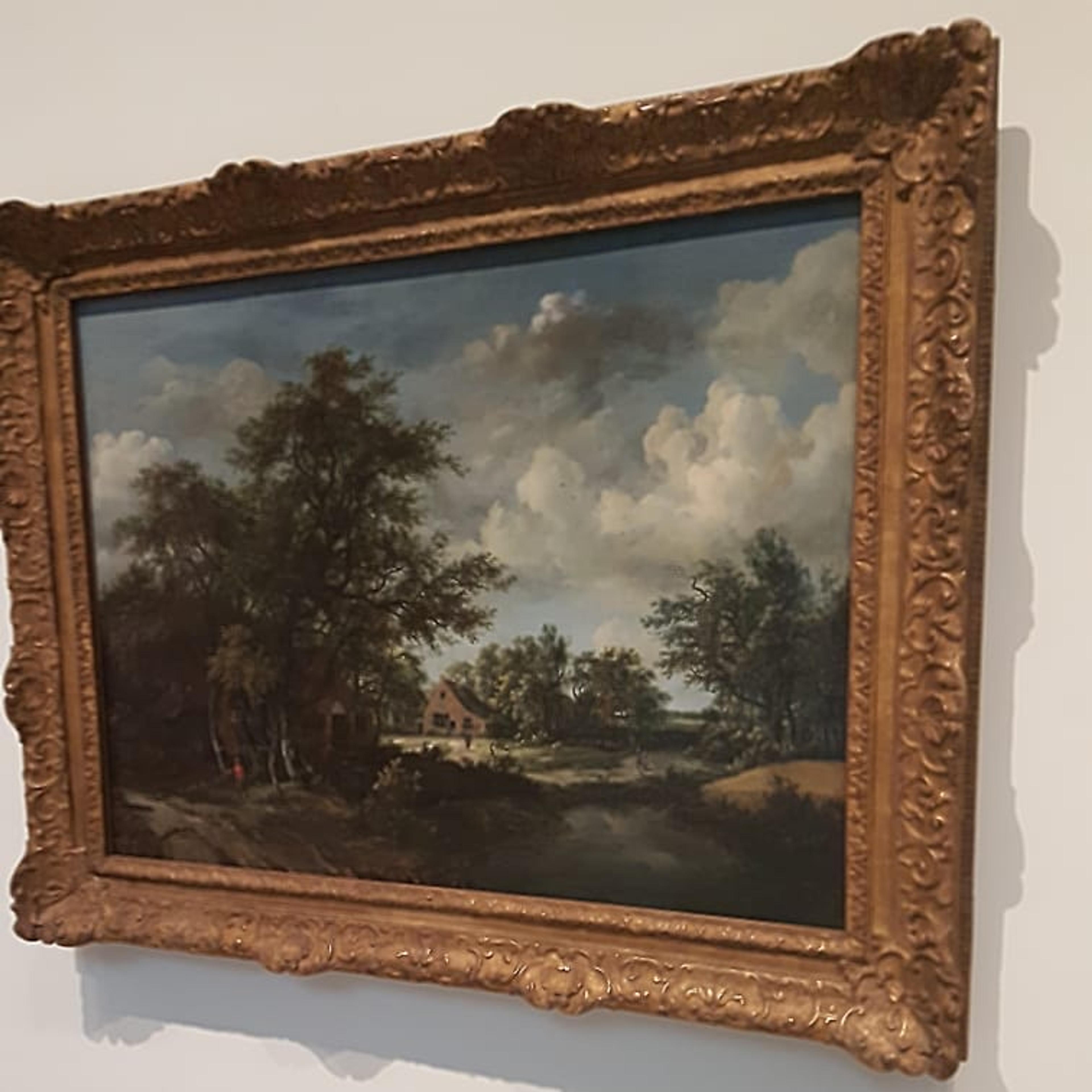 Sure! He was born in Amsterdam and spent most of his life there.At this time, the Netherlands and the rest of Europe, more people were moving into the cities, and upper-middle-class and upper-class people enjoyed paintings of the countryside that showed an ideal vision of country life.Hobbema trained with an artist named Jacob van Ruisdael and became known for his scenes of quiet village life. Although he was based in the city, he would travel out to sketch scenes of smaller towns in order to capture traditional country life for his paintings.Look closely at the cottage and the small figures of people!
Have information?
Have information about an artwork? Contact us at