Whistle
South Central Veracruz


1 of 6
Object Label
Figurines like this may represent participants in rituals. Their smiling faces have been interpreted as signs of intoxication. Since this figurine doubles as a musical instrument, it may be connected to a joyous religious celebration involving dance and music.
Caption
South Central Veracruz. Whistle, 600–900. Ceramic, traces of pigment, 11 3/8 × 6 13/16 × 2 1/4 in. (28.9 × 17.3 × 5.7 cm). Brooklyn Museum, Caroline A.L. Pratt Fund, 58.185. (Photo: Brooklyn Museum)
Gallery
Not on view
Collection
Gallery
Not on view
Collection
Culture
Title
Whistle
Date
600–900
Medium
Ceramic, traces of pigment
Classification
Dimensions
11 3/8 × 6 13/16 × 2 1/4 in. (28.9 × 17.3 × 5.7 cm)
Credit Line
Caroline A.L. Pratt Fund
Accession Number
58.185
Frequent Art Questions
Can you guys help me with this? I saw something similar at the MET called a "Smiling Figure" from Mexico. Is this the same thing?
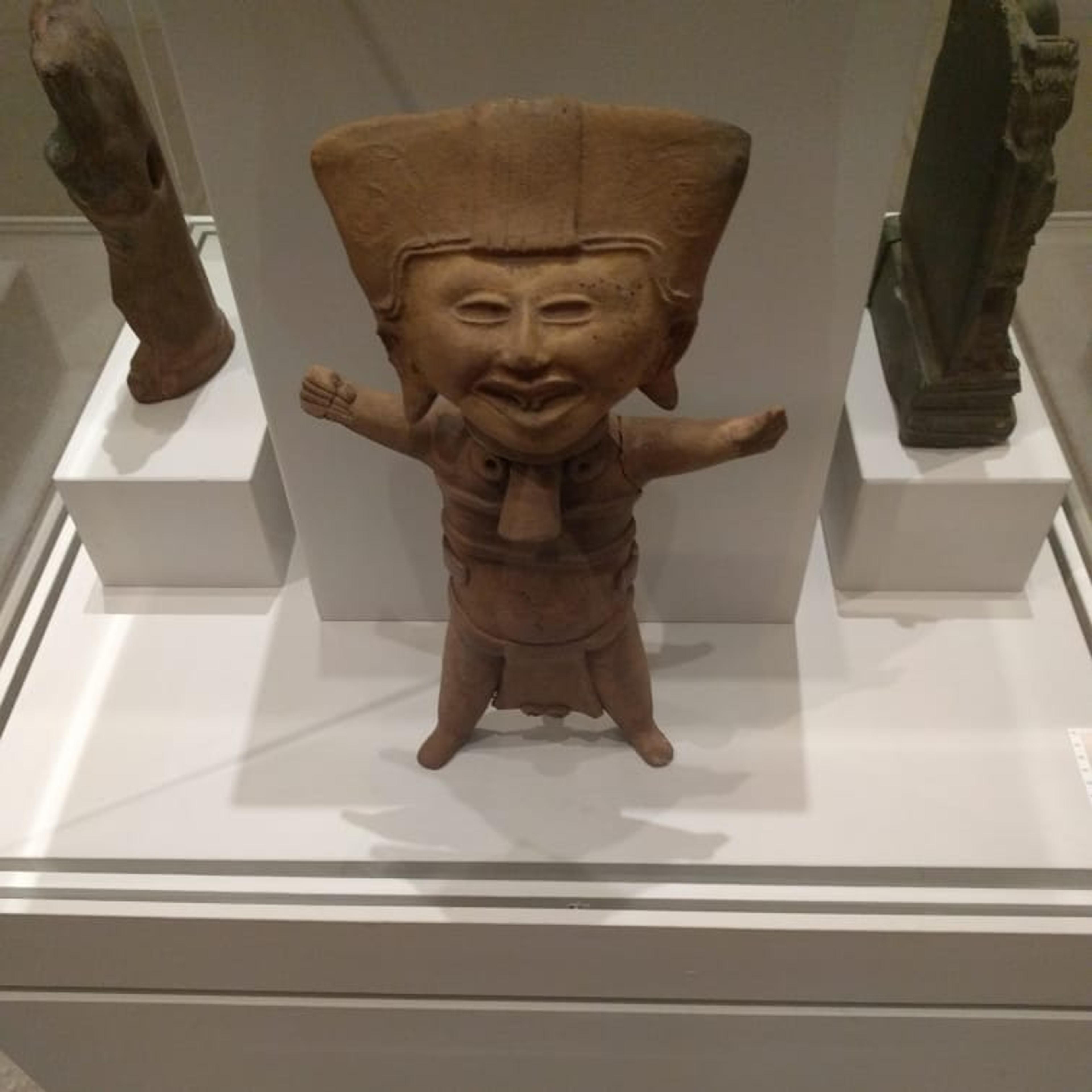 Yes, these figurines are also referred to as Smiling Figurines because they are represented in a state of euphoria, perhaps due to intoxication from a fermented beverage or hallucinogenic drug, we don't know for sure. These figures were made in large numbers in "press molds" where wet clay was pressed into a fired clay mold. Each one is slightly unique though, as the artist would add details afterwards: some of them little tongues, others teeth. They are very charming!The one at the MET is attributed to the Veracruz culture and is from Remojadas. Is that a place or a collection? How is Totonac related?Remojadas is a place and a name applied to the culture who produced works of a certain artistic style. Remojada culture is considered a subset of the larger Veracruz culture. The Totonac are also from the Veracruz area and their material culture is related.
I've seen figures like this before, why were they made?
This one in particular served as a whistle. Overall, their function is still being interpreted. It is believed that they served a ritual function in life, as many show signs of being used or have musical rattles built into them.
Have information?
Have information about an artwork? Contact us at