Goblet
Brooklyn Museum photograph
Object Label
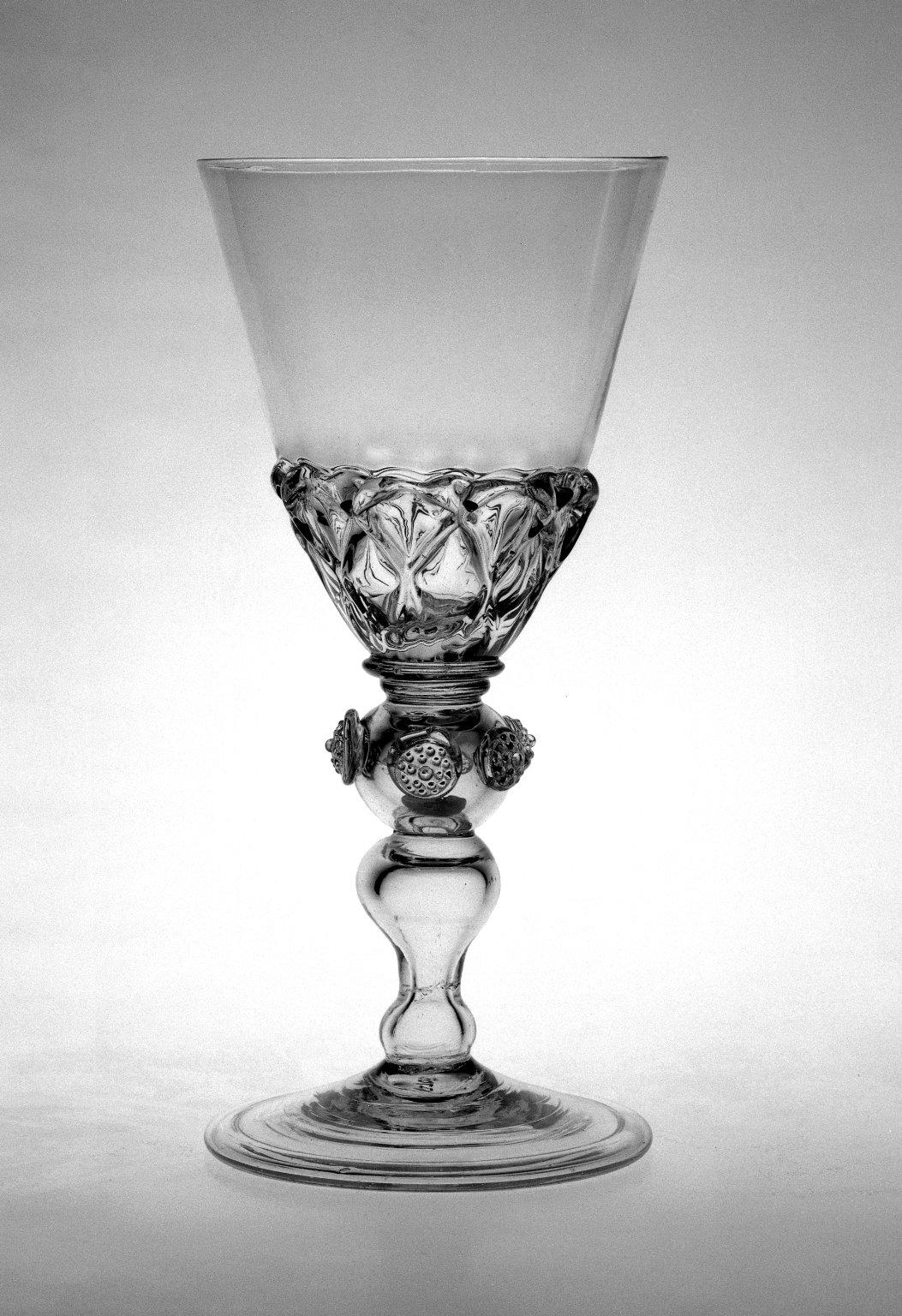
Encased in the hollow knop, or spherical projection, on the stem of this vessel is a coin that depicts Charles II of England (ruled 1660–1685). The coin and the large size of the vessel suggest that it was made for a supporter of the king around the time of Charles's death.
Caption
British. Goblet, 1670–1700. Glass, Height: 9 3/8 in. (23.8 cm) Rim diam.: 4 3/4 in. (12.1 cm) Foot diam.: 4 1/4 in. (10.8 cm). Brooklyn Museum, Purchased by Special Subscription and Museum Collection Fund, 13.708. (Photo: Brooklyn Museum)
Gallery
Not on view
Collection
Gallery
Not on view
Collection
Culture
Title
Goblet
Date
1670–1700
Medium
Glass
Classification
Dimensions
Height: 9 3/8 in. (23.8 cm) Rim diam.: 4 3/4 in. (12.1 cm) Foot diam.: 4 1/4 in. (10.8 cm)
Credit Line
Purchased by Special Subscription and Museum Collection Fund
Accession Number
13.708
Frequent Art Questions
Tell me more.
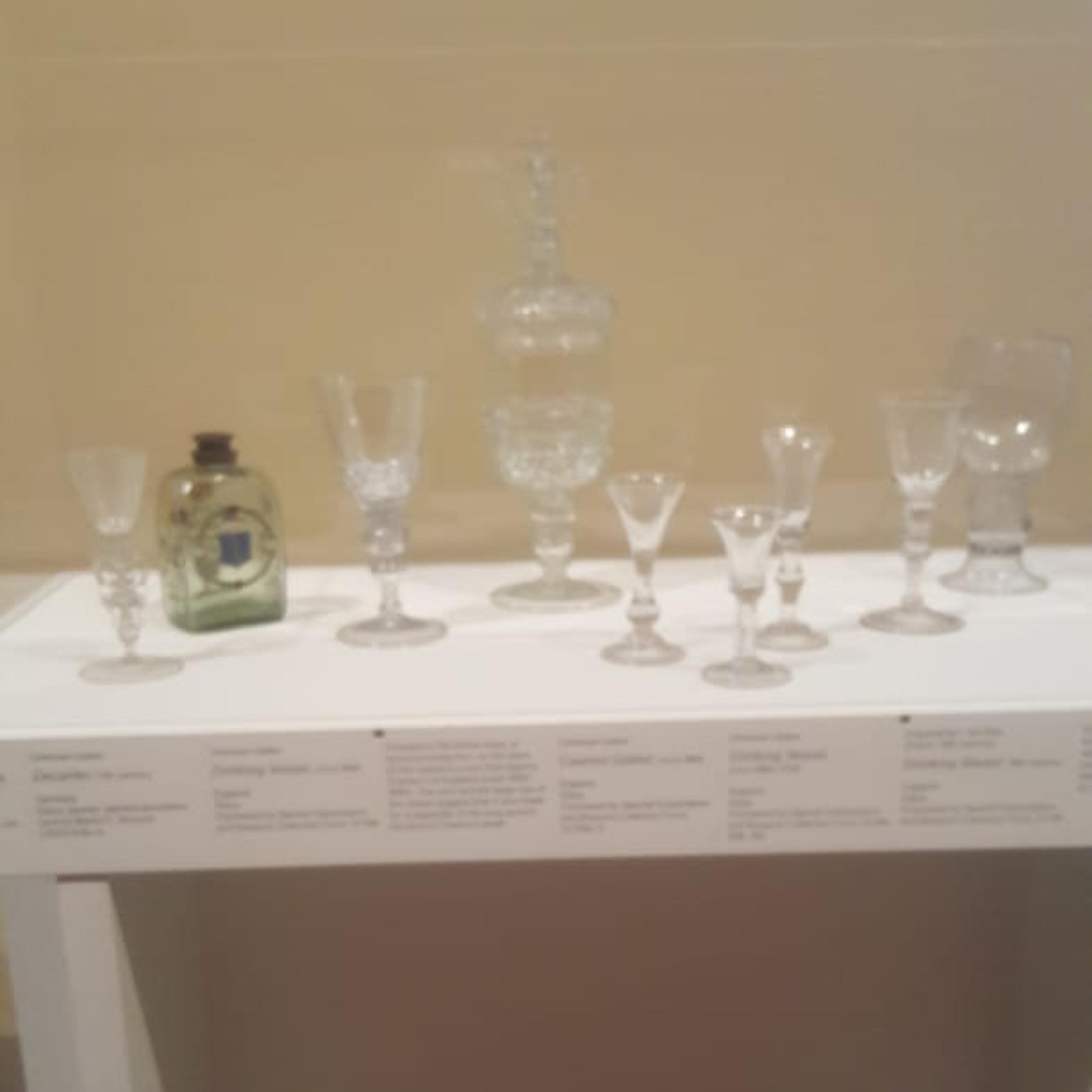 These glass objects are a symbol of luxury for the time. Glasses were a luxury item only owned by those who were well-off!Venice was the center of glass making, but other areas also produced glass, including northern Germany, Bohemia (parts of the Czech Republic), Silesia (parts of Poland), and the Netherlands, where the Schencks were from!The glasses themselves are what got me into wine tasting and their European design is indeed a luxury to have with the wine.How wonderful! Have you had the chance to drink from antique glass?I imagine that a beautifully-crafted vessel enhances the experience of a beverage.I only have one that I purchased that Thomas Jefferson used which is a flute as he called it. He admired all things that were European.Wow, what a piece of history to own! Yes, Jefferson was well-versed in European design trends.
Have information?
Have information about an artwork? Contact us at