Ceremonial Hacha in the Form of a Monkey's Head
Classic Veracruz


1 of 3
Object Label
U-shaped objects termed “yokes” by archaeologists are representations in stone of belts worn around a ball player’s hips. This example is decorated with symbolic images alluding to death, such as the human skeleton. The frog’s head at the front references the watery realm of the underworld. The hacha (literally, “axe,” for its resemblance to an axe head) was worn on the front of the belt. The monkey head may symbolize one of the half brothers of the Hero Twins of the Popol Vuh.
Caption
Classic Veracruz. Ceremonial Hacha in the Form of a Monkey's Head, 700–900. Stone, 7 1/4 x 6 1/2 x 4 in. (18.4 x 16.5 x 10.2 cm). Brooklyn Museum, By exchange, 59.237.2. (Photo: Brooklyn Museum)
Gallery
Not on view
Collection
Gallery
Not on view
Collection
Culture
Title
Ceremonial Hacha in the Form of a Monkey's Head
Date
700–900
Period
Post Classic
Geography
Place found: Veracruz, Mexico
Medium
Stone
Classification
Dimensions
7 1/4 x 6 1/2 x 4 in. (18.4 x 16.5 x 10.2 cm)
Credit Line
By exchange
Accession Number
59.237.2
Frequent Art Questions
What is this made of?
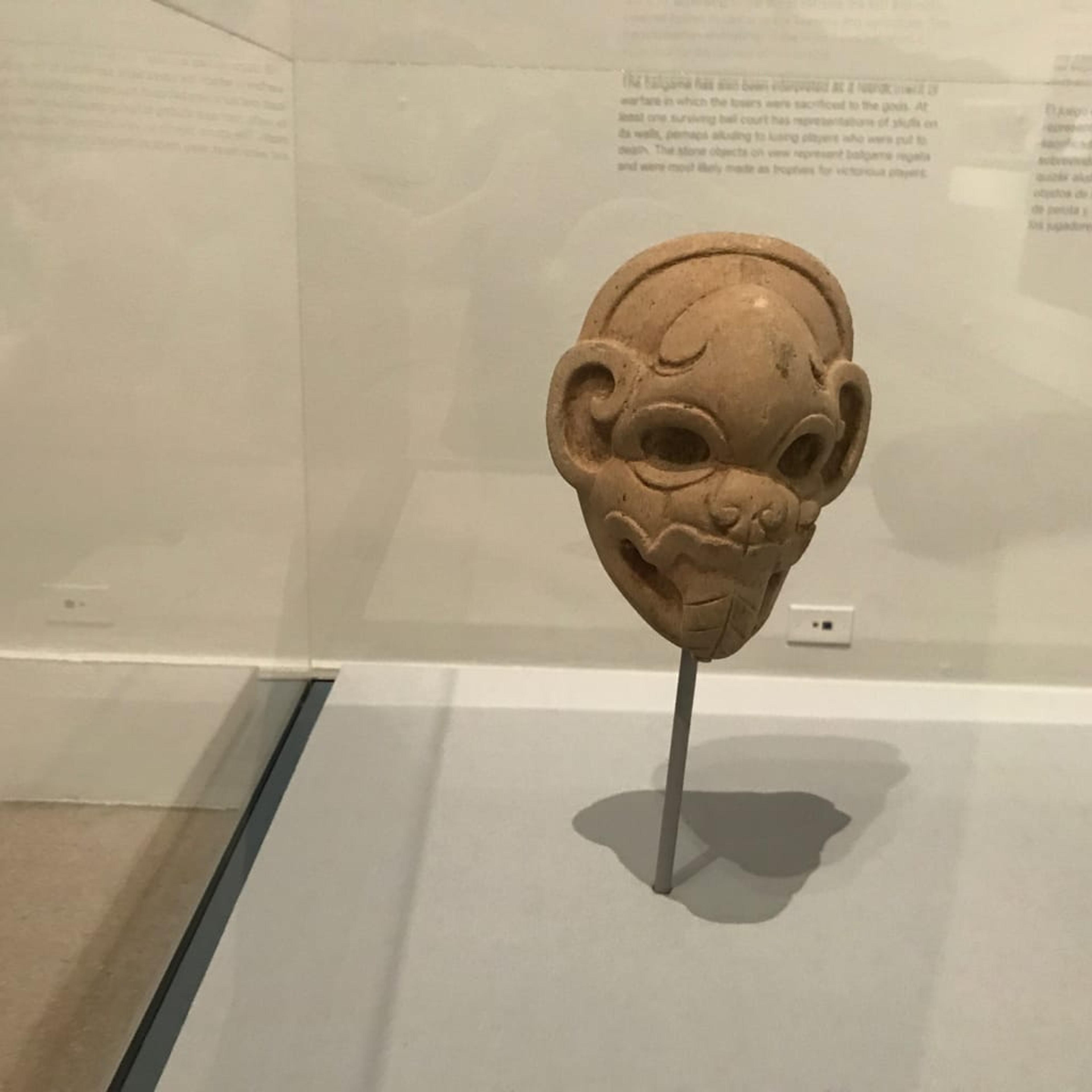 The hacha is made of stone. I'm not sure what kind of stone, but I think it is limestone.This is a stone version of something that a man would wear while playing the Ballgame.What ball games did they play?We assume that they played one ball game that we see depicted over and over again in wall reliefs and other archaeological remains.It resembles soccer! It was played on an I shaped court and the objective was to get rubber balls through stone carved hoops on the sides of the court. The game also served a ritual purpose. It was a reenactment of the world's creation. In their creation story Hero Twins journey to the underworld and defeat the lords of death in a ballgame. It has also been interpreted as a reenactment of warfare in which the losers are sacrificed to the gods.
What kind of ball did they use to play the game?
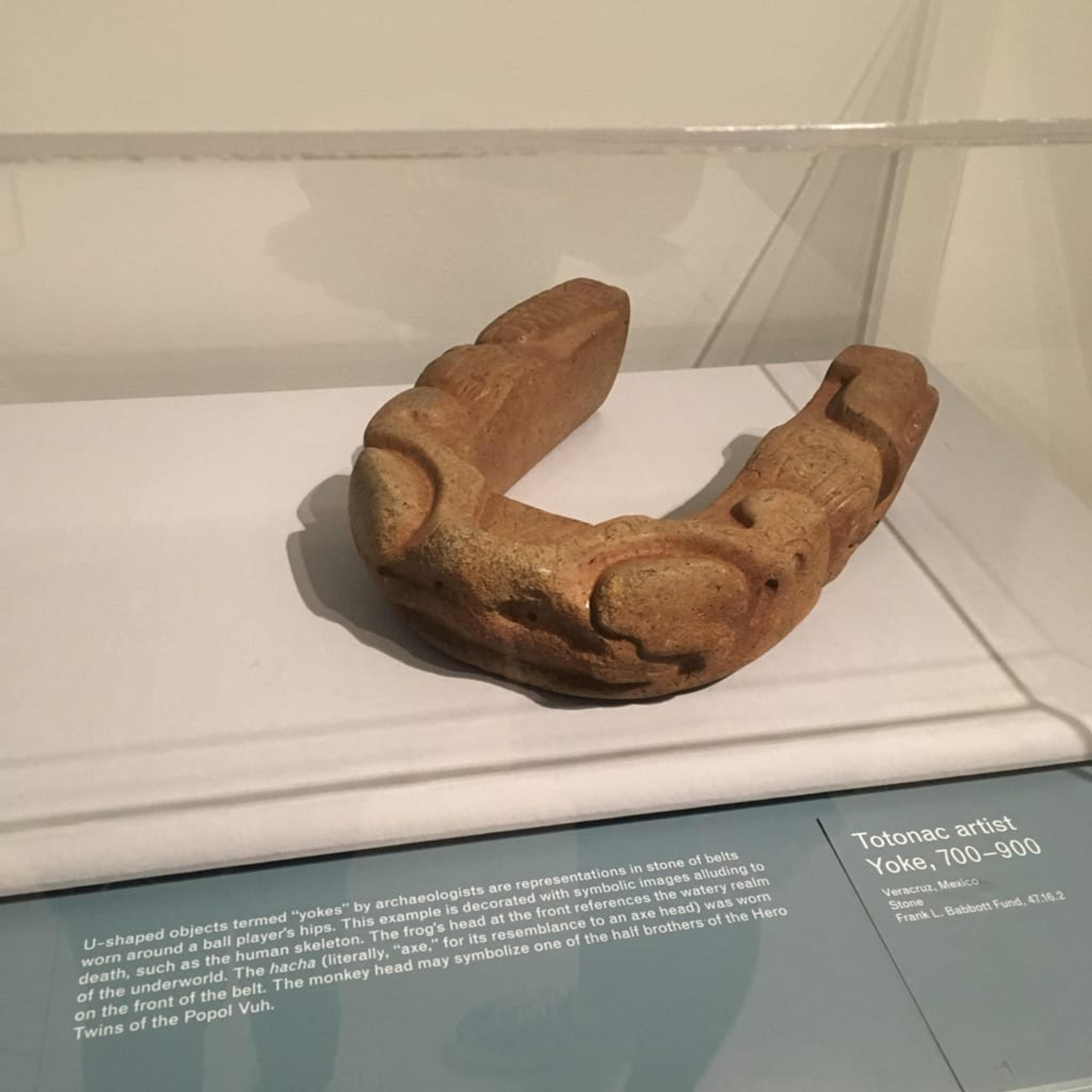 The balls were made from a natural rubber! They were extremely heavy and players had to wear a lot of padding to protect themselves. This stone piece represents a real piece of athletic gear that would have protected the hip and been made of leather or plant materials.
Have information?
Have information about an artwork? Contact us at