Headdress
Chimú


1 of 2
Object Label
The Chimú kingdom, which dominated the northern and central coasts of present-day Peru from 1100 to 1470, produced a variety of high-status feathered garments and ornaments for the ruling elite, such as tabards (tunics open at the sides), pectorals, ear ornaments, and headdresses. The large quantity of feathered regalia indicates an active trading network with the distant tropical lowlands to make exotic feathers more readily available to skilled Chimú artisans.
Feathers were sewn or adhered to a woven cotton cloth that was then attached to a reed foundation. The checkerboard pattern, surrounding stepped-fret motifs, and abstracted human figures are classic Chimú designs.
Feathers were sewn or adhered to a woven cotton cloth that was then attached to a reed foundation. The checkerboard pattern, surrounding stepped-fret motifs, and abstracted human figures are classic Chimú designs.
Caption
Chimú. Headdress, 1100–1470 C.E.. Cotton, hide, feathers, wood or reed, 5 1/8 x 8 1/4 x 8 1/4 in. (13 x 21 x 21 cm). Brooklyn Museum, Ella C. Woodward Memorial Fund, 61.11a-b. (Photo: Brooklyn Museum)
Gallery
Not on view
Collection
Gallery
Not on view
Collection
Culture
Title
Headdress
Date
1100–1470 C.E.
Period
Late Intermediate Period
Geography
Place made: North or Central Coast, Peru
Medium
Cotton, hide, feathers, wood or reed
Classification
Dimensions
5 1/8 x 8 1/4 x 8 1/4 in. (13 x 21 x 21 cm)
Credit Line
Ella C. Woodward Memorial Fund
Accession Number
61.11a-b
Frequent Art Questions
Can you tell me about this?
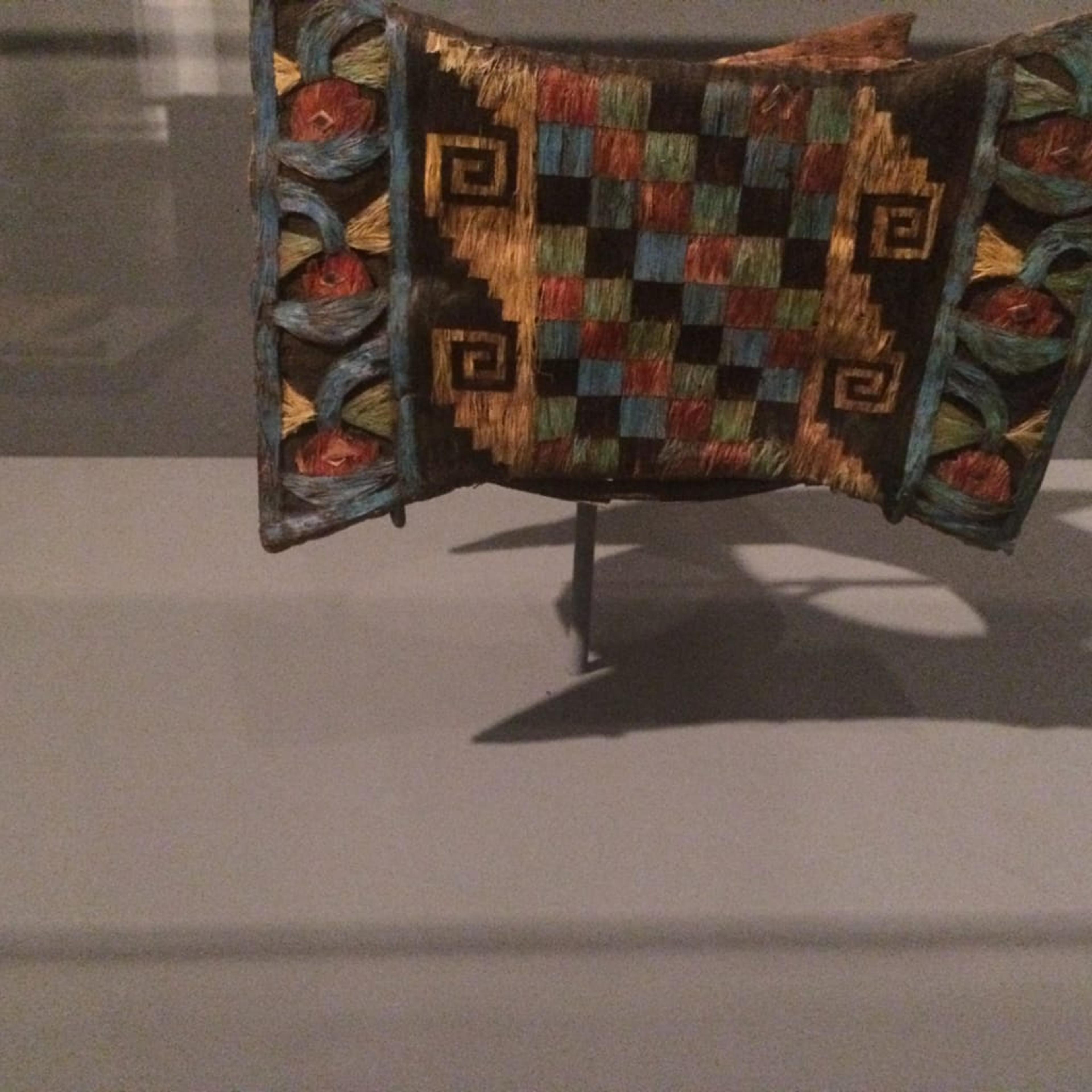 This headdress represents a fascinating art form common to a few Andean cultures: featherwork. It also illustrates the commonalities of iconography across artforms. The checkerboard pattern, stepped-fret motifs, and abstracted human figures can be seen on Chimu textiles as well!
Have information?
Have information about an artwork? Contact us at