Dance Mask (Takü)
Pamí’wa, also known as Cubeo


1 of 3
Object Label
The Pamí’wa, commonly referred to as the Cubeo, live in the present-day countries of Colombia and Brazil and are known for elaborate dance masks made of painted bark cloth. These full-body masks are worn for the mourning, or ónyo (“weeping”), ceremony, a multiday ritual held approximately a year after an individual’s death. The masks represent the spirits of primordial animals who were created by the deity Kúwai at the beginning of time and were prototypes for real species. Made and worn by men, the masks do not come alive until they are danced, thereby creating a connection between ancestral and present-day worlds. Geometric designs are more common on such masks (see nearby photographs) than the snakes depicted here, which may represent the spirit Ala, a venomous viper.
Caption
Pamí’wa, also known as Cubeo. Dance Mask (Takü), 20th century. Bark cloth, wood, pigments, 69 x 24 x 22 1/2 in. (175.3 x 61 x 57.2 cm). Brooklyn Museum, Frank L. Babbott Fund, 61.34.2. (Photo: Brooklyn Museum)
Gallery
Not on view
Collection
Gallery
Not on view
Collection
Culture
Title
Dance Mask (Takü)
Date
20th century
Geography
Possible place made: Brazil, Possible place made: Upper Vaupes, Colombia
Medium
Bark cloth, wood, pigments
Classification
Dimensions
69 x 24 x 22 1/2 in. (175.3 x 61 x 57.2 cm)
Credit Line
Frank L. Babbott Fund
Accession Number
61.34.2
Frequent Art Questions
Tell me more.
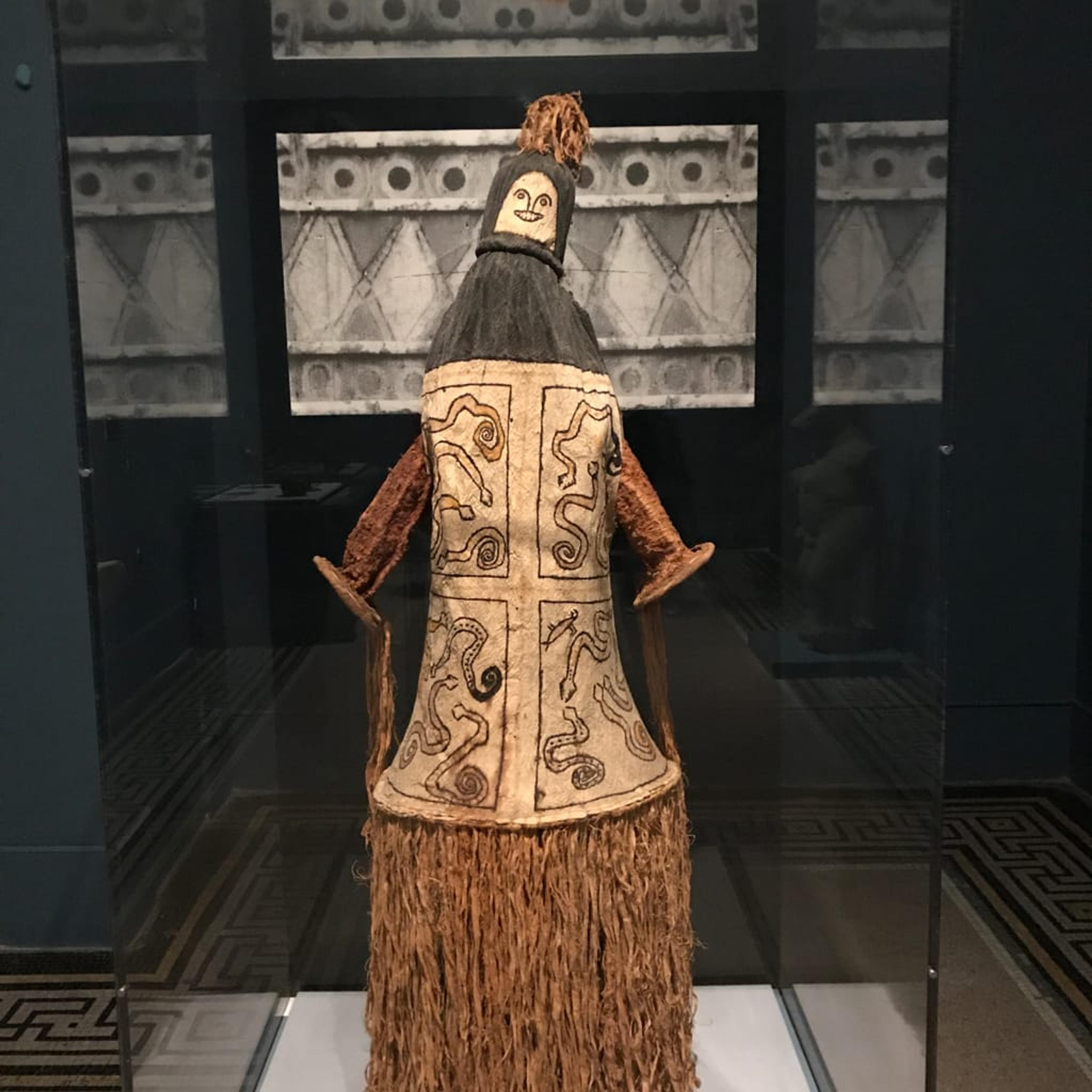 This full body dance mask is made of bark cloth, wood, and pigments. the wooden hoop at the bottom creates the place where the mask flares out, with fiber fringe hanging from it. The decoration on the mask include snakes in orange and yellow.The snakes may represent the spirit of Ala, a venomous viper.
I would love to know more about this object. Was it used for ceremonies?
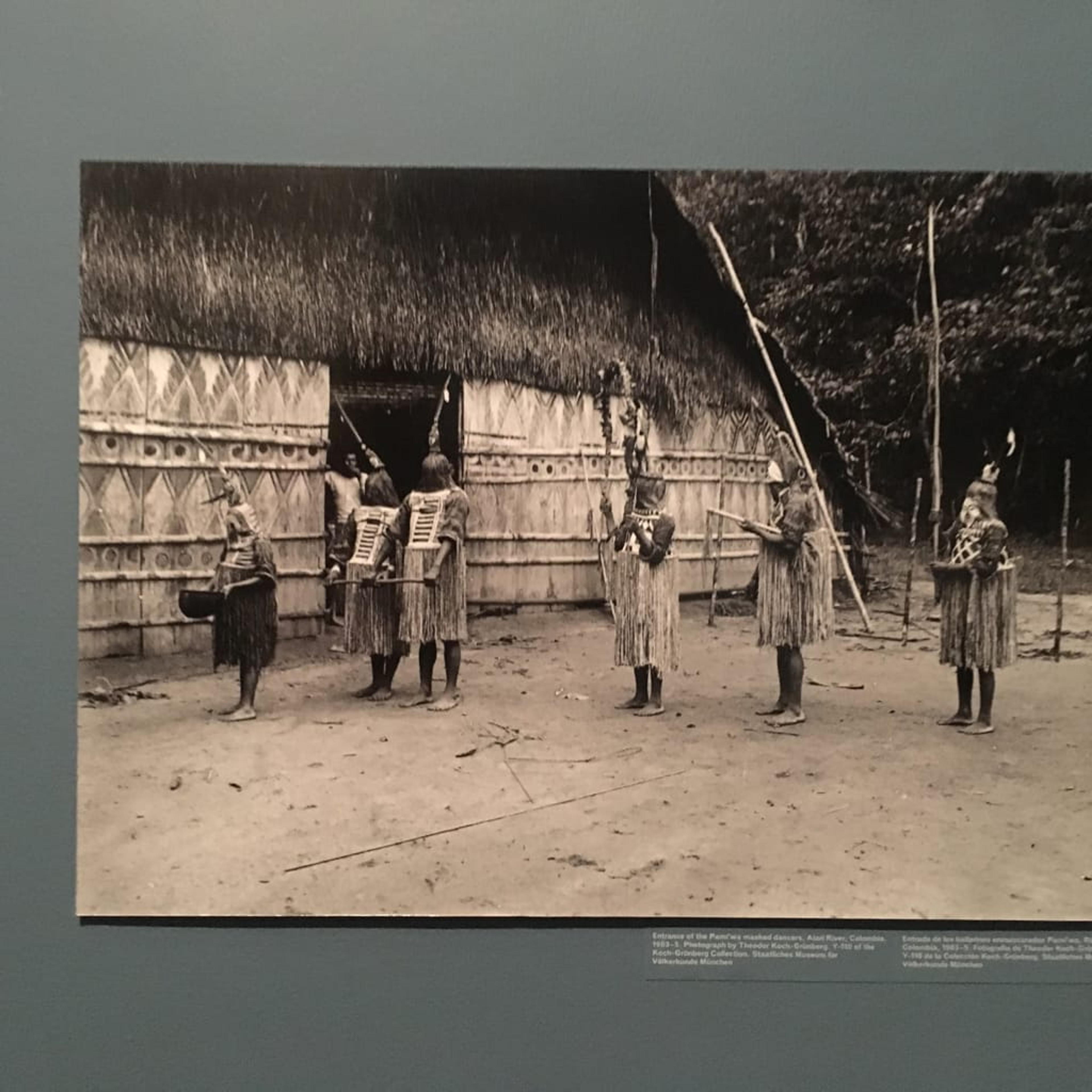 Yes! The full- body dance mask on view in the gallery and those you see in the photograph would be worn for óyno" (weeping) ceremonies, a ritual held in remembrance of someone's death.The masks themselves represent the spirits of primordial animals, and are made and worn by men.The óyno dance creates a connection between the present and ancestral world.Wow!
Tell me more.
This mask would have been used in a ónyo (weeping), ceremony, one year after the death of a Pami'wa individual.The ceremony and masquerade celebrated the individual's life, conveyed acknowledgment of their journey to their death, and also represented the primordial animal spirits.
Have information?
Have information about an artwork? Contact us at