Charm Necklace


1 of 4
Object Label
Among the Tucano of the northwestern Amazon basin, stories abound of people turning into animals to learn about their habits and of animals teaching people how to use certain resources in the natural world. Shamanic knowledge contains detailed descriptions of these encounters, and many shamans claim that animals have revealed to them an unexpected food source or the cure for an illness. This necklace of finely carved animal and human forms may have been worn by a shaman to acknowledge such a relationship.
Caption
Tukano. Charm Necklace, mid–20th century. Palm nut, seeds, plant fiber, 6 1/4 × 3/4 × 8 1/4 in. (15.9 × 1.9 × 21 cm). Brooklyn Museum, Gift of E.R. Squibb and Sons, 61.89. (Photo: Brooklyn Museum)
Gallery
Not on view
Collection
Gallery
Not on view
Collection
Culture
Title
Charm Necklace
Date
mid–20th century
Geography
Place made: Amazon, Brazil
Medium
Palm nut, seeds, plant fiber
Classification
Dimensions
6 1/4 × 3/4 × 8 1/4 in. (15.9 × 1.9 × 21 cm)
Credit Line
Gift of E.R. Squibb and Sons
Accession Number
61.89
Frequent Art Questions
Why are three pieces of Alaskan art paired with a piece from Brazil?
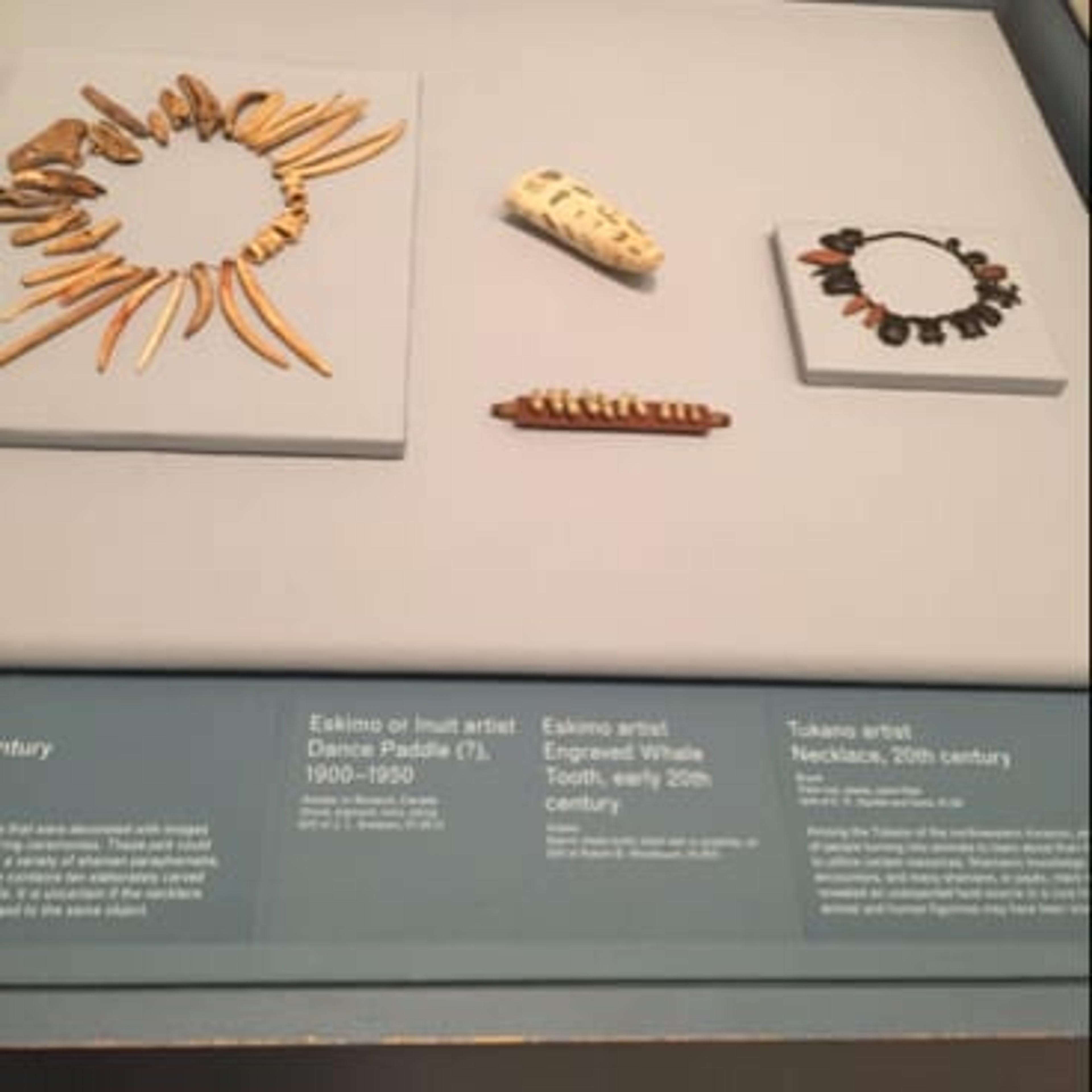 Great question! The installation is by theme and use rather than country of origin.What is the theme for this case?The theme is talismans and charms. The necklaces may have been worn by a shaman or medicine man. Images of animals on the Tukano necklace from Brazil acknowledges the important relationship between humans and animals. All three pieces are made from natural materials found within these specific regions.There is a case of musical instruments from different countries nearby that keeps with the concept of themes within the exhibition.Okay, I'll check that out, thank you!You're welcome!
Have information?
Have information about an artwork? Contact us at