Head of Isis-Fortuna
1st century B.C.E.– 2nd century C.E.


1 of 6
Caption
Head of Isis-Fortuna, 1st century B.C.E.– 2nd century C.E.. Marble, 14 x 8 7/16 x 5 1/2 in. (35.5 x 21.5 x 14 cm). Brooklyn Museum, Charles Edwin Wilbour Fund, 62.45. (Photo: Brooklyn Museum)
Gallery
Not on view
Gallery
Not on view
Title
Head of Isis-Fortuna
Date
1st century B.C.E.– 2nd century C.E.
Period
Ptolemaic Period to Roman Period
Geography
Possible place collected: Alexandria, Egypt
Medium
Marble
Classification
Dimensions
14 x 8 7/16 x 5 1/2 in. (35.5 x 21.5 x 14 cm)
Credit Line
Charles Edwin Wilbour Fund
Accession Number
62.45
Frequent Art Questions
Can you tell me a little more about this piece?
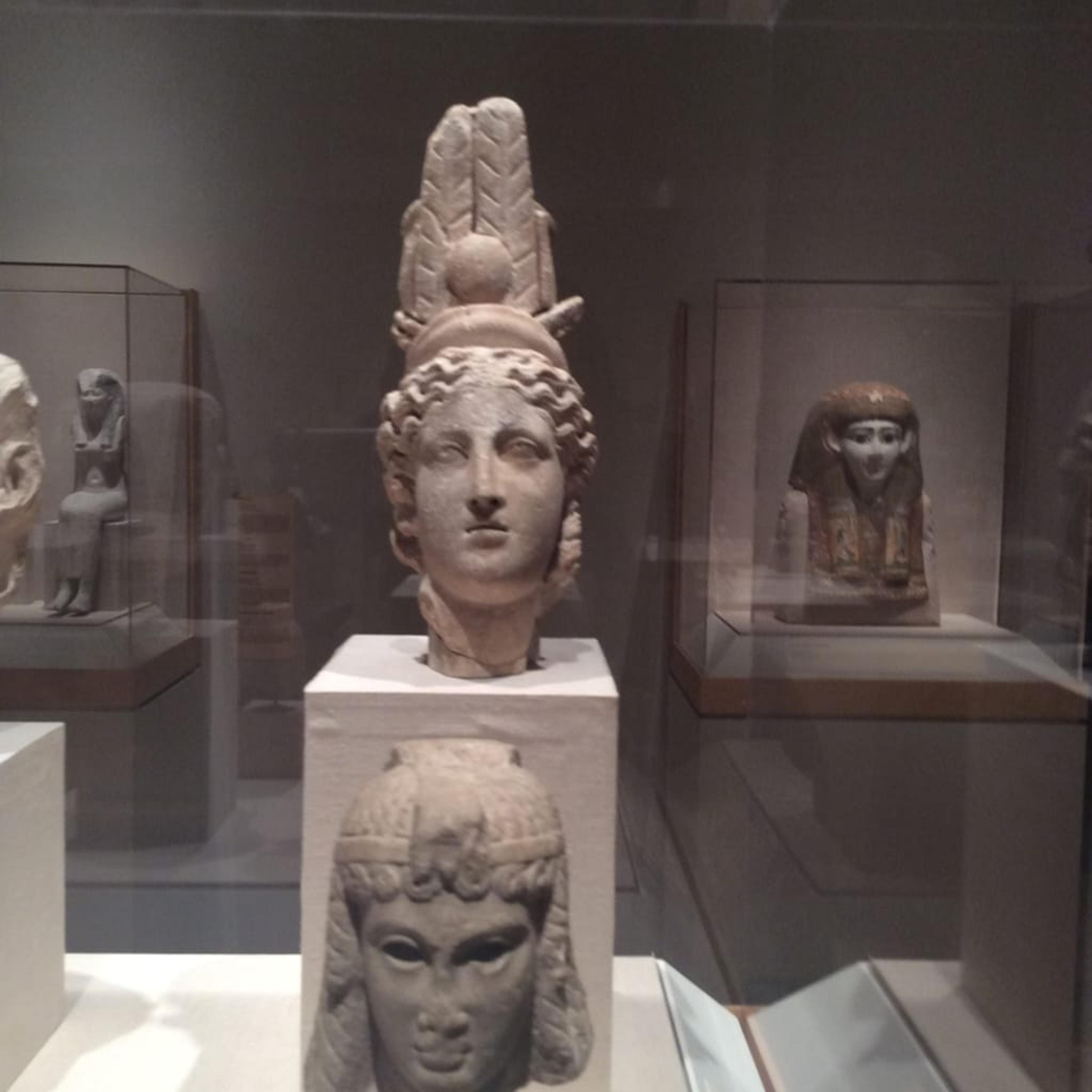 Sure! The head on the top is the goddess Isis-Fortuna. In the Hellenistic and Roman periods, there was a cross-connecting of Egyptian and Greco-Roman deities. Isis is a popular Egyptian goddess (many images of her can be found around the galleries) and she gained a great deal of popularity outside of Egypt!The other goddess, Fortuna, was a Roman goddess associated with fertility and fate. For contemporary audiences, the combination of these two deities made sense. She can be identified by the headdresses, which features feathers and a moon disk.Thank you!
Would you say this style of art greatly influenced Egyptian art from then on? It looks like some statues, though clearly Egyptian are more...Classical?
It was definitely a melding of cultures and art and iconographic styles. Egyptian aesthetics were retained in most cases but there was a whole new source of artistic traditions and techniques flooding in. Its fun to compare and contrast how Egyptian art changed through time. You can traces the evolution from the Old Kingdom through the Middle and New Kingdom and then the Roman period!Okay. Thank you very much!
Have information?
Have information about an artwork? Contact us at