Pounce Pot
ca. 1820
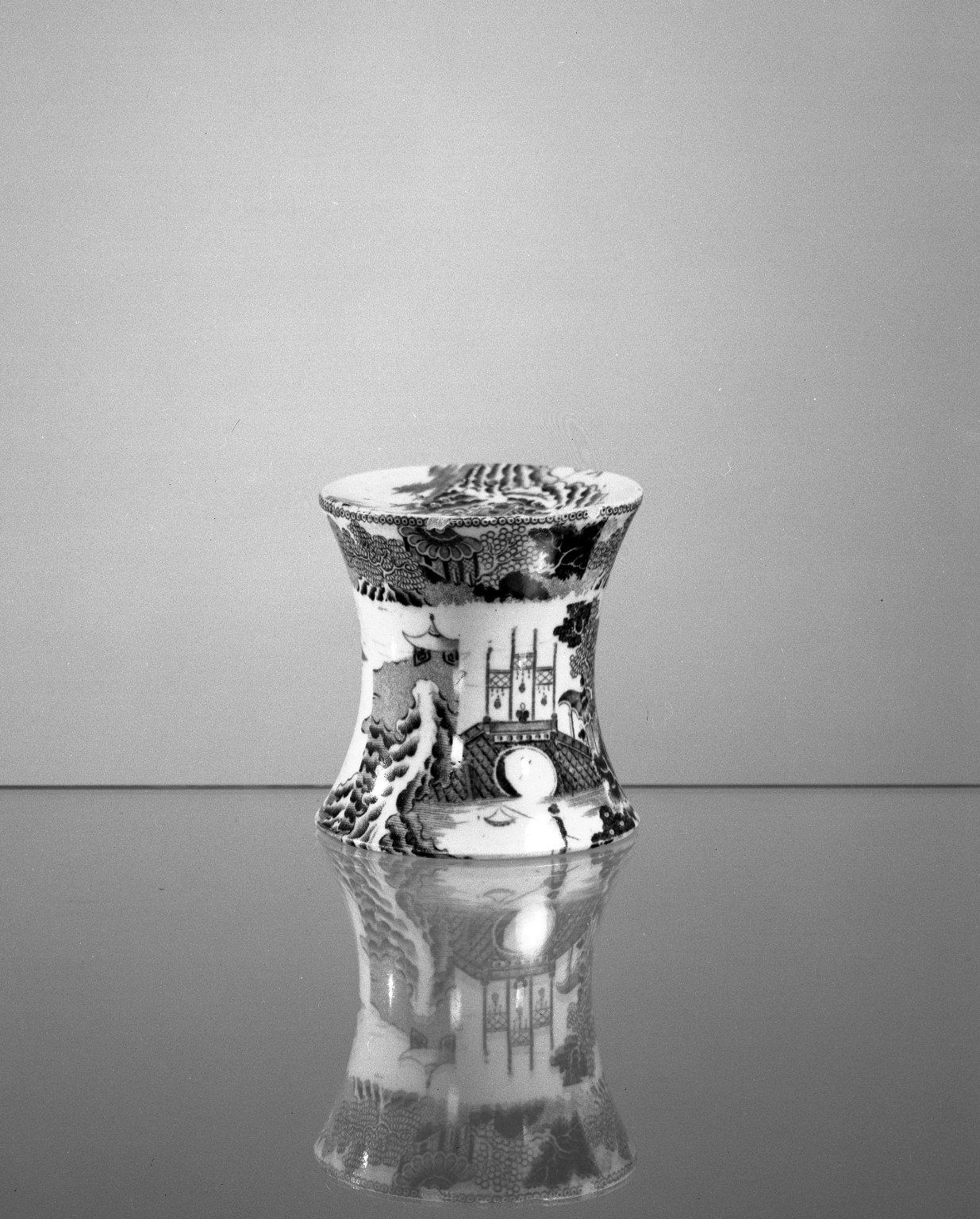
Brooklyn Museum photograph
Object Label
Pounce pots were filled with a powder, often made from dried fishbone, that was sprinkled on ink to secure writing to paper.
Caption
Pounce Pot, ca. 1820. Staffordshire earthenware, 2 3/4 x 2 9/16 in. (7 x 6.5 cm). Brooklyn Museum, Gift of H. Randolph Lever in memory of Mary E. Lever, 62.78.11. (Photo: Brooklyn Museum)
Gallery
Not on view
Collection
Gallery
Not on view
Collection
Title
Pounce Pot
Date
ca. 1820
Medium
Staffordshire earthenware
Classification
Dimensions
2 3/4 x 2 9/16 in. (7 x 6.5 cm)
Signatures
no signature
Inscriptions
no inscriptions
Markings
no marks
Credit Line
Gift of H. Randolph Lever in memory of Mary E. Lever
Accession Number
62.78.11
Frequent Art Questions
I have a question about the Pounce Pot. What kind of powder was used and was this the first evolution to “permanent ink”?
The pounce contained in this pounce pot was usually made of pumice or gum sandarac, a resin made from cypress trees. While ink already had staying power, the pounce would help the ink to dry faster and not smudge during the writing process.
Have information?
Have information about an artwork? Contact us at