Life Death Figure
Aztec


1 of 4
Object Label
The face on this small yet powerful sculpture exemplifies the dualism of ancient Mesoamerican religion with respect to life and death by combining a skull with lifelike features. Previous interpretations, based on the two-horned headdress and jeweled headband, identified the figure as Xiuhtecuhtli (Lord of Fire) or Tonacatecuhtli (Lord of Sustenance). More recent scholarship suggests that the two horns or tufts may refer to the two temples crowning the Templo Mayor, the Mexica (Aztec) ceremonial center that dominated the capital of Tenochtitlán, in present-day Mexico City. The temples were dedicated to Huitzilopochtli (Lord of Warfare) and to Tlaloc (Lord of Rain and Fertility).
Caption
Aztec. Life Death Figure, 1200–1521. Volcanic Stone, 10 1/2 x 5 1/2 x 6 1/8 in. (26.7 x 14 x 15.6 cm). Brooklyn Museum, Purchased with funds given by The Henfield Foundation, 64.50. (Photo: Brooklyn Museum)
Gallery
Not on view
Collection
Gallery
Not on view
Collection
Frequent Art Questions
Hi! About this "life-death figure" (Mexico, Aztec) 1200-1521.... Three rows of teeth! Any insight?
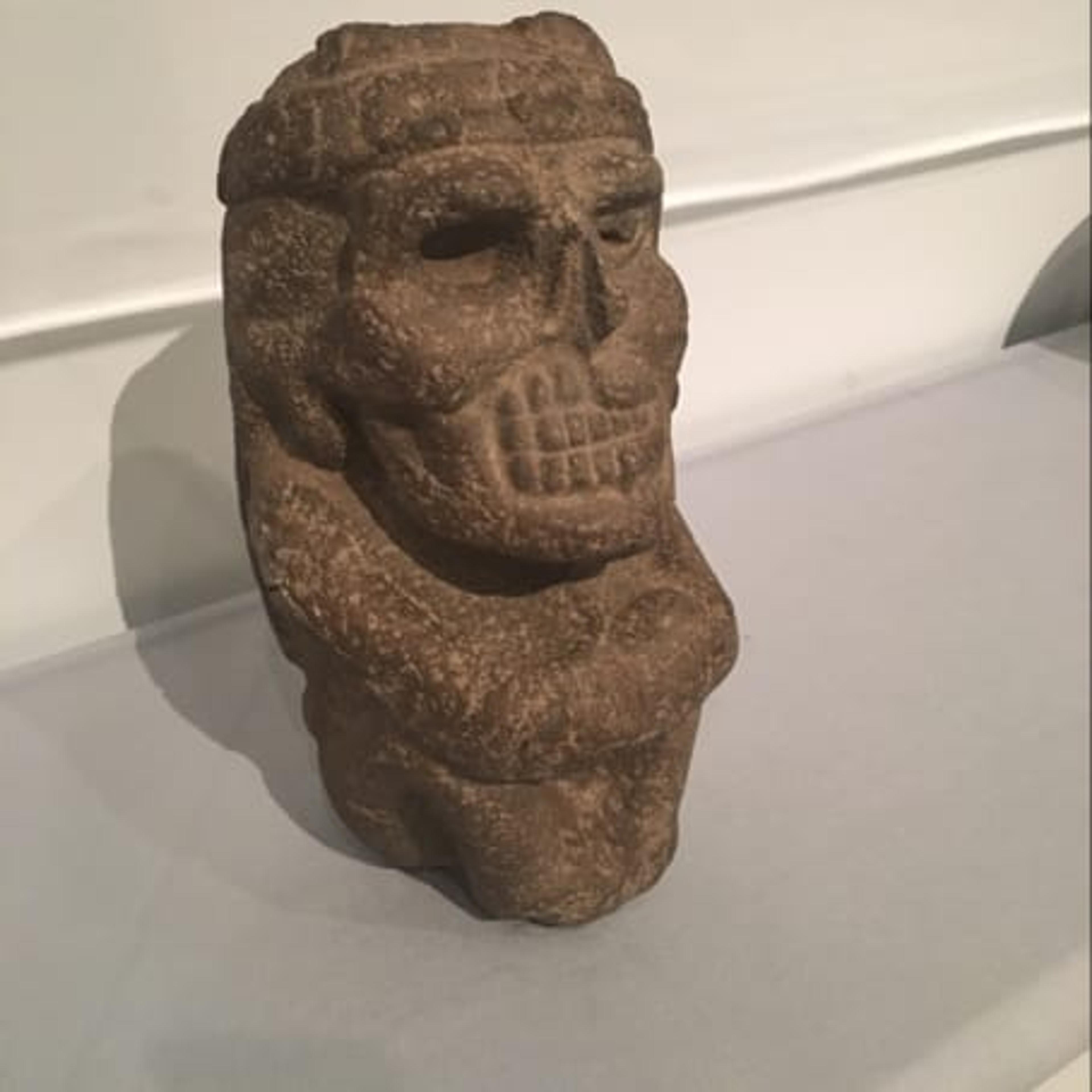 Wow, great observation! I believe three rows may not have a specific meaning -- if you look closely on the human side of the face there is only one. My guess with this work is that the artist was figuring around how to depict the teeth with and without lips.It's such a fascinating depiction with the human and skeleton faces divided right down the middle.Ha! Probably right. Volcanic stone is tough to carve. #scultptorproblemsAbsolutely! Many of our Aztec sculptural works are made from volcanic stone. They are certainly good at working with such a hard material!
Tell me about this Mexica "Life Death Figure".
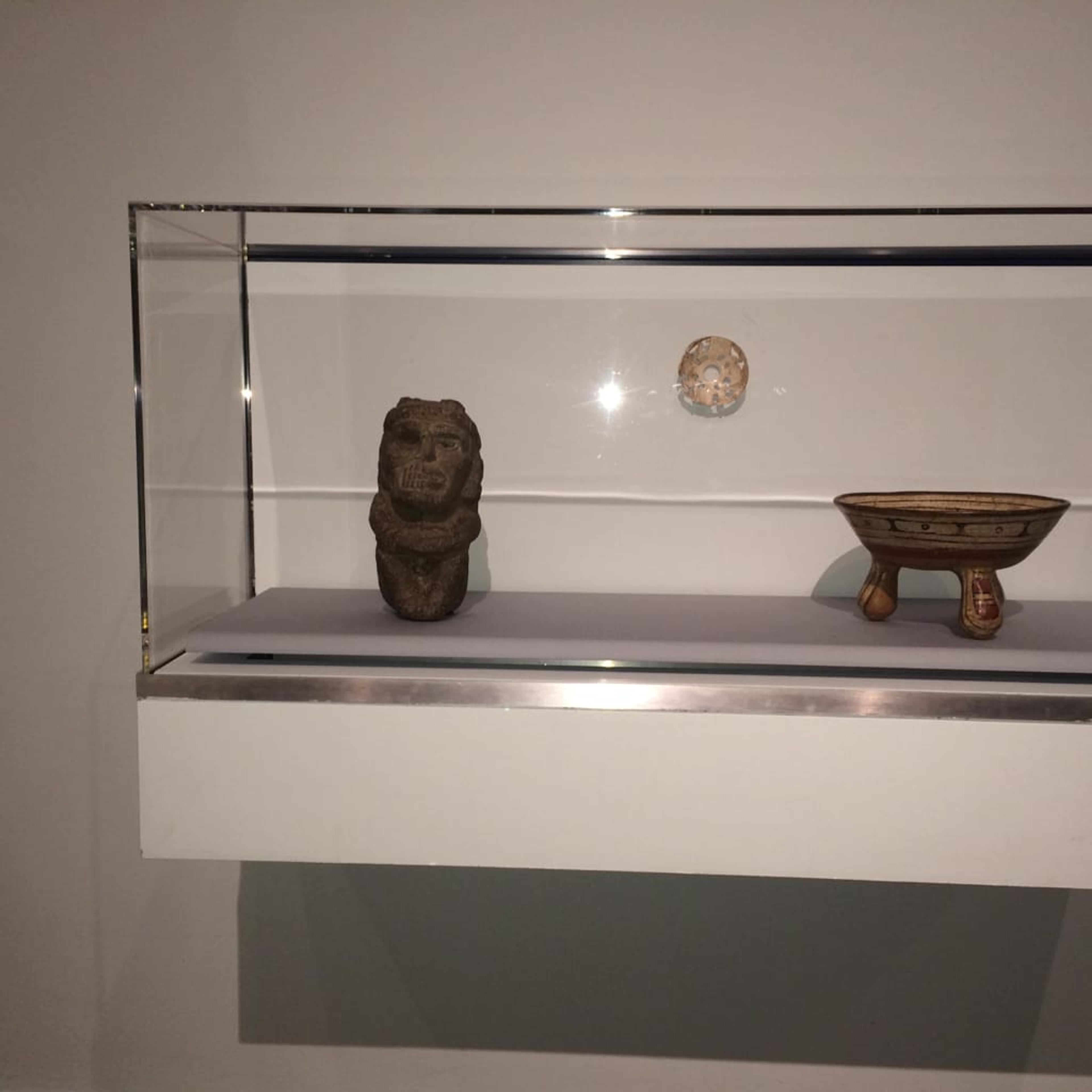 This is an example of small-scale religious sculpture from the Aztec (Mexica) culture of central Mexico. The Aztecs controlled the valley of Mexico for a century before the Spanish conquered them and began colonizing the region.The two horns on the figure's headdress may be a reference to the Templo Mayor that was crowned by two temples. The Templo Mayor was the ceremonial center of the Aztec capital, Tenochtitlán, modern-day Mexico City.
Have information?
Have information about an artwork? Contact us at