A Persian Guard
Ancient Near Eastern; Persian; Achaemenid




1 of 6
Object Label
The Achaemenid rulers of Persia (modern Iran) established an empire that lasted from 559 b.c. until it was conquered by Alexander the Great in 330 b.c. By that time, the Persian Empire controlled an area extending from Egypt through present-day Iraq, Iran, Syria, and Turkey into India. The Achaemenid kings built huge palace complexes at Persepolis and Pasargadae in southern Iran and hired craftsmen from throughout the world to decorate them with sculpture and reliefs.
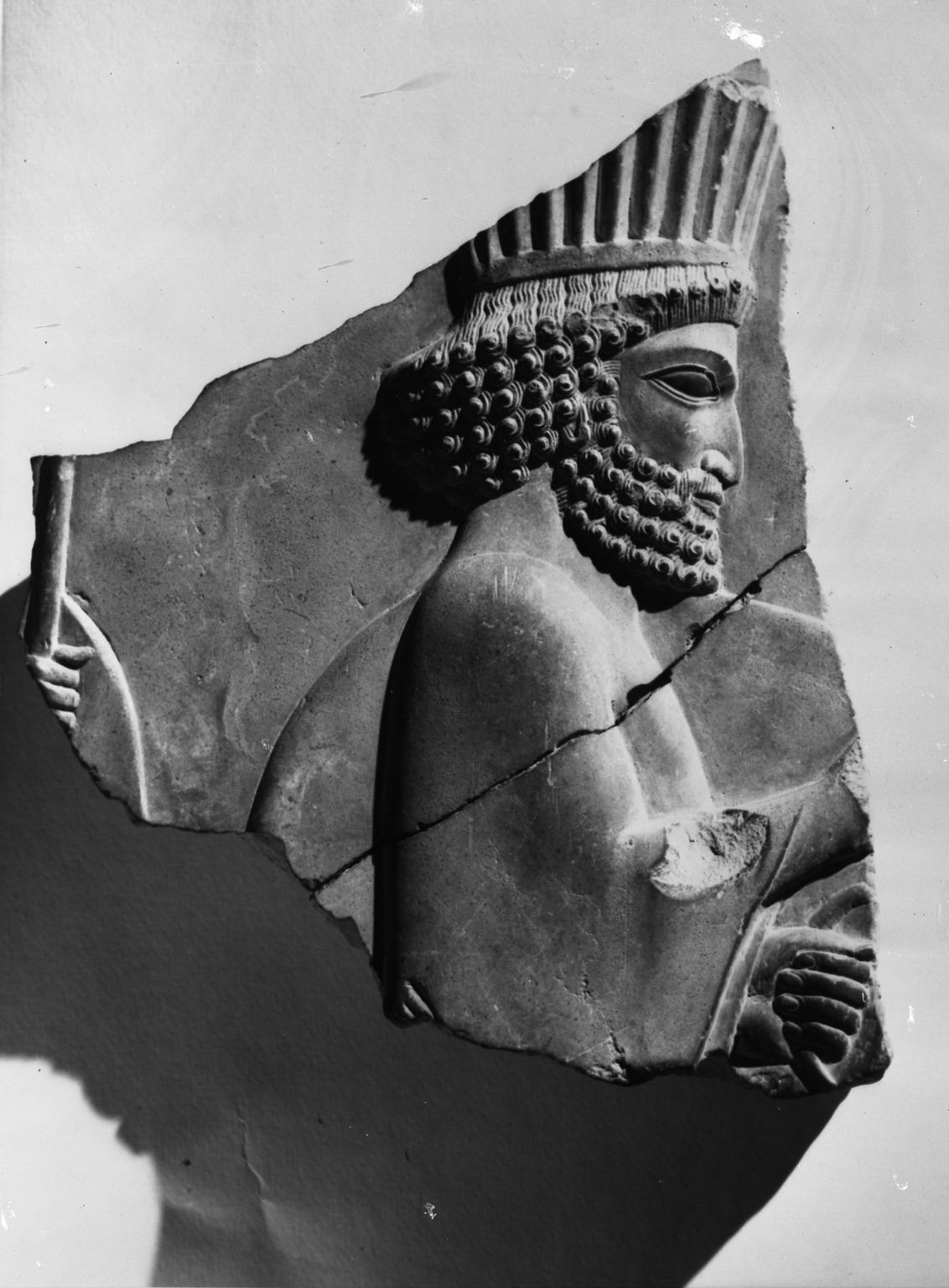
This fragment shows the upper body of a palace guard holding a round shield in one hand; in his other hand, now lost, he held a spear. His hair and beard are elaborately curled, and he wears a tall, fluted hat. Behind him is the hand of another guard with a shield and spear.
This fragment shows the upper body of a palace guard holding a round shield in one hand; in his other hand, now lost, he held a spear. His hair and beard are elaborately curled, and he wears a tall, fluted hat. Behind him is the hand of another guard with a shield and spear.
Caption
Ancient Near Eastern; Persian; Achaemenid. A Persian Guard, 5th–4th century B.C.E.. Limestone, 10 1/2 x 9 x 1 7/8 in. (26.6 x 22.8 x 4.7 cm). Brooklyn Museum, Gift of the Kevorkian Foundation in memory of Hagop Kevorkian, 65.195. (Photo: Brooklyn Museum)
Gallery
Not on view
Gallery
Not on view
Cultures
Title
A Persian Guard
Date
5th–4th century B.C.E.
Period
Persian Achaemenid Period
Geography
Place made: Persepolis, Iran
Medium
Limestone
Classification
Dimensions
10 1/2 x 9 x 1 7/8 in. (26.6 x 22.8 x 4.7 cm)
Credit Line
Gift of the Kevorkian Foundation in memory of Hagop Kevorkian
Accession Number
65.195
Frequent Art Questions
Does the museum have possession of the rest of the relief from which this fragment comes?
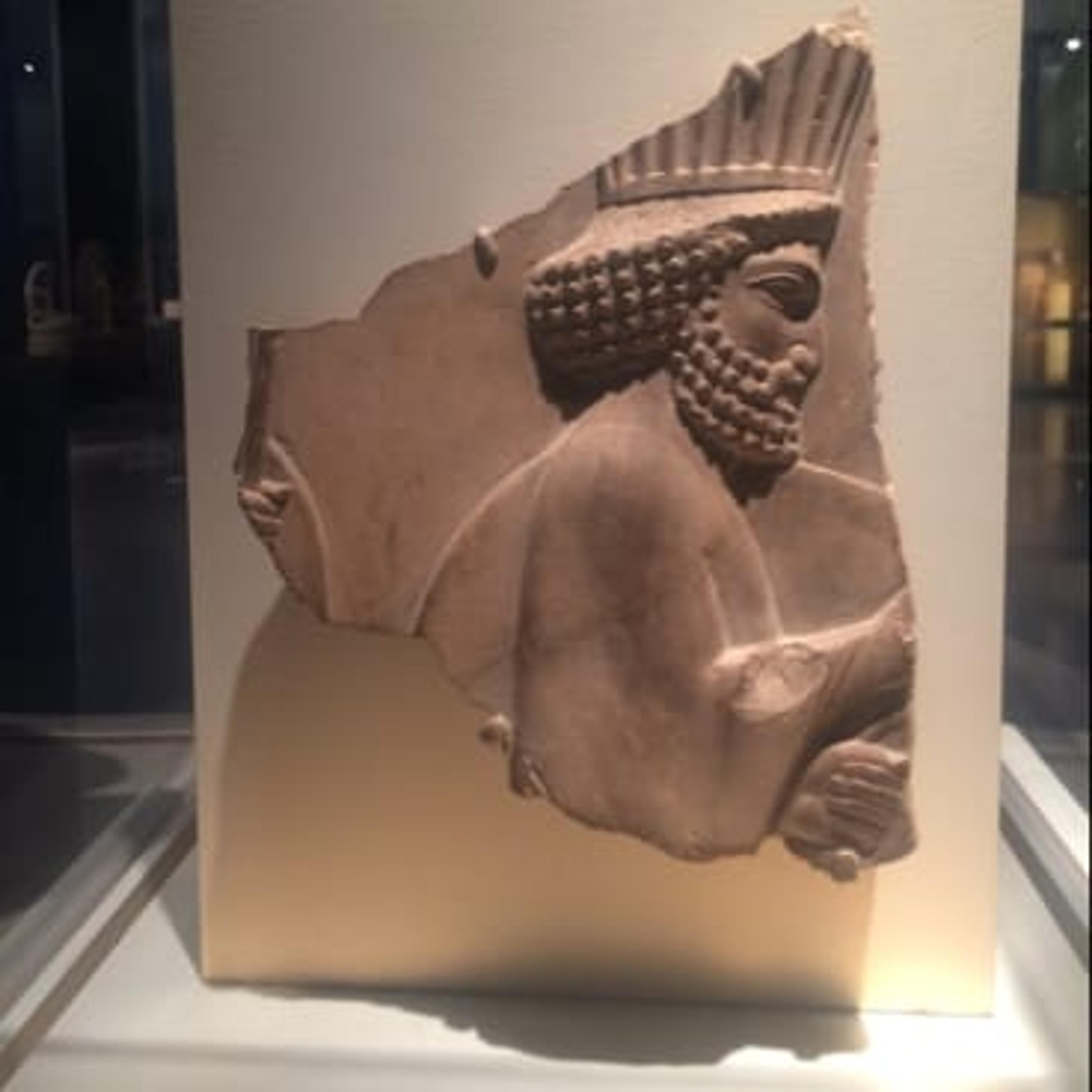 That is a good question! This is the only fragment of the relief that the Museum owns. If you look closely, you'll see the hand, shield, and spear of another guard standing behind the one whose head we see. This Persian guard demonstrates a typical hairstyle from his time and place. Hair and clothing are often these easiest way to tell where a person is from in ancient art.
Have information?
Have information about an artwork? Contact us at