Folding Stool
Attributed to Nicolas-Quinibert Foliot
Object Label
When it was new, this stool was part of the winter furnishings of the bedchamber of the Comtesse d’Artois at the Palace of Versailles. Seating furniture and the etiquette of its use held meaning in royal courts. Chairs with backs and arms were largely reserved for royalty. Everyone else sat on tabourets or stools.
A certain duchess at the court of King Louis XIV felt that her status entitled her to sit in an armchair. Society leaders disagreed and required her to sit on a tabouret instead. Rather than submit to such humiliation, the duchess refused to sit at all and spent every long hour in society standing.
A certain duchess at the court of King Louis XIV felt that her status entitled her to sit in an armchair. Society leaders disagreed and required her to sit on a tabouret instead. Rather than submit to such humiliation, the duchess refused to sit at all and spent every long hour in society standing.
Caption
Attributed to Nicolas-Quinibert Foliot (French, 1706–1776). Folding Stool, ca. 1773. Gessoed and gilded beech and upholstery, 21 x 26 x 20 1/2 in. (53.3 x 66 x 52.1 cm). Brooklyn Museum, Gift of the Estate of Mary Hayward Weir, 68.202.4.
Gallery
Not on view
Collection
Gallery
Not on view
Collection
Title
Folding Stool
Date
ca. 1773
Medium
Gessoed and gilded beech and upholstery
Classification
Dimensions
21 x 26 x 20 1/2 in. (53.3 x 66 x 52.1 cm)
Signatures
no signature
Inscriptions
no inscriptions
Markings
no marks
Credit Line
Gift of the Estate of Mary Hayward Weir
Accession Number
68.202.4
Frequent Art Questions
I'm curious about the use of folding stools in Versailles. Today, we think of folding furniture as practical for compact spaces or for shipping, but why did folks bother with folding furniture in the Palace of Versailles?
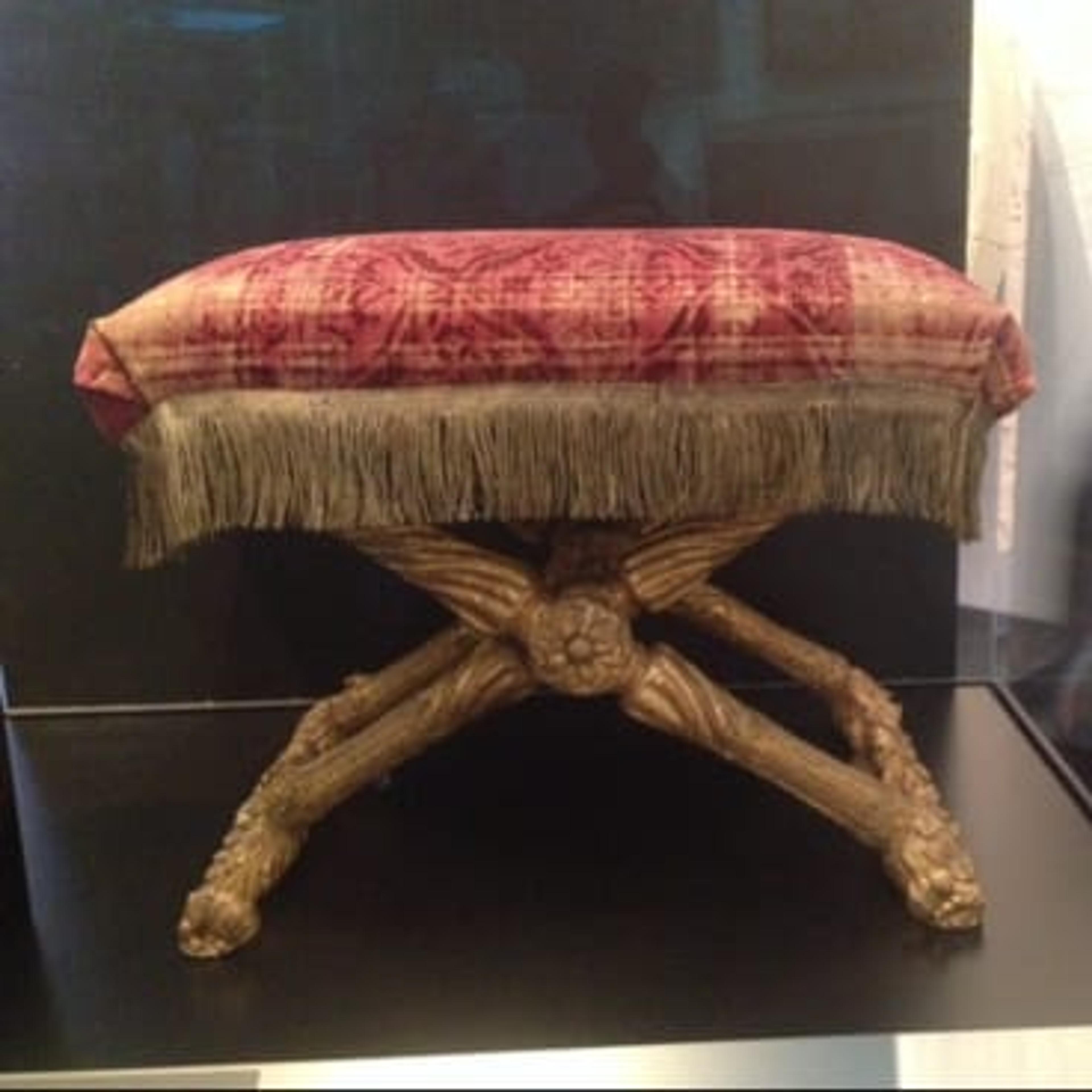 Folding stools were used by ancient Roman senators and so stools like this held allusions to Rome's imperial past. They signified power and so the design was used in Versailles. When not in use, such stools would have been placed around the walls of a room but would not have been folded. Their portability was useful in rooms that had many uses.I went to the official Versailles website, and here's a direct quote for you: "folding chairs and seating chairs will testify to the revolution that the 18th century brought about in the history of furniture, a reflection of the evolving tastes of a society enamoured by modernity and wanting to live in comfort and luxury."
The sign says that a duchess of King Louis 14th's court wanted a seat with armrests. Since she couldn't get one, she chose to stand. Do we know who this duchess was?
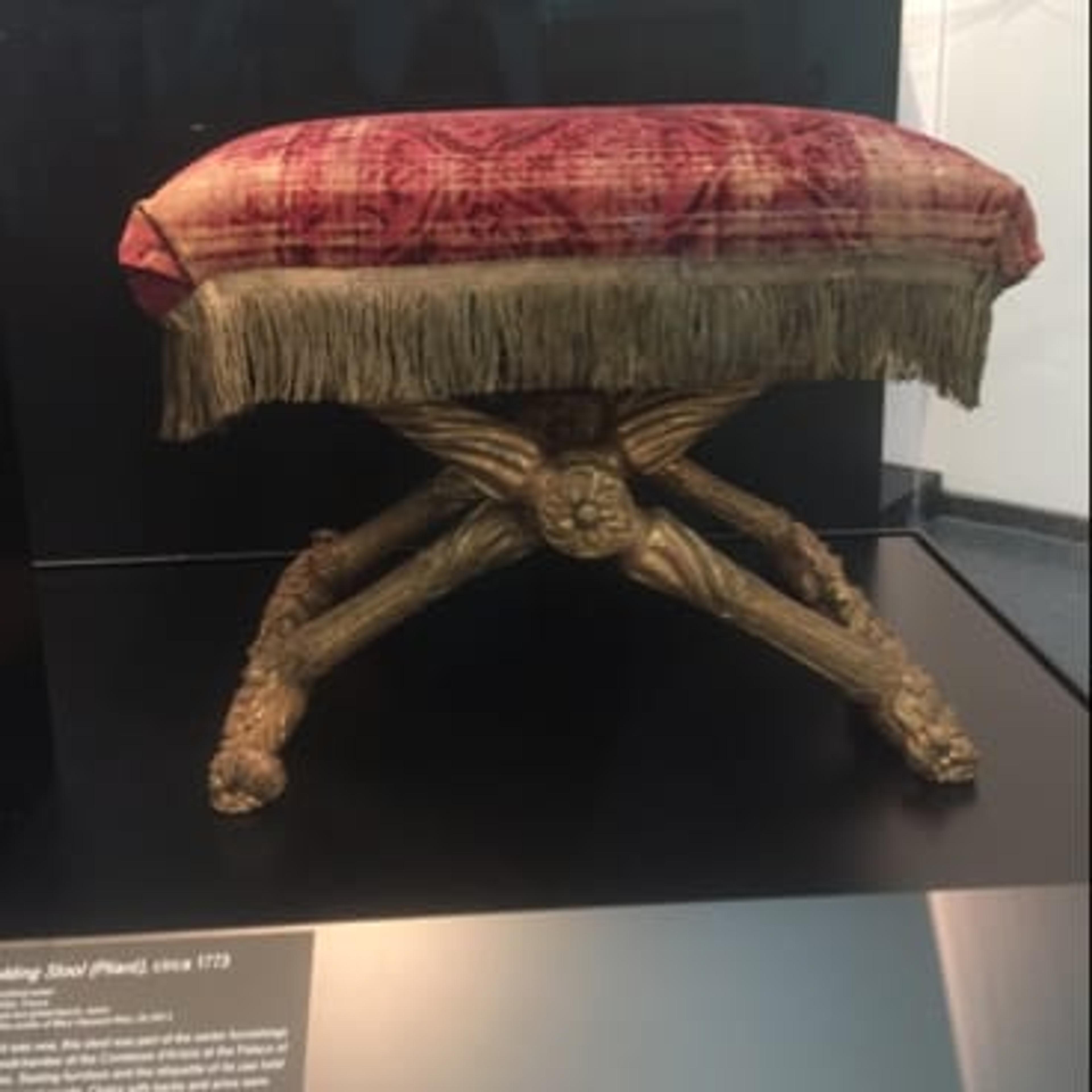 Indeed we do! She was the Duchess of Mantua and is described in Jesse Browner's book titled "The Duchess Who Wouldn't Sit Down."
Have information?
Have information about an artwork? Contact us at