The Money Diggers

Brooklyn Museum photograph
Object Label
Early ethnic stereotypes animate this painting based on one of the American author Washington Irving’s raucous stories of life in colonial New York. In this scene from “The Adventure of the Black Fisherman,” three money-mad characters hunt for treasure supposed to have been buried in a Dutch New York cemetery at the time of the British takeover. In painting the miserly Dutchman, the sinister German sorcerer, and the superstitious black fisherman who led the group to the spot, John Quidor followed Irving’s descriptions exactly, down to the green lenses in Dr. Knipperhausen’s glasses.
Caption
John Quidor (American, 1801–1881). The Money Diggers, 1832. Oil on canvas, 15 15/16 x 20 15/16 in. (40.5 x 53.2 cm) frame: 23 x 28 1/8 x 3 1/4 in. (58.4 x 71.4 x 8.3 cm). Brooklyn Museum, Gift of Mr. and Mrs. Alastair Bradley Martin, 48.171. (Photo: Brooklyn Museum)
Gallery
Not on view
Collection
Gallery
Not on view
Collection
Artist
Title
The Money Diggers
Date
1832
Medium
Oil on canvas
Classification
Dimensions
15 15/16 x 20 15/16 in. (40.5 x 53.2 cm) frame: 23 x 28 1/8 x 3 1/4 in. (58.4 x 71.4 x 8.3 cm)
Signatures
Signed right center: "J. Quidor Pinxt / N. York June, 1832."
Credit Line
Gift of Mr. and Mrs. Alastair Bradley Martin
Accession Number
48.171
Frequent Art Questions
Why does everyone look so terrified? And who is the figure in the top right corner?
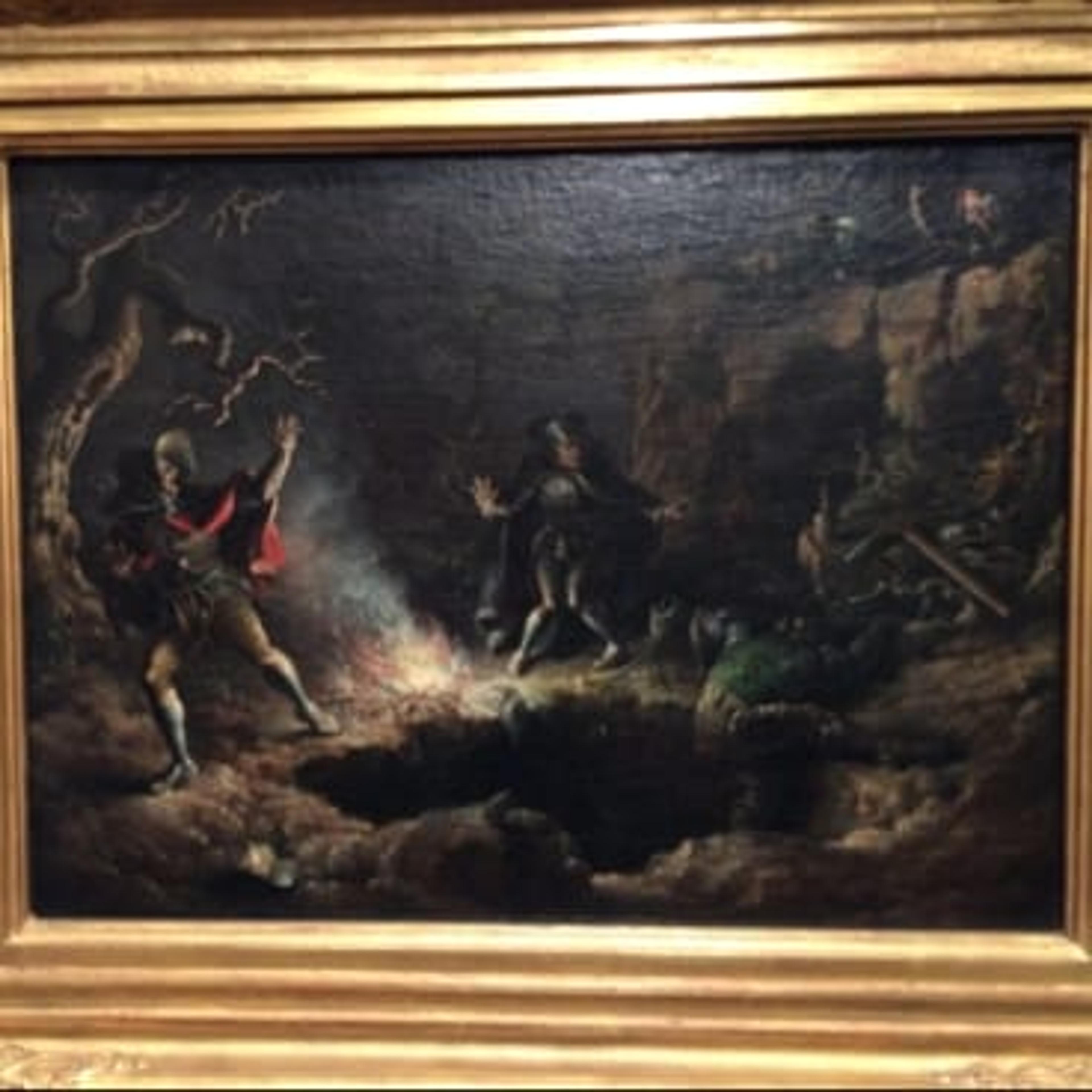 The story is that Wolfert Webber, a Dutchman of old Manhattan who recently lost all his money, becomes obsessed with the legends of buried treasure in the area. He, along with Doctor Knipperhausen (the guy in the cape and green glasses) and Sam (an African American fisherman) attempt to dig up some of the treasure supposedly buried by pirates years before.Their midnight adventure climaxes when a supposedly deceased pirate appears leering at them from the cliff above. (This is the figure in upper right that you asked about.) The diggers are frightened out of their wits, as Quidor comically shows us!Oh, interesting! Thanks for the information!
Was this painting always that dark? Or is it dark because of age?
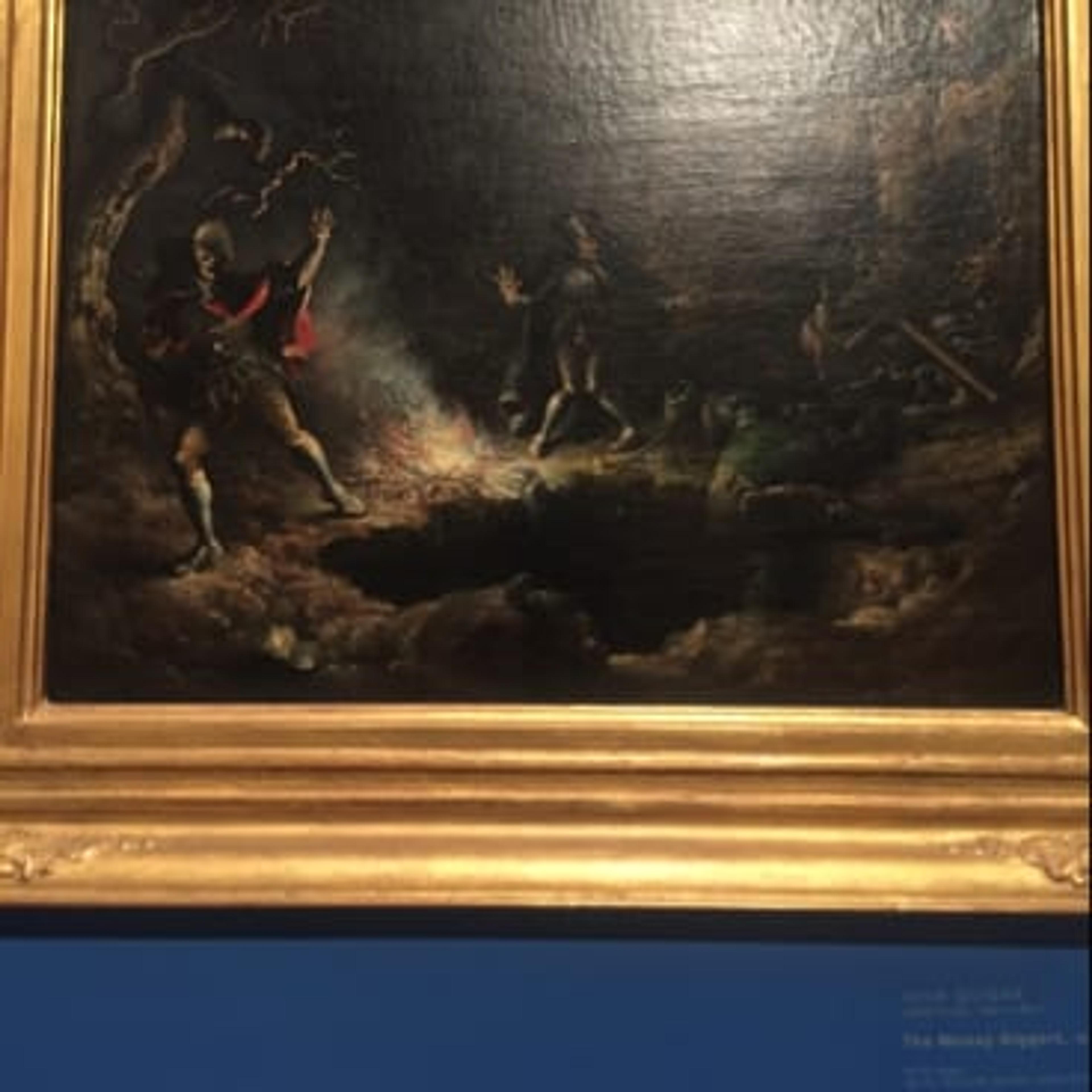 Great question. John Quidor's work really evokes a sense of fear in the night. Likely, Quidor was inspired by Goya, who worked from a black canvas and gradually added light as opposed to the more common approach of working from light to dark. Although over time pigments do change, it's likely it was dark in general to begin with. What are some other things that catch your eye in this work?The branches on the trees are really creepy, the way they extend like fingers toward the people in the scene. Also, that book is just barely safe from falling into the pit! It could be lost so easily.You're right, there certainly is a lot of tension in the scene! This scene was taken from "The Adventure of the Black Fisherman," written by American author Washington Irving. Would you like a summary? It might change the way you see the painting.Sure!The story is that Wolfert Webber, a Dutchman of old Manhattan who recently lost all his money, becomes obsessed with the legends of buried treasure in the area. He, along with Dr. Knipperhausen (the guy in the cape and green glasses) and Sam (an African American fisherman) attempt to dig up some of the treasure supposedly buried by pirates years before.Their midnight adventure reaches its peak when a supposedly deceased pirate appears leering at them from the cliff above. (This is the scene depicted by Quidor here.) The diggers are frightened out of their wits, as Quidor comically shows us!
Have information?
Have information about an artwork? Contact us at